
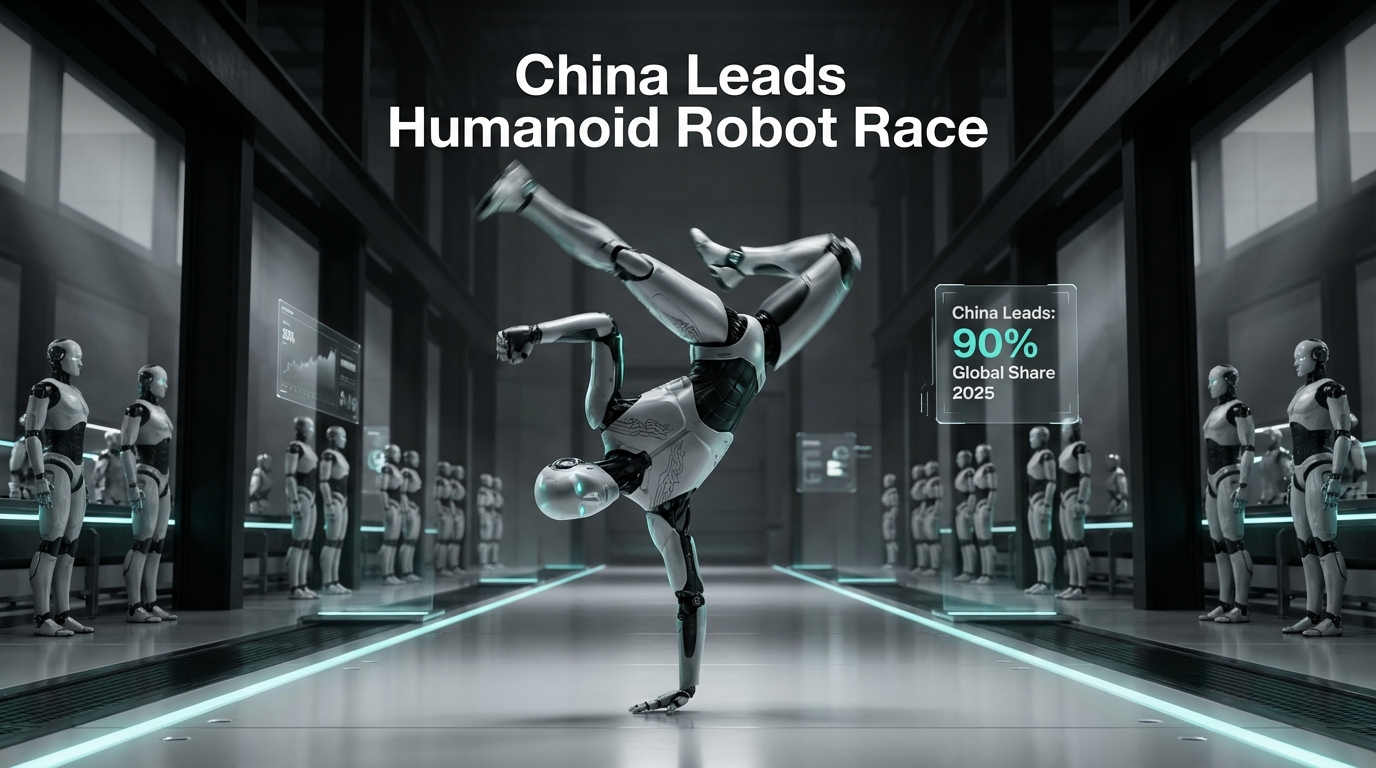
China’s humanoid robots are capturing global attention with stunning performances like kung fu flips at the 2026 Spring Festival Gala. Chinese firms are outpacing U.S. rivals in production speed and volume, thanks to strong supply chains and government support.
National Strategy Fuels Growth
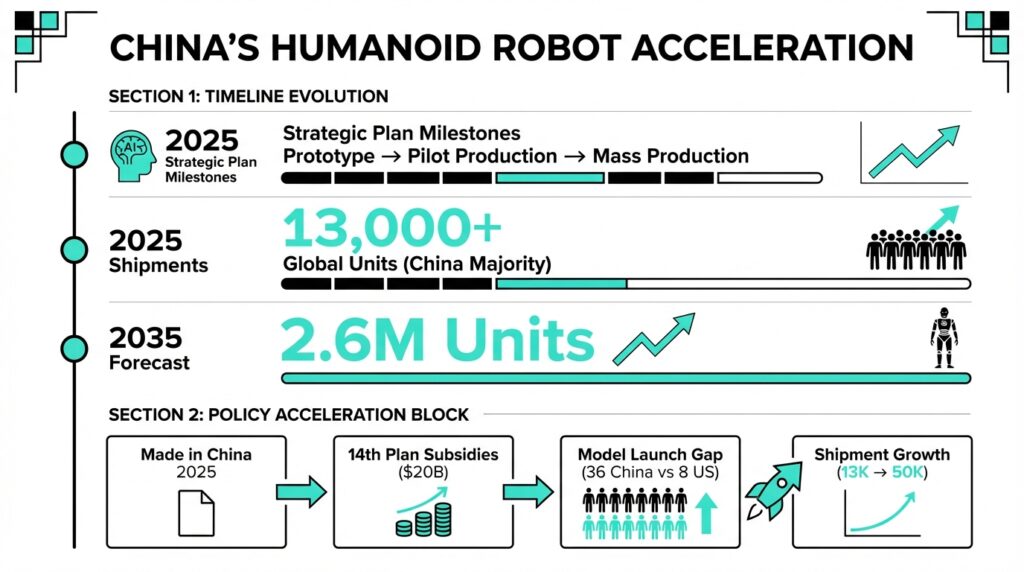
Robotics has been a key focus under China’s “Made in China 2025” plan, initially targeting factory automation but now extending to humanoid development. Advances in multimodal AI are driving embodied AI, helping address labor shortages and boost productivity. Officials see this as vital for economic gains in manufacturing and services.
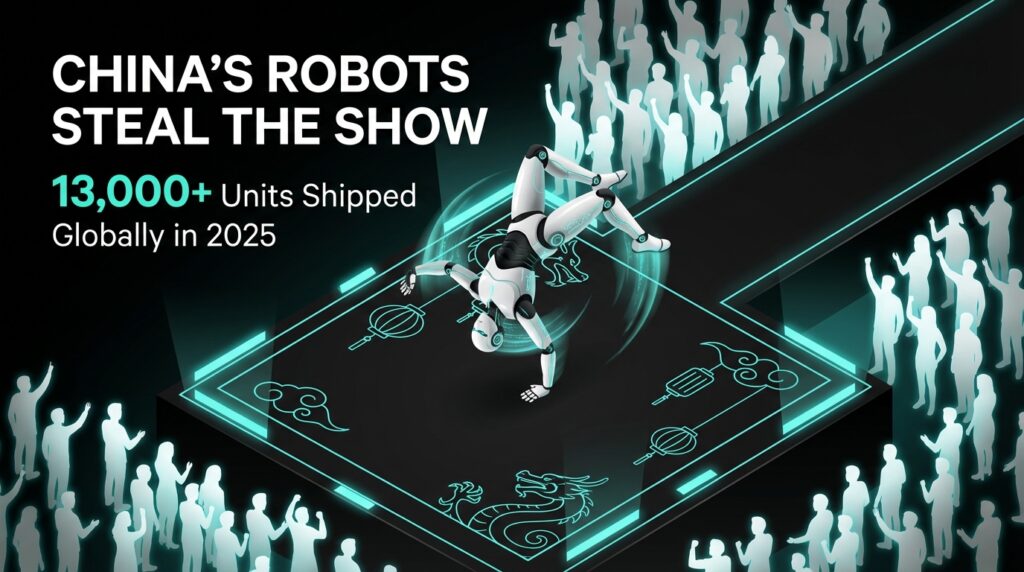
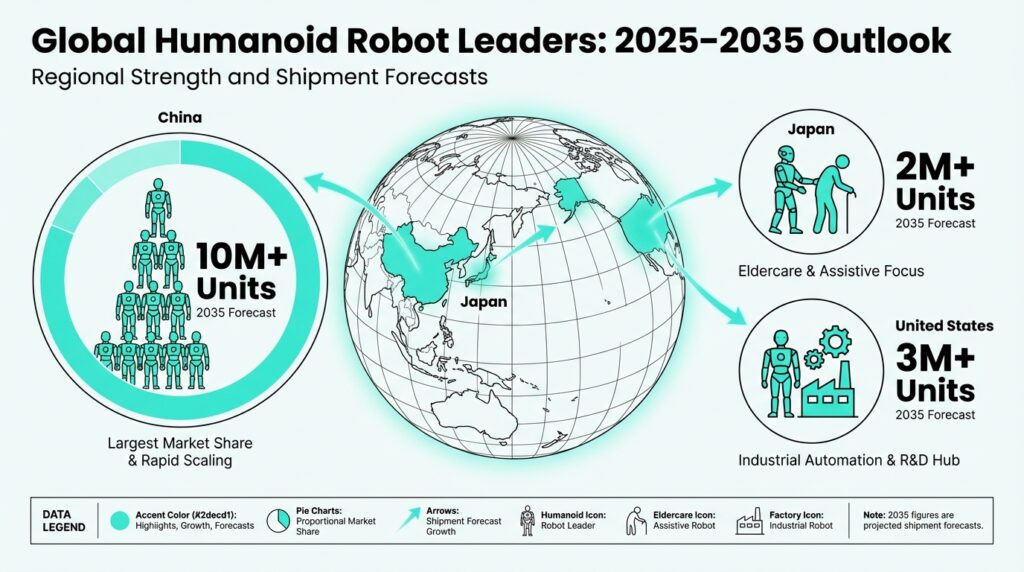
In 2025, global humanoid shipments hit 13,317 units, with China dominating. Projections show nearly doubling yearly, reaching 2.6 million by 2035 or even $38 billion market value. Revenue topped $500 million last year, led by entertainment and data production scenarios.
China’s 14th Five Year Plan elevates humanoid robotics as a strategic priority, with over $20B in subsidies fueling 31+ firms to launch 36 models in 2025 alone vs. just 8 in the U.S. Municipal incentives like free land and procurement contracts accelerate deployment. Omdia reports China claimed 90% of 13,000 global shipments in 2025, with Morgan Stanley forecasting a jump to 50,000+ units in 2026.
Top Chinese Companies Dominate
Agibot led 2025 shipments with over 5,100 units, claiming 39% global market share, followed by Unitree with 5,500+ units 36 times more than U.S. peers like Figure and Tesla. UBTech, Leju Robotics, Engine AI, and Fourier Intelligence rounded out the top ranks. These firms leverage EV honed supply chains for sensors and batteries, enabling faster, cheaper iterations.
RobotEra’s L7 excels in fast limb power, while UBTech’s Walker S handles fast production lines with rigid flexible joints. Lumos LUS2 recovers from falls in <1s.
From Demos to Real Use
The shift is from flashy demos to operational adoption, as seen with Galbot’s G1, Unitree, Noetix, and MagicLab robots at the Spring Festival Gala. Customers demand stable performance in real settings, aided by China’s automation policies and rapid manufacturing. Galbot raised $300M+, valuing it at $3B; Unitree hit $3B post-Series C, eyeing $7B IPO.
Honor plans its first service humanoid reveal at MWC 2026, integrated with its Robot Phone for tasks like shopping. Funding surges: Beijing’s Humanoid Robotics Hub secured $100M for Tiangong series, boosting commercialization.
Practical pilots shine: UBTech deployed dozens of Walker S1 at Zeekr’s Ningbo EV plant for multi task ops like box lifting. Galbot eyes industrial reliability post Gala.
Key Challenges Ahead
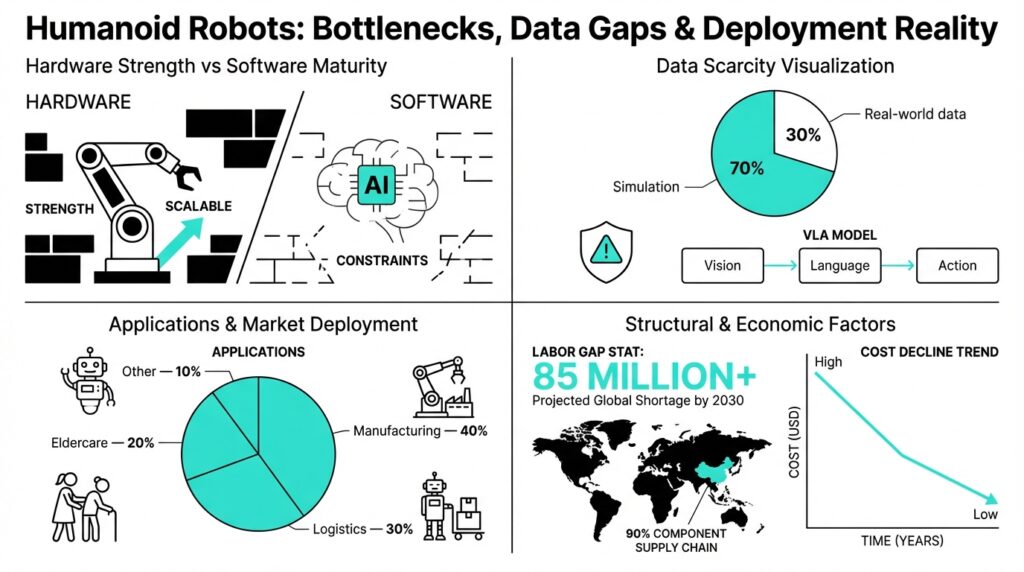
AI software lags hardware: Firms bet on vision language action (VLA) models and world models to predict actions, but data scarcity hinders progress simulations help, yet real data is crucial. Nvidia’s Orin chips power most, with domestic alternatives emerging. Safety risks and regulations loom large.
Early demand targets structured settings like manufacturing, logistics, and retail for repetitive tasks. Market forecasts: $2B in 2025 to $21B+ by 2035 at 26% CAGR, driven by AI sensors.
Emerging Applications in China
Humanoids target labor gaps from aging populations Goldman Sachs sees them filling 48-126% of global shortages, 53% in eldercare. In China, pick and place thrives in factories; less precise tasks like logistics lead adoption. Future: Healthcare (rehab), households (chores), disaster response.
China produces 90% of components (motors, drives), dropping BOM from $35K to $17K by 2030 like EV cost curves. Scale favors repetitive industrial/warehouse/retail first.
Global Competition Heats Up
Japan targets 2027 mass production, excelling in eldercare with robots like Kawasaki’s Nyokkey amid labor shortages and robot friendly culture. Hyundai’s Boston Dynamics plans 30,000 Atlas units yearly for U.S. factories by 2028, focusing on heavy tasks.
U.S. firms like Foundation aim for 50,000 units by 2027. Yet China’s ecosystem policy, capital, supply chains gives it speed to scale edge.
Japan’s precision (harmonic drives) contrasts China’s scale; U.S. focuses integration/deployments. Experts predict 2026-2028 mass adoption inflection, with humanoids in homes/healthcare. NASA’s early work informs U.S. edge in autonomy.
China’s manufacturing makes humanoids “almost free labor,” per analysts bipedal for human spaces is key.
Humanoid Future Predictions
2026 predictions: AI autonomy for real-time decisions, cobots sans cages, household “Rosie” bots under car-price (~$30K), education/STEM tutors. Population decline accelerates: Robots offset workforce shrinks in aging nations.
Shing predicts 20K Chinese shipments in 2026 (4x 2025). Risks: AGI ethics, but breakthroughs in LLMs close cognition gaps.
China’s humanoid surge blends innovation, investment, and infrastructure, positioning it as the early frontrunner. As tech matures, expect broader impacts on global industries.
Check out more on our blog page now → AI, Tech, Cybersecurity