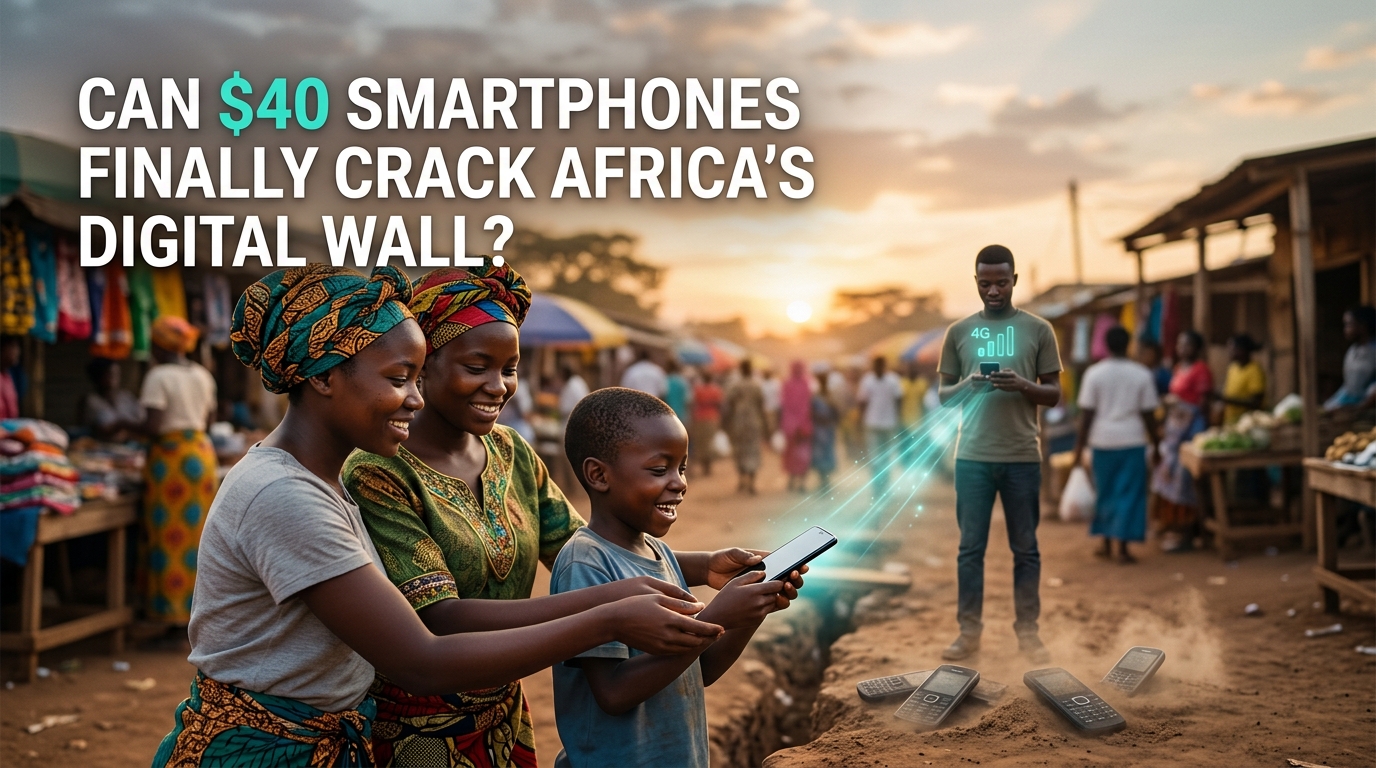
A coalition of telecom giants and device makers is pushing for $40 smartphones to connect millions more people online, especially in Africa. However, surging component costs pose major challenges to this ambitious goal.
African Pilot Launch
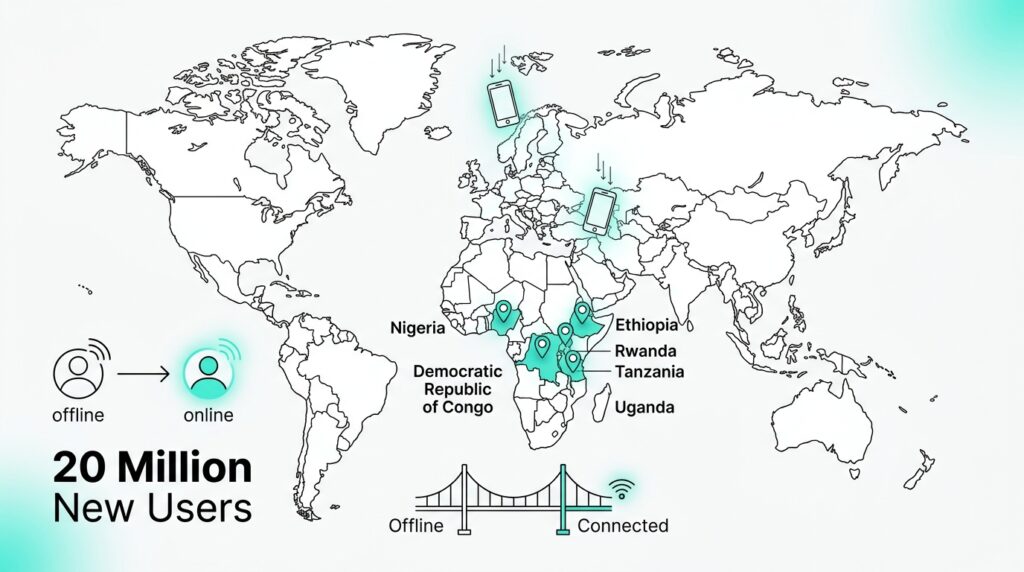
At Mobile World Congress in Barcelona, the GSMA announced pilots for ultra low cost 4G smartphones in six African countries: Democratic Republic of Congo, Ethiopia, Nigeria, Rwanda, Tanzania, and Uganda. Major operators like Airtel, MTN Group, Orange, Vodafone, Ethio Telecom, and Axian Telecom are partnering with smartphone makers under the Handset Affordability Coalition.
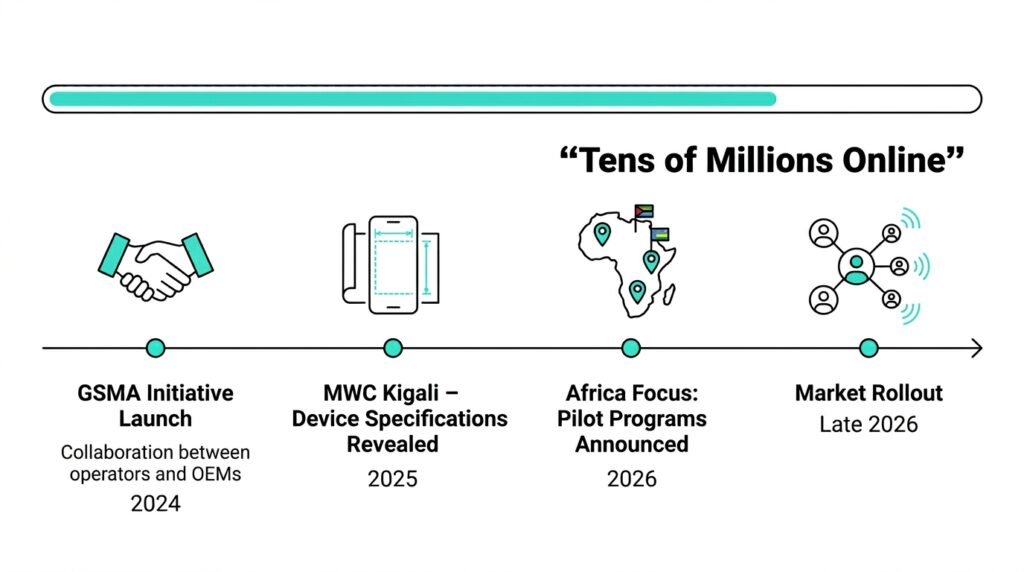
This effort targets bringing 20 million more people online by making devices affordable. The coalition signed a Memorandum of Understanding to formalize collaboration, building on minimum specs unveiled at MWC Kigali in 2025.
GSMA has engaged over 18 manufacturers, with at least eight in commercial talks. Proof of concept devices could launch this year, aiming for consumer availability by late 2026.
Closing the Digital Divide
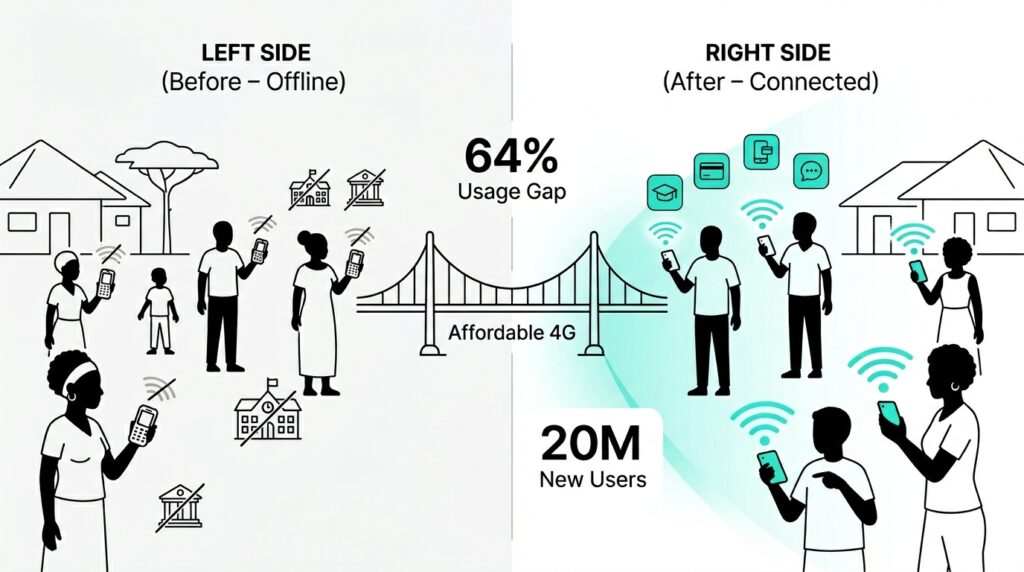
Affordable smartphones are crucial for narrowing Africa’s usage gap, where 64% of people in coverage areas lack internet access despite coverage improving from 41% to 9% gap between 2015-2024. Handset costs remain the top barrier, preventing access to education, healthcare, finance, and e-commerce.
GSMA intelligence shows the $30-$40 price as key for mass adoption. Yet, 3.1 billion globally have coverage but no mobile internet connection.
In Africa, smartphone shipments first surpassed feature phones recently, growing 17.9% YoY to 20.2 million units in early 2025, while feature phones fell 15.9%. Brands like Transsion (Tecno, Infinix, Itel) lead with entry level models tailored for the market.
Cost Challenges Ahead
Rising memory costs, especially DRAM and NAND, threaten the $40 target. Analysts note it’s harder now than historically when memory was cheaper; entry-level devices may skimp on RAM/storage.
Middle East and Africa smartphone ASP hit $188 in Q4 2025, with Q2 2025 up 7% YoY as buyers shift to premium. Sub $40 sales exist but negligible from major vendors.
Import duties and taxes, sometimes 30% treating phones as luxuries, inflate prices. South Africa cut a 9% duty on sub $150 phones last year; more reforms needed. Financing from banks could help operators.
Operator and Maker Roles
Key Players Involved
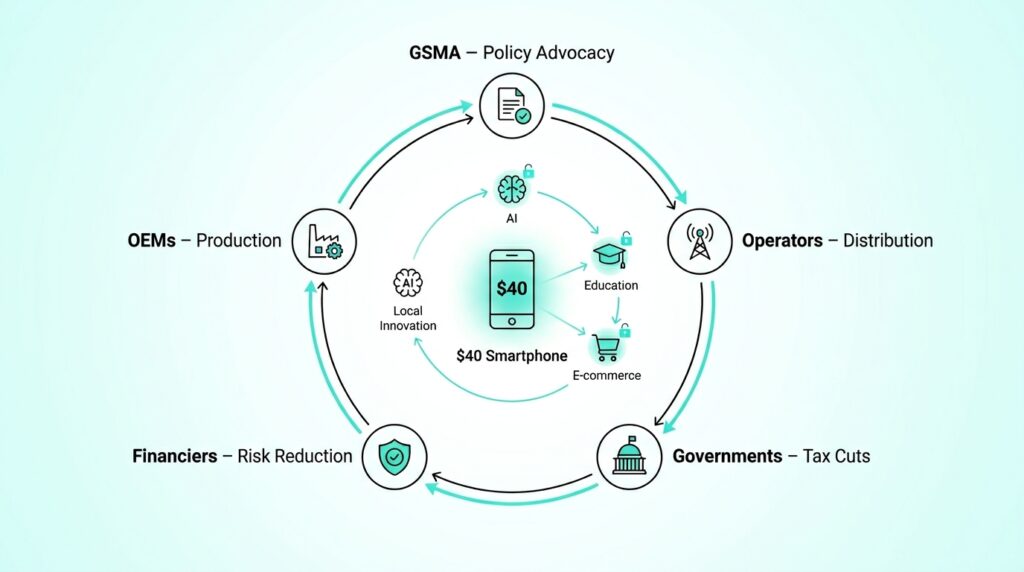
G6 operators (Airtel Africa, MTN, etc.) handle distribution and engagement. OEMs develop per specs; GSMA pushes policy. Vivek Badrinath, GSMA Director General, stresses government role in tax cuts for scale.
No specific makers named yet, focus on price performance. Coalition includes World Bank, ITU for financing.
AI and Broader Impact
Cheap devices enable on-device AI, local languages via GSMA’s AI Language Models Initiative. Showcased at MWC 2026: Swahili reasoning model, African AI talent map.
Past Efforts’ Lessons
Google’s 2014 Android One targeted emerging markets like India, Indonesia, Africa but struggled against cheap rivals like Xiaomi, Motorola. Online sales flooded markets; adoption low.
Feature phones still hold 39.5% Africa shipments in 2025 at $10-15, preferred for basics. IDC calls $30-40 ambitious amid inflation.
Success needs operator manufacturer-government coordination. Pilots at MWC Kigali June 2026 will review progress.
Future Outlook
With pilots underway, $40 phones could transform Africa if costs stabilize and policies shift. This bridges usage gap, boosts economies via digital services.
Challenges persist, but momentum from MWC signals real progress. Watch for late-2026 launches.
$40 Smartphones vs. Africa’s Digital Divide
GSMA’s bold push for $40 4G smartphones could connect 20 million more Africans online through pilots in six nations DRC, Ethiopia, Nigeria, Rwanda, Tanzania, and Uganda backed by giants like MTN, Airtel, and Orange.
Facts
- Massive Gap: Networks cover 95% of Africa, but 700 million people stay offline handsets cost up to 73% of poorest households’ monthly income.
- Tax Trap: Duties add 30-40% to prices; South Africa slashed them on sub $150 phones, paving the way.
- $30 Dream: Dropping to $30 could onboard 50 million users, fueling AI, e-commerce, and GDP growth.
- Past Flops: Android One (2014) failed against cheap rivals like Xiaomi feature phones still claim 39.5% market share.
- OEM Rush: 18 manufacturers committed, with 8 in talks; Transsion leads entry level sales.
Rising memory costs challenge the goal (ASP $188 now), but coalition momentum at MWC signals breakthroughs by late 2026.
Check out more on our blog page now → AI, Tech, Cybersecurity