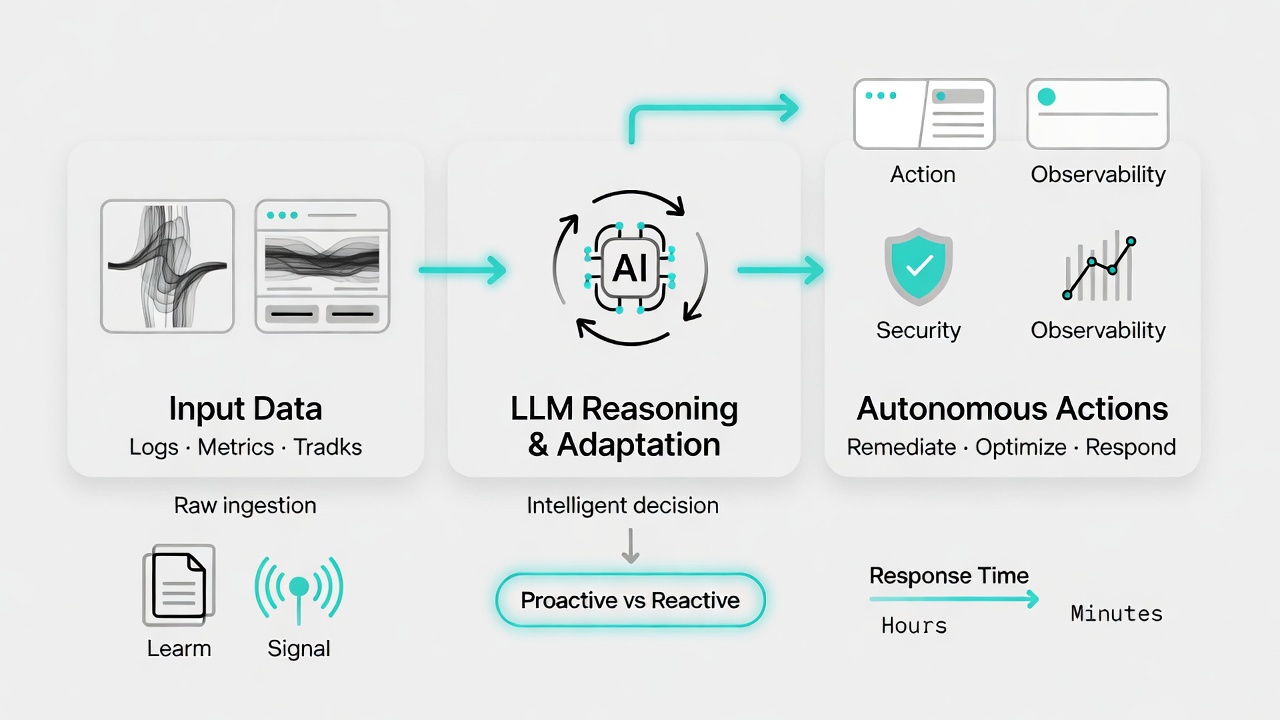
Agentic AI: Future of Enterprise Security — Autonomous, adaptive AI acts at machine speed, shifting enterprises from reactive defense to proactive, intelligent security. Agentic AI reasons, adapts, and acts autonomously at machine speed, transforming enterprise digital resilience. It redefines security and performance for digital ecosystems, enabling real-time data pattern recognition and decision making. With agentic AI, companies gain conversational analysis from LLMs plus automated task execution. This shifts IT teams from reactive firefighting to proactive planning.
Promise of Agentic AI
Pinpoint Root Causes Instantly
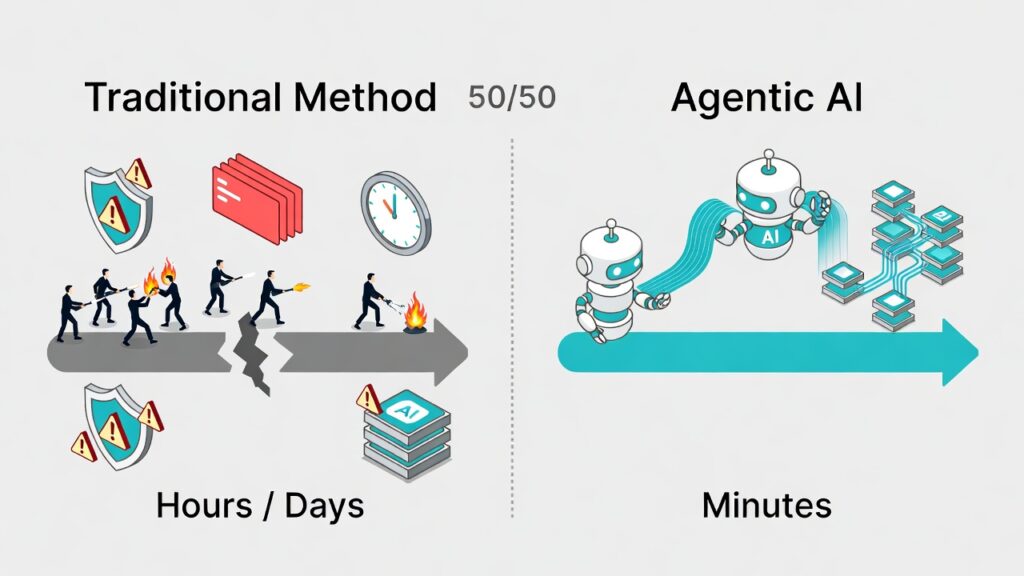
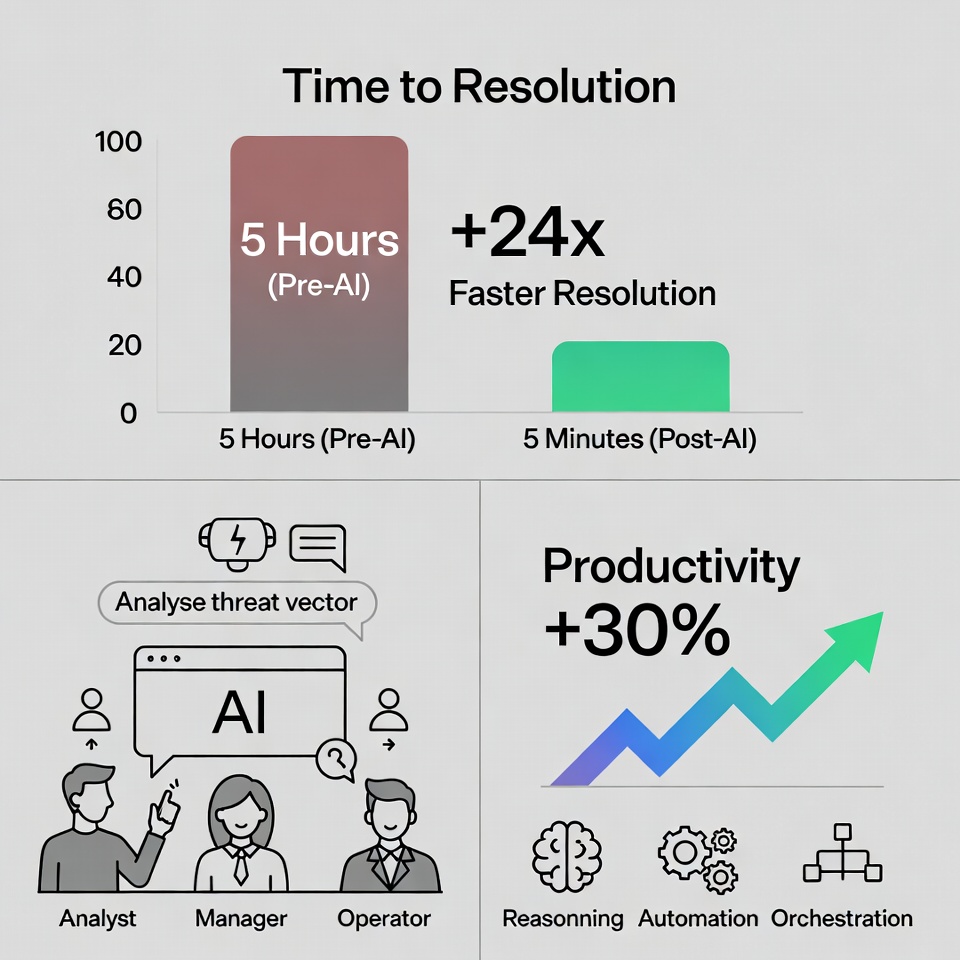
Agentic AI crosses siloed apps for complete visibility, analyzing logs, metrics, events, and traces. It queries monitoring systems, applies reasoning, and recommends or executes fixes what took SREs hours now happens in minutes. For threats, it scans data streams for zero day exploits or insider risks, automates investigations across security tools, and contains issues to block lateral movement. SOC tasks shrink from hours to minutes.
Preempt Disruptions
Agentic AI forecasts vulnerabilities like unpatched software or weak encryption from historical and real time data. It spots user anomalies early and monitors logs, metrics, and traces for bottlenecks or latency before escalation. This speed lets it handle more alerts, resolving them proactively.
Real-Time Insights for Decisions
Agentic AI processes environmental data like user patterns, device states, and network flows—for rapid, contextual decisions. It detects incidents and optimizes performance on the fly.
Upskill Your Workforce
Natural language interfaces and automation help teams master security threats or app stacks, boosting skills across levels.
Key Deployment Considerations
Keep Humans in the Loop
Humans oversee AI agents. Technical analysts must learn to integrate them (human on the loop), while critical checkpoints prevent errors in complex workflows (human in the loop).
Avoid Hallucinations
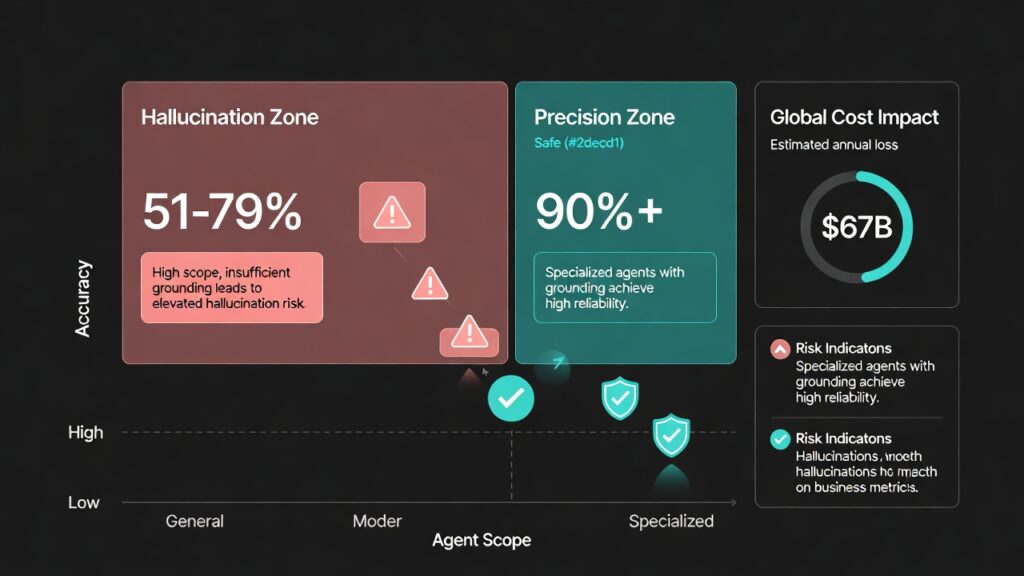
Hallucinations cost billions narrow agents with fine-tuning and domain data like RAG boosts accuracy. Specialized security/observability agents cut costs and latency versus general LLMs.
Seamless Integration
Rethink data flows, processes, and security for AI. Emerging protocols like Model Context Protocol for app integration, Agent to Agent for collaboration, and Agency for orchestration enable this.
Agent Access and Privacy
The volume and speed of agent access management will far exceed traditional human access management. It’s critical to define clear access levels for autonomous agents that maintain compliance and establish a plan of record for audits and governance. The goal: boost operational efficiency without introducing risk so AI acts as a secure, augmentative force within the IT ecosystem
Splunk AI for Resilience
Splunk, a Cisco company, embeds generative and agentic AI into security and observability solutions. Its unified platform accelerates insights, automates workflows, and boosts productivity with AI ready foundations.
Conclusion
Agentic AI is revolutionizing enterprise security and observability, delivering digital resilience through instant root cause analysis, proactive threat detection, and real time insights. By preempting disruptions, optimizing workforces with natural language interfaces, and ensuring human in the loop oversight, it shifts IT from reactive to strategic. Deployment success hinges on combating AI hallucinations via specialized agents, RAG fine tuning, seamless protocol integration, and robust agent access control. Splunk AI leads this charge, embedding generative and agentic AI into unified platforms for faster workflows and analyst productivity. The future of secure, resilient enterprises is autonomous and intelligent, powered by agentic AI. Ready to transform your digital resilience? Explore Splunk AI solutions and step into proactive enterprise security now.