
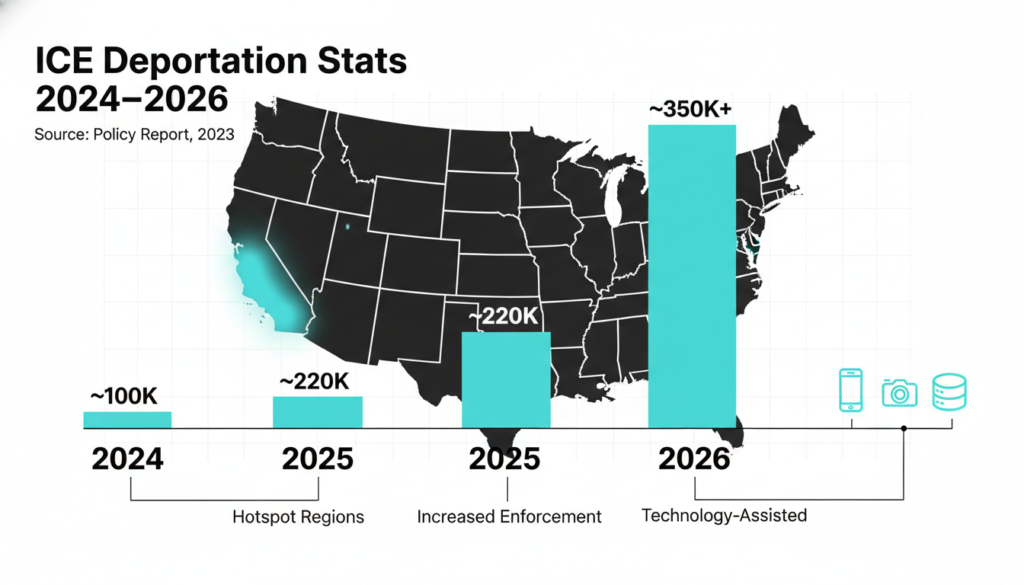
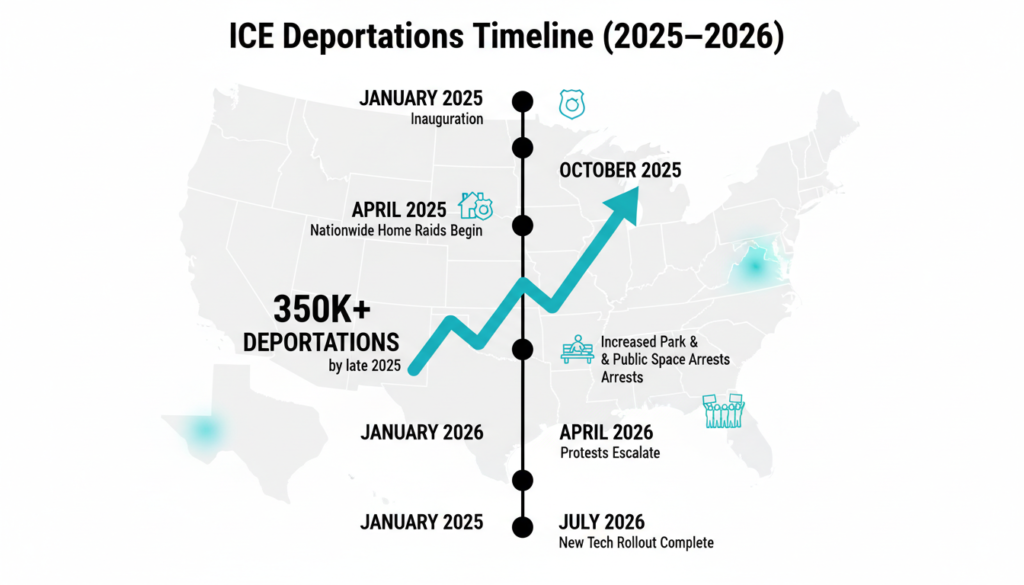
President Trump’s second term has ramped up immigration enforcement, with ICE leading mass deportations exceeding 350,000 people in the past year. Raids target homes, workplaces, and parks, sparking protests nationwide. ICE relies on advanced surveillance tech to track and identify targets, often pushing legal boundaries like warrantless home entries, which experts argue breach Fourth Amendment rights against unreasonable searches.
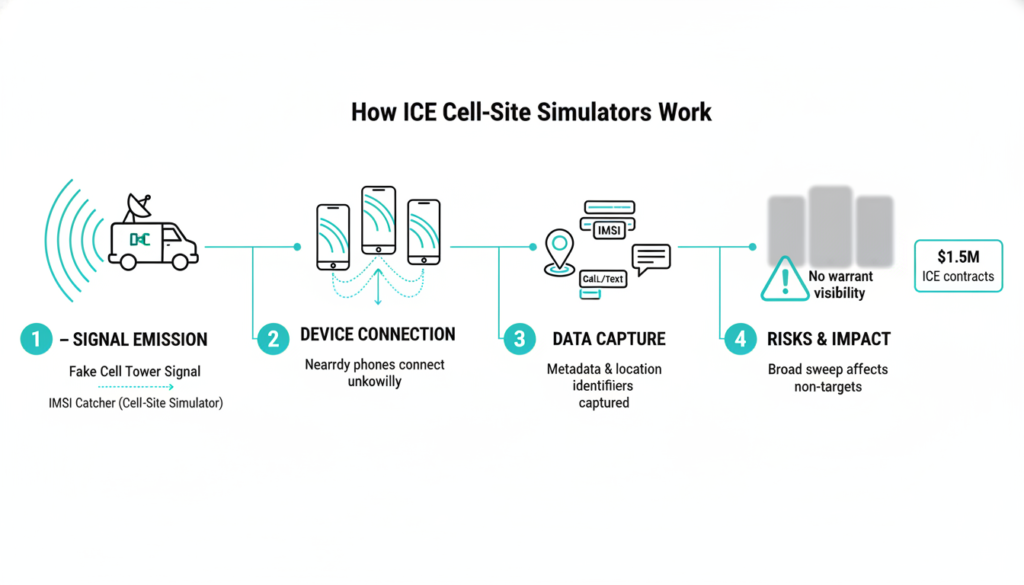
Cell Site Simulators Track Phones
ICE deploys cell site simulators, fake cell towers that mimic legit ones to lure nearby phones. Once connected, they pinpoint locations, snag unique identifiers like IMSI numbers, and even intercept calls or texts. Known as Stingrays from early Harris Corp models, these tools grab data from everyone nearby not just suspects.
In 2025, ICE spent over $1.5 million on TechOps Specialty Vehicles for simulator equipped vans, including an $800,000 deal for “CSS Vehicles.” TOSV integrates but doesn’t build the simulators. Controversies abound: they vacuum innocent bystanders’ data, often without warrants, per EFF reports. Courts have seen cases dropped to hide usage, like a 2019 Baltimore incident where prosecutors avoided breaching NDAs.
Facial Recognition Identifies Faces
Clearview AI powers ICE’s facial scans, scraping billions of public web photos for matches. A recent $3.75 million contract aids Homeland Security Investigations (HSI) in spotting child exploitation victims, offenders, and officer assaults. Prior deals include $1.1 million for forensic software in 2024 and $800,000 for licenses in 2023.
Agents also use Mobile Fortify, cross-referencing street scans against 200 million driver’s license photos from state databases. This raises alarms as states share data with feds, bypassing some privacy laws.
Paragon Spyware Targets Devices
ICE’s $2 million deal with Israel’s Paragon Solutions for phone spyware faced a Biden era pause but reactivated under Trump. The package includes licenses, hardware, training, and maintenance for HSI probes into trafficking and fraud. Paragon, now merged with U.S. firm RedLattice after a 2024 buyout, markets “ethical” tools amid scandals like Italy’s journalist spying.
Phone Hacking and Location Tools
HSI’s $3 million Magnet Forensics contract covers Graykey devices to unlock phones and extract evidence. Merged with Grayshift in 2023, it processes multiple devices for reports.
ICE also bought Penlink’s Tangles and Webloc for $5 million Webloc crunches billions of daily location pings from apps and ad bidding, enabling warrantless buys from data brokers. Tangles AI scours web/dark web intel.
License Plates, Records, and Palantir
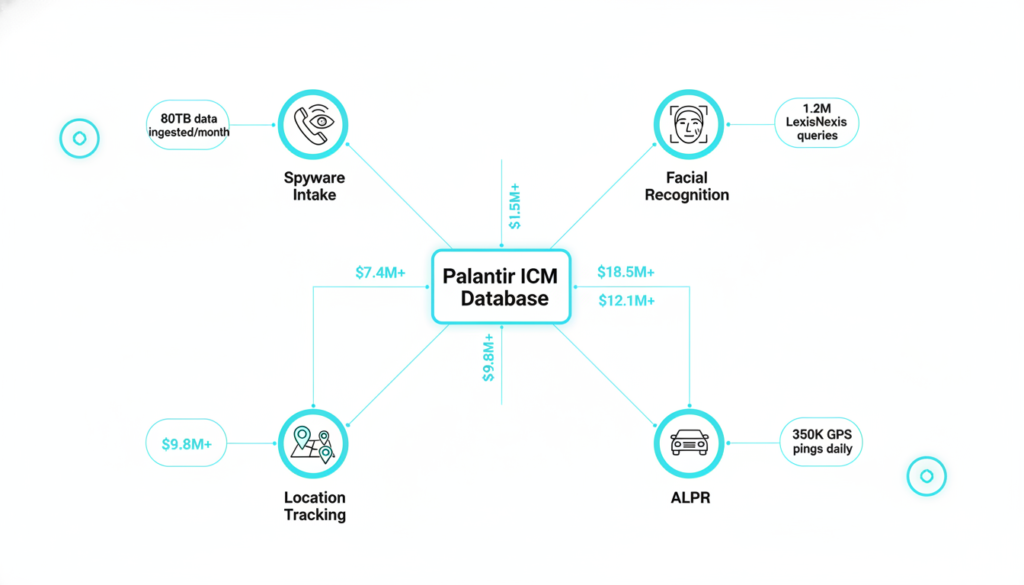
Automated license plate readers (ALPR) from Flock Safety track vehicles nationwide, with ICE tapping local police networks despite some cutoffs. Border Patrol runs its own camera grid.
LexisNexis’ Accurint Virtual Crime Center saw 1.2 million ICE searches in 2022 alone for migrant backgrounds; 2026 spend hit $4.7 million. It flags pre-crime activity via public/commercial data.
Palantir’s $18.5 million Investigative Case Management (ICM) database renewed from a $95.9 million 2022 deal filters by visa, looks, location, and more. A $30 million ImmigrationOS tracks overstays and self deportations in real time.
These tools amplify ICE’s reach but fuel debates on privacy, ethics, and overreach in a digital age.
Cleaning Surveillance Tech Data
Here’s a practical regex example for stripping HTML tags from surveillance contract reports or raw tech data dumps:
textconst htmlString = '<h1>Stingray Contract</h1><p>$1.5M spent</p>';
const cleanText = htmlString.replace(/<[^>]*>/g, '').trim();
console.log(cleanText);  // "Stingray Contract $1.5M spent"
This /<[^>]*>/g pattern matches anything between < and > tags, perfect for cleaning messy procurement records before analysis. Use .trim() to handle extra whitespace.
Blog Summary
ICE leverages advanced surveillance technologies like cell site simulators, Clearview AI facial recognition, Paragon spyware, Graykey phone unlocking, Penlink location tracking, ALPR cameras, LexisNexis databases, and Palantir’s ICM/ImmigrationOS systems to execute mass deportations exceeding 350,000 people under President Trump’s second term. These multi million dollar contracts enable precise targeting but spark intense privacy debates, warrantless data collection concerns, and Fourth Amendment challenges. The post includes detailed infographics, contract breakdowns, and a practical regex example for cleaning surveillance data reports.
Explore More Insights
These tools amplify ICE’s deportation operations but raise critical questions about privacy and surveillance ethics in our digital age.
Discover more on our blog page check out related posts tagged AI, TECH, and CYBERSECURITY for deeper dives into emerging technologies and their impacts.