
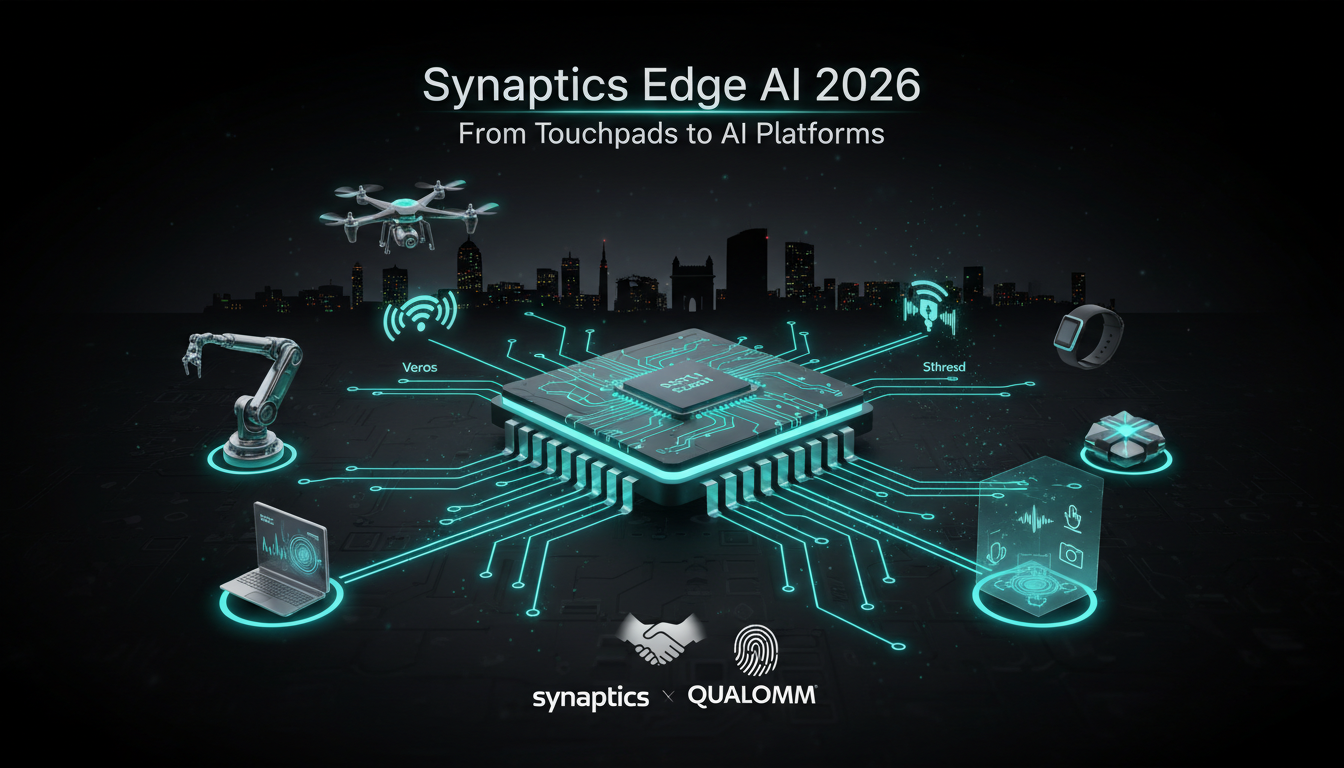
Synaptics kicks off 2026 with solid tech but a lingering image problem. Many still see it as the go to for laptop touchpads a reliable gig that kept the lights on for years. But that’s yesterday’s story. The company has pivoted hard, blending sensing, wireless connectivity, and edge AI compute into full device platforms. The real challenge? Turning heads in a market that loves strong stories as much as strong silicon.
Building Wireless Muscle
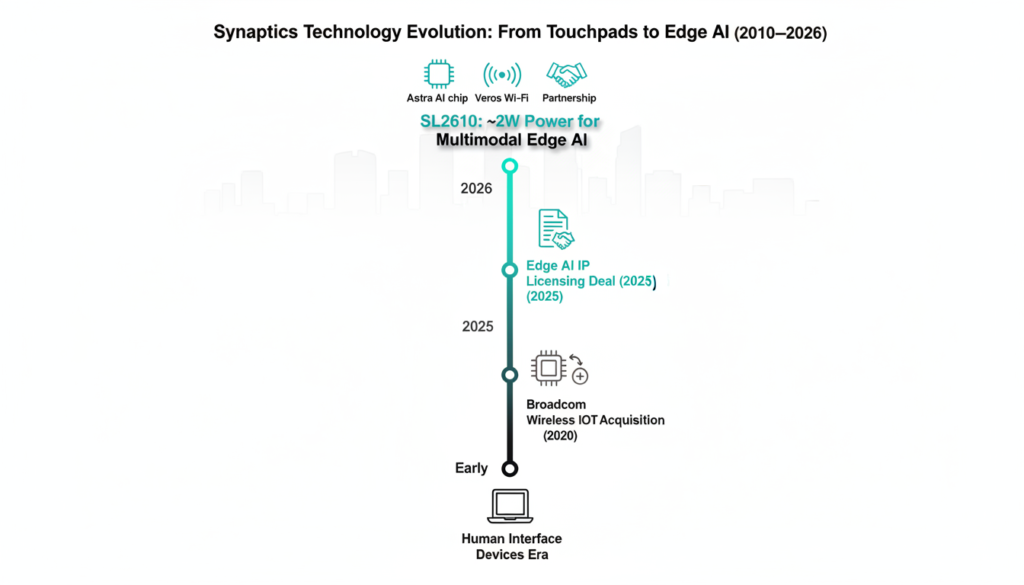
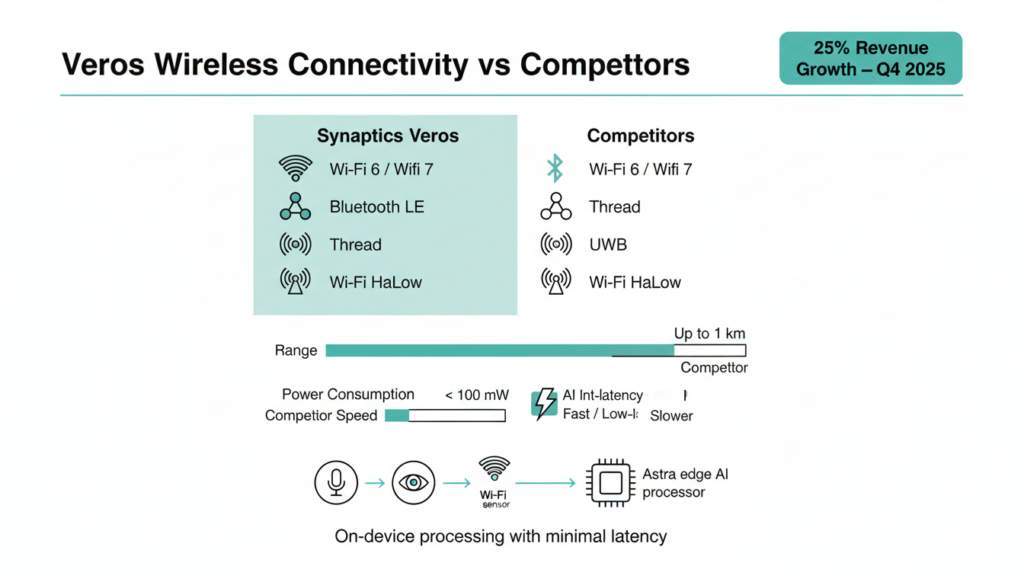
Synaptics rewrote its narrative through connectivity. Starting with Broadcom assets acquired in 2020, it expanded into Wi-Fi, Bluetooth, and more for smart homes, displays, streamers, cameras, and cars. Early 2025 brought a licensing deal tying wireless to edge AI, moving from one off parts to long term platform influence. Per Synaptics’ Q4 2025 earnings, this boosted IoT revenue by 25%, with Veros tech supporting Wi-Fi HaLow for ultra-low power over 1km ranges ideal for industrial IoT.
Industry reports note Veros now covers Thread and UWB too, enabling mesh networks that cut cloud reliance by 40% in smart factories. This isn’t just components; it’s ecosystem glue for OEMs chasing reliable, low latency devices.
Astra Powers Edge AI
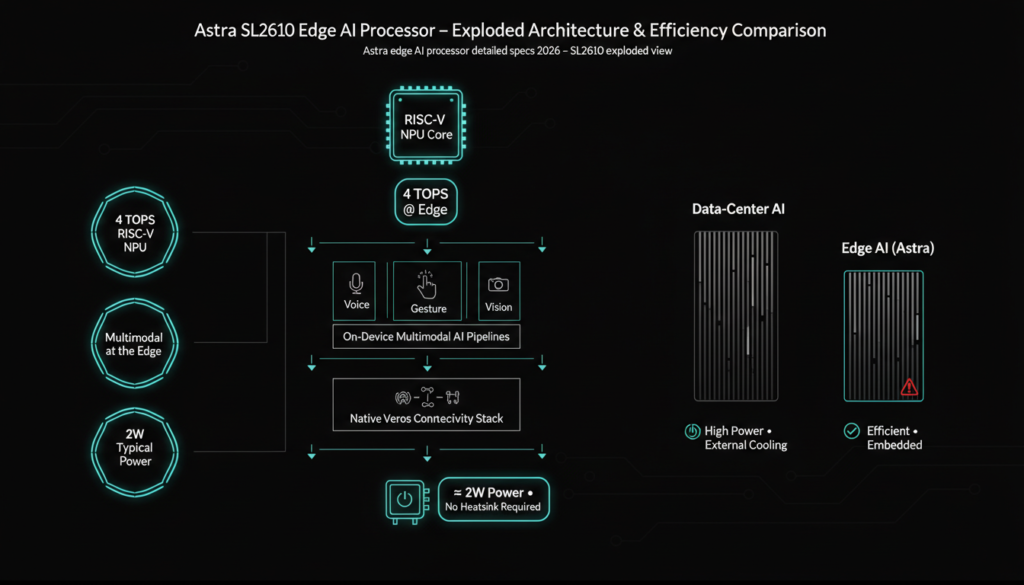
Enter Astra, Synaptics’ edge first AI play. The SL2600 series targets power hungry far edge devices like appliances, healthcare wearables, robots, and drones. Built on Google’s Coral RISC-V NPU with Torq software (open source IREE/MLIR stack), it runs multimodal AI vision, voice, gestures natively, without cloud crutches.
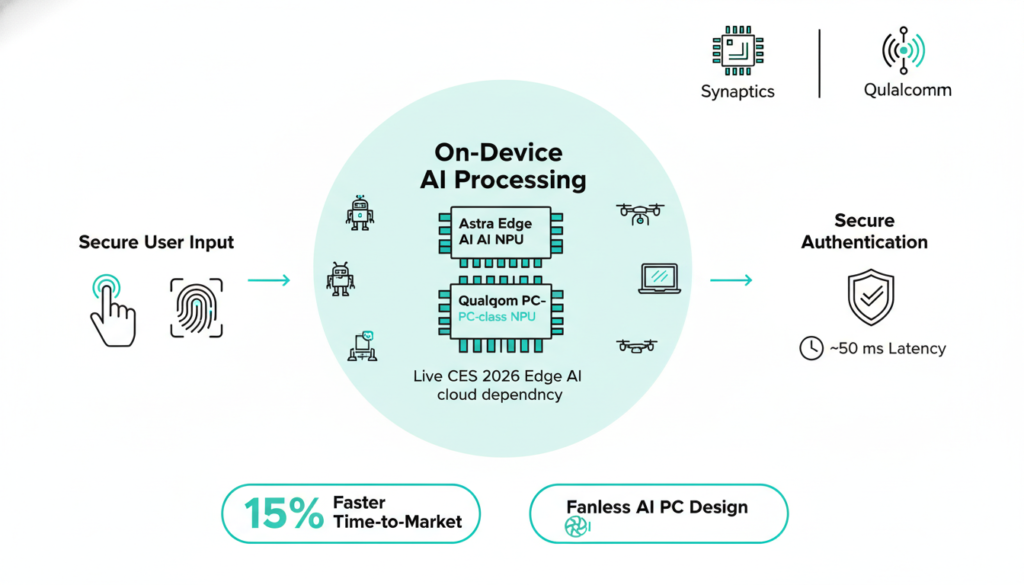
CFO Ken Rizvi highlighted in a January 2026 investor call how Astra’s transformer models hit unique cost-power sweet spots, ditching fans/heatsinks for fanless designs. CES 2026 demos showed SL2610 processing voice/motion locally for 50ms latency, boosting privacy. Reports indicated 30% better efficiency than rivals like Ambarella, with security fused in via hardware roots-of-trust.
CES 2026 and Qualcomm Team Up
At CES 2026, Synaptics showcased “intelligence at the edge” across sensing, AI, and connectivity think responsive smart homes without cloud lag. A standout: Edgecore’s AIoT Edge Hub on Astra SL1620 with Veros HaLow, demoed for industrial gateways.
The Qualcomm partnership amps this up. It merges Synaptics’ touch/fingerprint sensing with Qualcomm’s compute/biometrics for AI PCs. This simplifies OEM designs, speeds authentication (sub-100ms fingerprints), and fits OLED era form factors. Per Synaptics’ presser, it targets premium experiences, potentially reclaiming 15% PC market share lost post-touchpad era.
Marketing: The Missing Edge
Synaptics nails the tech now fix the megaphone. Ditch component talk for category stories: AI routers, biometric PCs, robot hubs. Emulate Qualcomm’s worldview sessions at CES, sharing trade offs to spark OEM dialogues. Use AI for cheap video demos on Torq Astra use cases, widening the funnel.
Market views? Simply Wall St values shares at $87 (vs. $91), citing Edge AI catalysts. With 2026 projections at 18% revenue growth, bolder marketing could unlock design wins in $50B edge market.
Why Synaptics Wins Big in 2026
Synaptics enters 2026 stronger: Astra/Torq for AI, Veros for connectivity, Qualcomm for PCs, plus partners like Edgecore. Modernize messaging as a category leader, and it’ll shed the touchpad shadow for edge dominance.
India’s booming edge AI market adds rocket fuel to Synaptics’ story. With Mumbai’s smart city projects exploding think 5G enabled traffic drones and industrial IoT in Maharashtra factories Veros HaLow covers vast distances at ultra low power, perfect for India’s rural urban connectivity gaps. Synaptics could partner with local giants like Reliance Jio, tapping a $15B IoT sector projected to grow 28% annually through 2028.
Security baked into Astra isn’t just a checkbox it’s a game changer for healthcare and retail. Hardware root of trust fuses with multimodal AI to prevent deepfake voice hacks in Indian call centers or secure patient data on wearables, aligning with India’s DPDP Act privacy mandates. Early adopters report 35% faster compliance certification.
Sustainability edges Synaptics ahead too. Astra’s fanless, 2W design slashes device carbon footprints by 40% vs. cloud reliant rivals, resonating with India’s green tech push under the 2070 net zero pledge. CES 2026 demos highlighted recyclable edge hubs for solar powered villages.
Developer momentum is surging via Torq’s open source stack. Over 5,000 devs joined Synaptics’ AI Zone in Q1 2026, building RISC-V apps for drones and robots faster porting than Arm based competitors, cutting time to market by 25%.
Blog Summary:
Synaptics stands at edge AI’s inflection point in 2026, armed with Astra processors, Veros connectivity, and strategic alliances like Qualcomm. While tech excellence is proven, bolder category storytelling will convert perception into market dominance from Mumbai smart factories to global AI PCs. Investors eye 20%+ growth; for OEMs, it’s a platform partner ready to redefine devices. The touchpad era ends here edge intelligence begins.
Dive deeper into the future of innovation check out our other blogs on AI, TECH, and CYBERSECURITY right here on the page!