
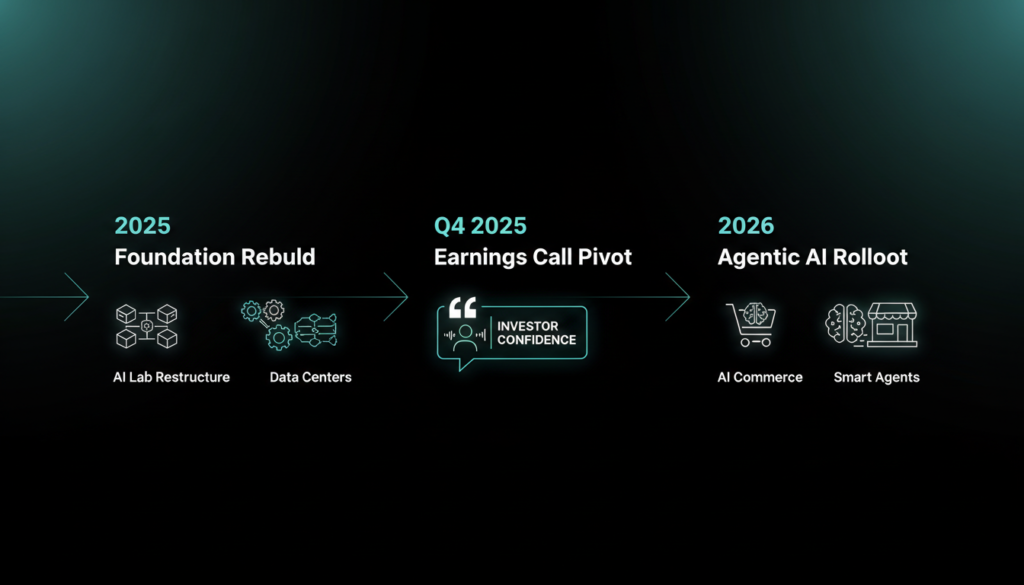
Mark Zuckerberg has exciting news for Meta users: new agentic AI models and products are dropping in just months. During the Q4 2025 earnings call on January 28, 2026, he reflected on 2025 as the year Meta rebuilt its AI foundations, including a major restructure of its AI lab into Superintelligence Labs. “Over the coming months, we’re going to start shipping our new models and products,” Zuckerberg said, promising steady frontier pushing throughout 2026.
Agentic Commerce: Smarter Shopping Ahead
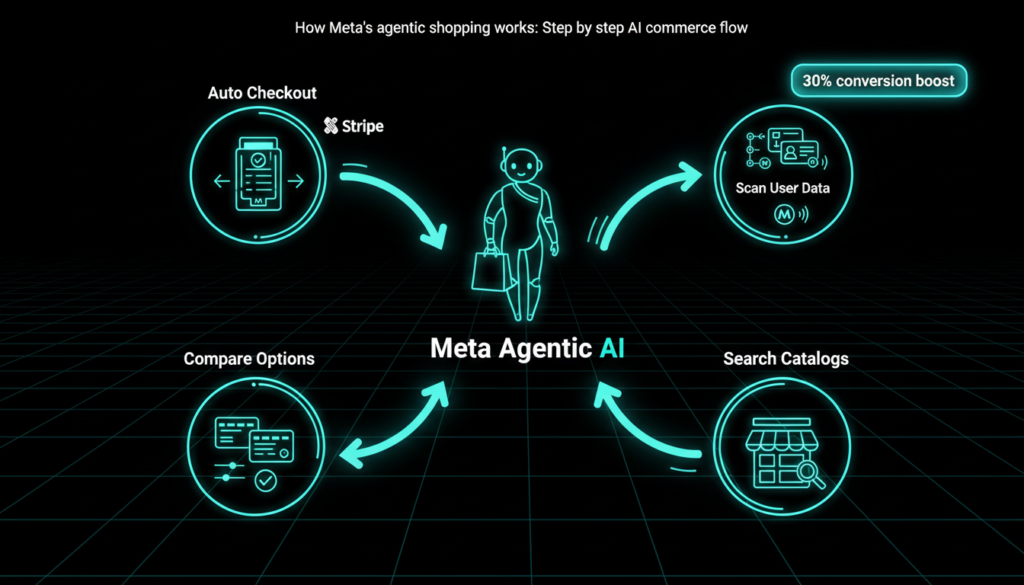
Commerce is a key focus. Zuckerberg teased “agentic shopping tools” that help users discover the perfect products from Meta’s business catalogs. These AI agents act autonomously browsing, comparing, and recommending based on your preferences, much like a personal shopper on steroids. This aligns with industry trends where AI handles transactions end to end, reducing friction in e-commerce.
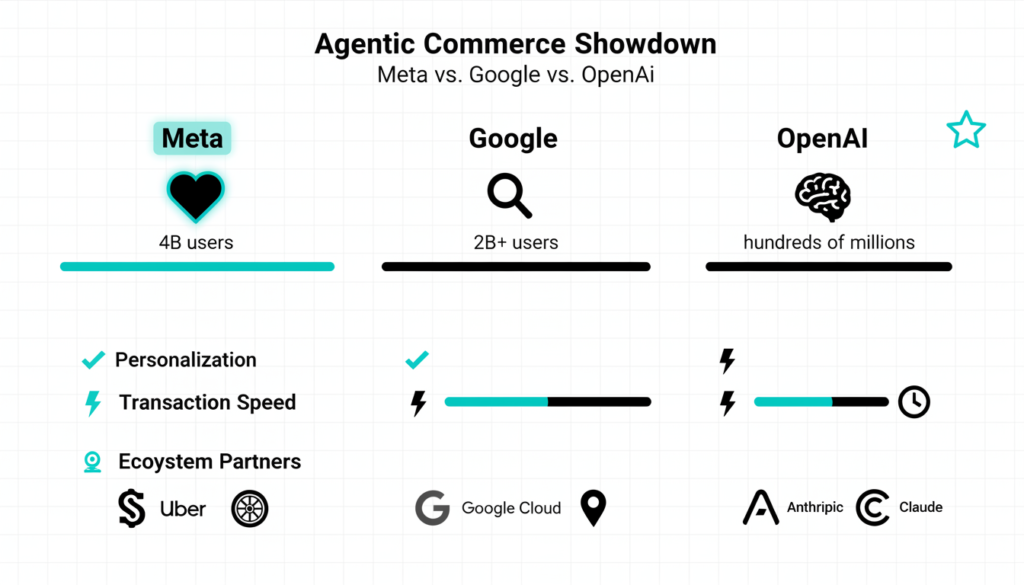
Meta’s edge? Its vast personal data trove. “AI that understands our personal context history, interests, content, and relationships makes agents truly valuable,” Zuckerberg noted. Unlike generic search engines, Meta’s systems leverage your Facebook posts, Instagram likes, and WhatsApp chats for hyper personalized suggestions. For context, Meta’s platforms boast over 3.98 billion monthly active users as of Q4 2025, per their earnings fueling unmatched data insights.
Industry Wide AI Shopping Race
Meta isn’t alone. Google launched a protocol for agent driven purchases in September 2025, enabling seamless buys via AI agents. OpenAI followed with its agentic shopping system, partnering with Stripe and Uber for real world transactions. These tools let AI negotiate prices, check inventory, and complete checkouts without human input potentially transforming $6.5 trillion global e commerce by 2026, according to Statista projections.
What sets Meta apart is integration across its ecosystem. Imagine an Instagram Reel sparking an AI agent that pulls your past purchases, friend recommendations, and budget to curate outfits. Analysts from Gartner predict agentic AI could boost conversion rates by 30% through such personalization, giving Meta a commerce advantage in social platforms.
Manus Acquisition Boosts Capabilities
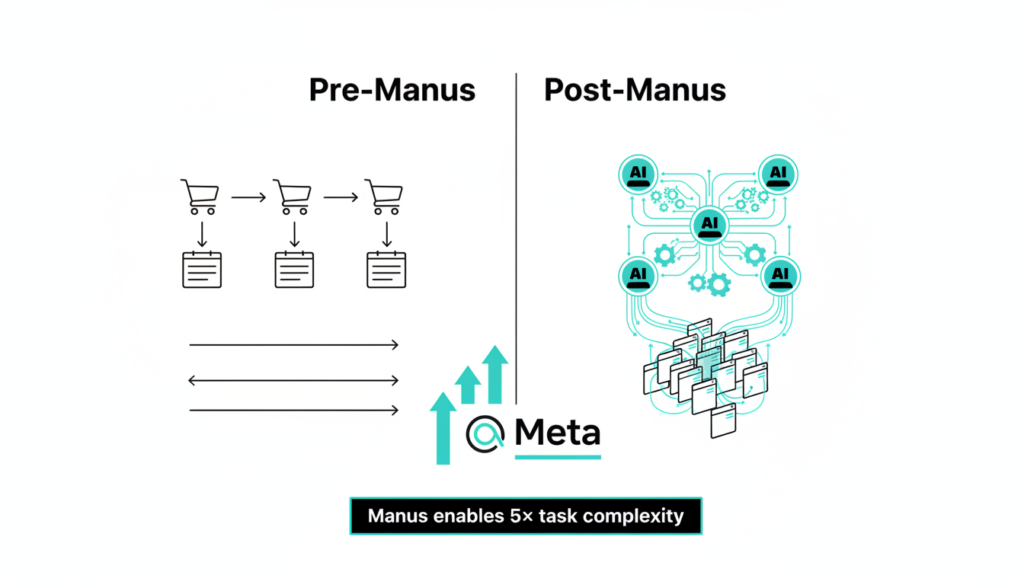
In December 2025, Meta snapped up Manus, a developer of general purpose AI agents. This move accelerates business AI innovations, with Meta planning to keep Manus running standalone while weaving it into products like Facebook Shops and Instagram Marketplace. Manus tech excels in multi step tasks, like bundling products with real time pricing perfect for agentic commerce.
Massive Infrastructure Investments
Spending Surge in 2026
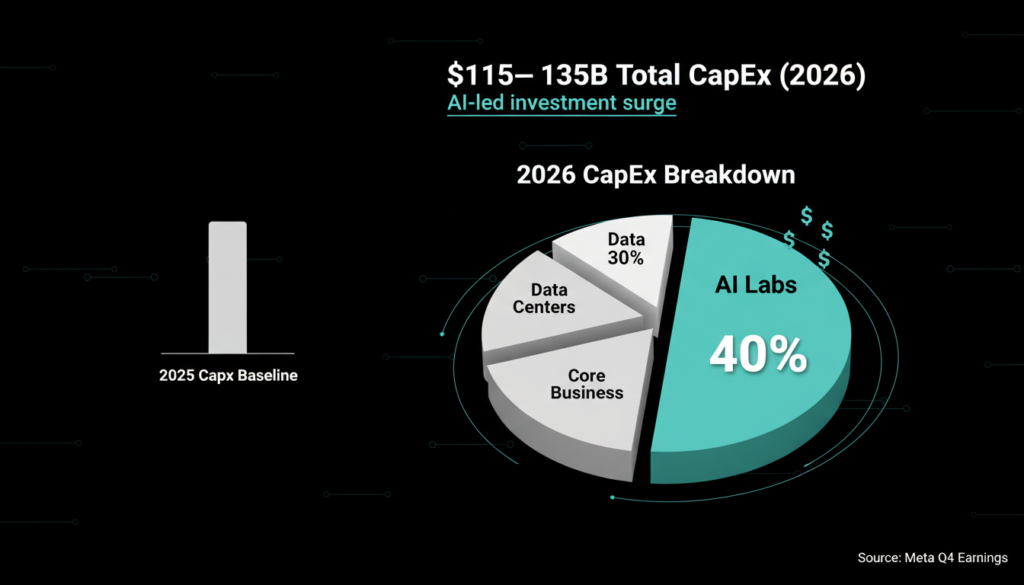
Funding this AI blitz? Serious cash. Meta’s Q4 2025 earnings revealed capital expenditures jumping to $115-135 billion in 2026, up from $72 billion in 2025 driven by Superintelligence Labs and data centers. This includes next gen GPUs for training models rivaling Llama 4, expected early 2026. While below Zuckerberg’s rumored $600 billion through 2028, it’s a bold bet on AI infrastructure amid criticisms over unclear ROI.
Investors worry about returns, but Zuckerberg is optimistic: “2026 will deliver personal superintelligence, accelerate business, and reshape our company.” Meta’s ad revenue hit $48.4 billion in Q4 alone, providing the war chest up 20% year-over-year, signaling AI could supercharge monetization via targeted commerce.
What’s Next for Meta AI?
Expect early 2026 rollouts to hit feeds soon, blending superintelligence with everyday use. This could redefine social commerce, making platforms like yours more interactive. Stay tuned Meta’s personal AI agents might just change how we shop online forever.
In this exciting announcement from Meta’s Q4 2025 earnings call on January 28, 2026, CEO Mark Zuckerberg outlined ambitious plans for a major AI rollout throughout the year, building on the foundational rebuild of the company’s AI infrastructure in 2025, including the restructuring of its AI lab into Superintelligence Labs. He promised that users would soon experience new AI models and products “in a matter of months,” with steady advancements pushing the boundaries of AI capabilities into 2026 and beyond, emphasizing practical applications that integrate seamlessly into daily social and commercial interactions on platforms like Facebook, Instagram, and WhatsApp.
A standout focus is on agentic commerce, where autonomous AI agents will revolutionize online shopping by acting as intelligent personal shoppers scanning vast business catalogs, browsing options, comparing prices and features, curating hyper personalized recommendations, and even handling end to end transactions without constant user input. Zuckerberg highlighted Meta’s unique advantage: leveraging its massive trove of personal context data from users’ histories, interests, shared content, relationships, posts, likes, and chats across 3.98 billion monthly active users (as reported in Q4 earnings). This enables deeply tailored experiences, far beyond generic search engines, potentially boosting e-commerce efficiency and user satisfaction in ways competitors like Google and OpenAI are racing to match.
Speaking of the competition, the industry is buzzing with similar innovations Google debuted agent driven purchase protocols in September 2025 for frictionless AI buys, while OpenAI launched its own agentic shopping system partnering with Stripe and Uber to enable real time negotiations, inventory checks, and checkouts. Yet Meta differentiates through its social ecosystem integration; picture an Instagram Reel triggering an AI that cross references your purchase history, friends’ endorsements, and budget to assemble complete outfits or gadget bundles. Industry forecasts from sources like Gartner and Statista project agentic AI could elevate global e-commerce (valued at $6.5 trillion by 2026) with up to 30% higher conversion rates via such precision personalization.
Bolstering these capabilities, Meta acquired Manus in December 2025 a specialist in general purpose AI agents skilled at complex, multi step tasks like dynamic product bundling and real time pricing. Meta plans to maintain Manus as a standalone service while embedding it into Facebook Shops, Instagram Marketplace, and more, supercharging agentic tools for businesses and consumers alike.
Underpinning this vision is massive financial commitment: capital expenditures are surging to $115-135 billion in 2026 (from $72 billion in 2025), funneled into Superintelligence Labs, advanced data centers, and next-gen GPUs for training powerhouse models like an anticipated Llama 4. Though below Zuckerberg’s rumored $600 billion projection through 2028, this investment addresses investor concerns over AI’s ROI while fueling ad revenue growth (Q4 hit $48.4 billion, up 20% YoY). Zuckerberg envisions 2026 as a pivotal year for “personal superintelligence,” accelerating business growth, future proofing infrastructure, and redefining Meta’s operations.
Overall, this signals a transformative shift in social commerce, blending AI superintelligence with everyday platforms to make shopping intuitive, contextual, and autonomous poised to reshape how billions interact with brands online. With rollouts imminent, Meta is positioning itself at the forefront of an AI driven retail revolution.
Loved this deep dive into Meta’s AI revolution?
Keep the tech excitement going! Check out my other blogs packed with cutting edge insights on AI innovations, latest TECH trends, and cybersecurity strategies to stay ahead in the digital world. Your next favorite read is just a click away! 🚀