
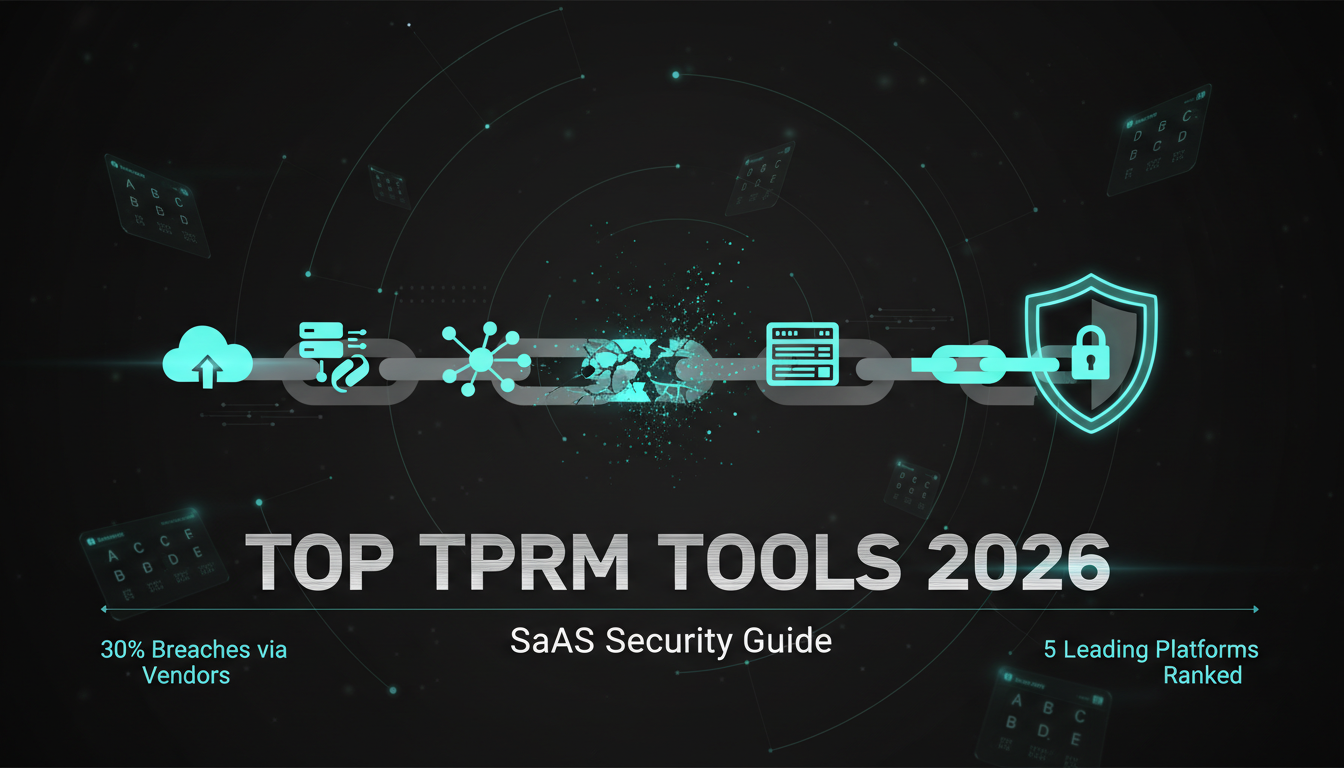
SaaS companies rely on cloud vendors for CI/CD pipelines, billing gateways, and AI plugins, making third party risks a direct operational threat. Verizon’s 2025 Data Breach Investigations Report revealed third party involvement doubled to 30% of breaches. Vanta’s 2025 State of Trust report found 56% of teams experienced vendor related incidents post partnership.
This guide provides streamlined criteria, detailed tool evaluations, and strategies to automate diligence amid DORA regulations, shadow AI proliferation, and surging supply chain attacks.
Why TPRM is Essential in 2026
A vendor outage or breach instantly disrupts customer facing features, turning dependencies into cascading liabilities. Supply chain attacks spiked in 2025, with cloud misconfigurations amplifying sector wide impacts. Vendor counts average 1,000+ for 18% of enterprises, yet only 39% feel confident in mitigation effectiveness.
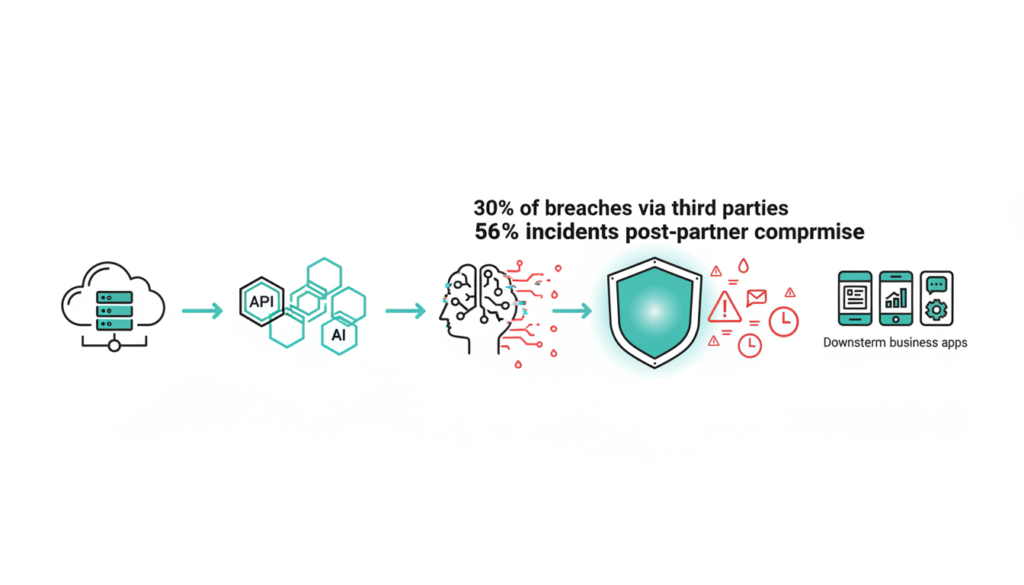
Regulations like SOC 2, GDPR, Europe’s DORA, SEC disclosures, and US DoD CMMC 2.0 now mandate continuous vendor oversight with audit trails. Shadow AI compounds exposure employees paste sensitive data into unvetted tools, while vendors embed external AI endpoints. Gartner forecasts 40% of enterprises will face shadow AI breaches by 2030, demanding inventory expansion to include every plugin and prompt repository.
Annual reviews fall short; the MOVEit zero day showed exploits can escalate from detection to mass exfiltration in weeks. Modern TPRM requires real time monitoring of security ratings, breach wires, dark web signals, and certificate health, with automated workflows routing issues to Jira, ServiceNow, or Slack.
Evaluating TPRM Tools: Key Criteria
Automation and Intelligent Workflows
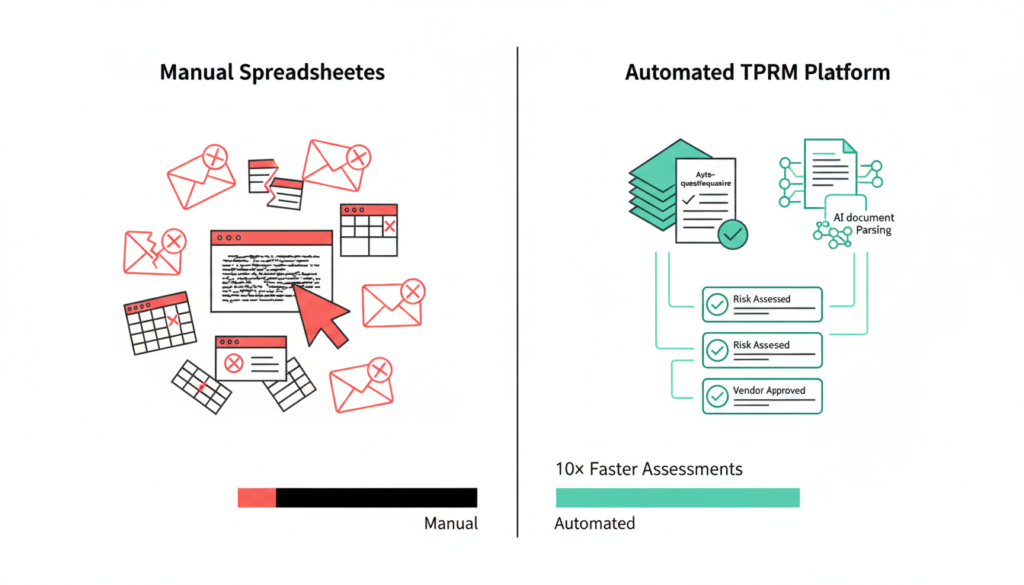
Top platforms eliminate spreadsheet chaos by auto sending questionnaires, calculating inherent risk scores, chasing evidence, and logging decisions. AI parses uploaded SOC 2 reports and policy documents to highlight gaps like missing MFA or encryption controls. Strong tools close 10 assessments monthly per analyst versus 3 manually, routing admitted gaps directly to remediation tickets.
Seamless Integrations and Auto-Discovery
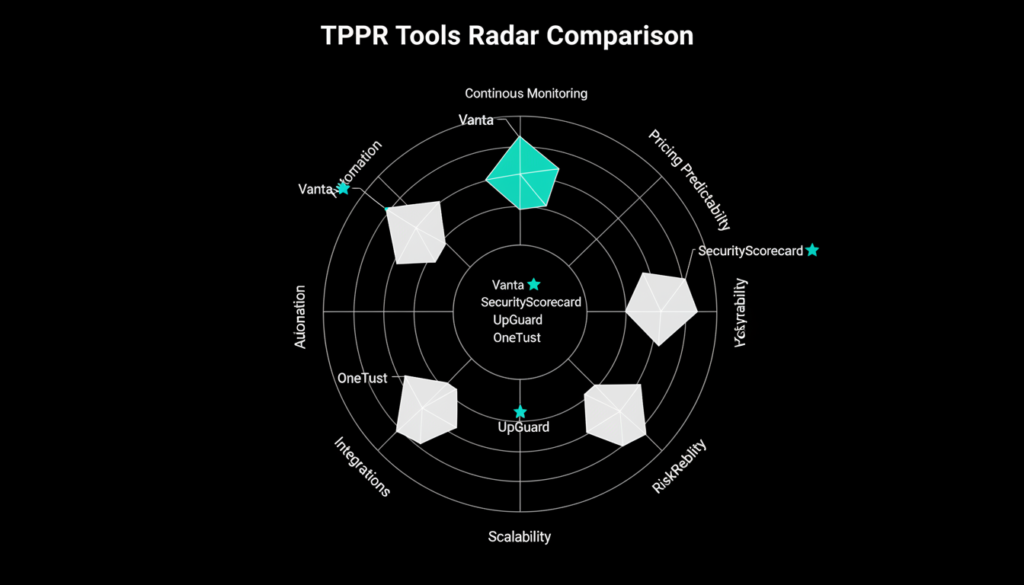
Vendor tools must pull data from identity (Okta), procurement (NetSuite), and finance systems to surface hidden shadow IT. Vanta boasts 375+ integrations running 1,200+ hourly automated tests, syncing contracts from CLM platforms and pushing alerts to team channels. During demos, verify live discovery from SSO logs and spend data revealing marketing’s AI writing tools or engineering’s rogue registries.
Continuous Monitoring and Real Time Intelligence
Healthy vendors today become headlines tomorrow. Leading platforms ingest security ratings (SecurityScorecard, BitSight), vulnerability feeds, dark web crawls, and breach databases, translating signals into actionable score changes within minutes. Mock a vendor SSL expiry or zero day during demos watch alerts fire to Slack and reopen remediation tasks automatically.
Compliance Mapping and Audit Ready Reports
Auditors prioritize traceability over volume. Platforms should map vendor evidence and responses to control frameworks (SOC 2, ISO 27001, GDPR, HIPAA), enabling one click views of control coverage gaps. Export-ready reports bundle assessed vendors, control mappings, and remediation status for prospects or regulators. Pre-built templates for CCPA or DORA prevent questionnaire rebuilds.
Scalability, Flexibility, and Total Cost
Startups scale from 10 to 500+ vendors by Series D; dashboards must remain responsive at thousands. Verify hierarchy support for subsidiaries and fourth parties. Pricing varies wildly per vendor models explode with growth, while flat subscriptions reward scale. Calculate ROI: automation reclaiming analyst hours plus accelerated enterprise deals often offsets costs quickly. Third party breaches average $4.91M for financial services.
Top 5 TPRM Platforms for 2026
1. Vanta: Unified Compliance and Risk Dashboard
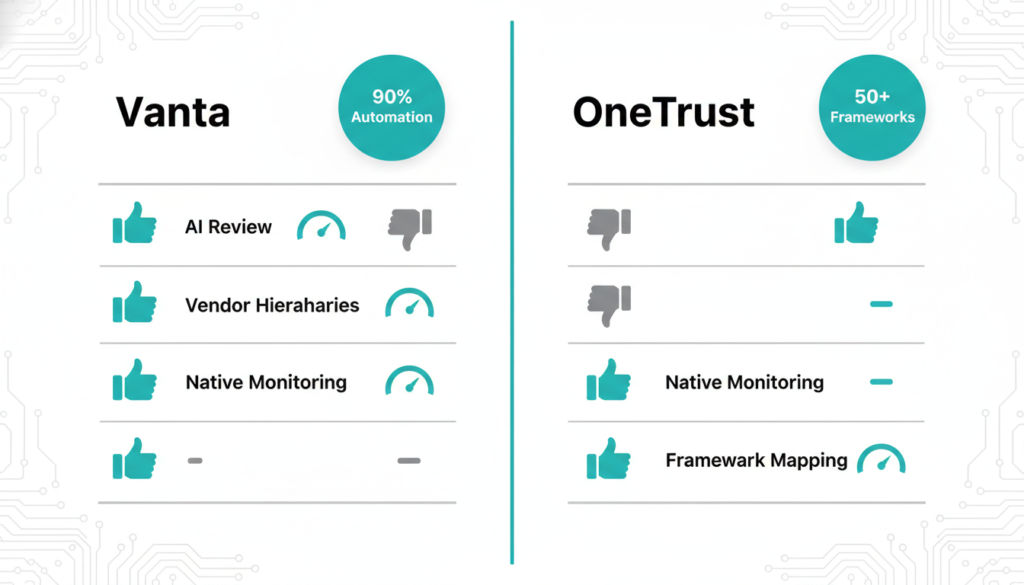
Vanta extends compliance automation into full TPRM lifecycle coverage, automating 90% of tasks from intake through remediation. AI assisted reviews parse vendor documents and questionnaires, delivering 50% time savings while flagging issues. SSO based discovery surfaces shadow IT continuously.
375+ integrations ensure findings route bi directionally to Jira/ServiceNow; Vendor Exchange portal enables evidence reuse from Trust Centers. Continuous monitoring focuses on actionable signals (breaches, misconfigurations, cert anomalies) rather than opaque scores. Modular pricing starts basic, with AI/monitoring add ons. Perfect for mid market SaaS consolidating tools.
2. OneTrust: Privacy First Enterprise Solution
OneTrust couples vendor risk with deep privacy governance, ideal for GDPR/PHI heavy programs. Vendorpedia offers thousands of pre populated profiles across subsidiaries and engagement types. 50+ regulatory framework templates align assessments automatically.
Power BI embedded dashboards slice risks by region, tier, and category. Continuous monitoring leverages partner ratings (BitSight, SecurityScorecard). Enterprise pricing ranges $40K-$500K by vendor/users plus implementation. Best for complex estates, though lean teams face steeper setup curves.
3. Prevalent (Mitratech): Complete Lifecycle Platform
Prevalent delivers end to end coverage from onboarding through offboarding, recognized as a 4x leader. AI-powered assessments and risk analytics pair with customizable dashboards tracking inherent vs residual risk. Exchange accelerates reviews via pre completed reports.
Breach intelligence feeds directly into vendor records for contextual remediation. Enterprise scale suits hundreds of vendors; validate ITSM/CLM integrations during evaluation. Higher setup investment yields broad lifecycle structure over point solutions.
4. SecurityScorecard: A-F Grades for Rapid Triage
Daily external scans deliver simple A-F grades across patching, endpoints, and exposed assets. HyperComply acquisition (late 2025) adds AI driven questionnaires to complement monitoring strength. Watchlists trigger Slack alerts; vendors get free invites to remediate findings collaboratively.
Executive friendly grades scale across large portfolios but lack internal context (data classification, compensating controls). Custom enterprise pricing; pair with full TPRM platforms for complete workflows.
5. BitSight: Numeric Scores for Portfolio Benchmarks
BitSight’s 250-900 credit style scores enable consistent vendor comparisons and trend tracking. Daily scans detect open ports, botnet traffic, and infrastructure compromises; fourth party mapping extends visibility.
Widely recognized by leadership and insurers, scores integrate as signals into GRC platforms. Non configurable methodology requires internal context to avoid overreaction. Custom pricing with growth escalators; best as monitoring complement rather than standalone TPRM.
Retail faces 52% vendor breaches, while only 34% trust vendor notifications. Mid sized SaaS should trial Vanta or Prevalent for growth; privacy heavy enterprises need OneTrust; ratings platforms complement monitoring gaps. Quantify ROI through accelerated deals and reclaimed security hours amid rising AI supply chain threats.
Hey security pros and SaaS builders,
Our latest post “Top TPRM Tools for SaaS: 2026 Guide” breaks down the 5 must-have platforms to lock down your vendor risks amid skyrocketing third-party breaches (30% per Verizon DBIR 2025!).
From Vanta’s AI automation to SecurityScorecard’s A-F grades, get ranked comparisons, real criteria, and implementation tips to choose right for your stack.
🔒 Ready to sleep better about vendor risks? Read now → AI, Tech, Cybersecurity