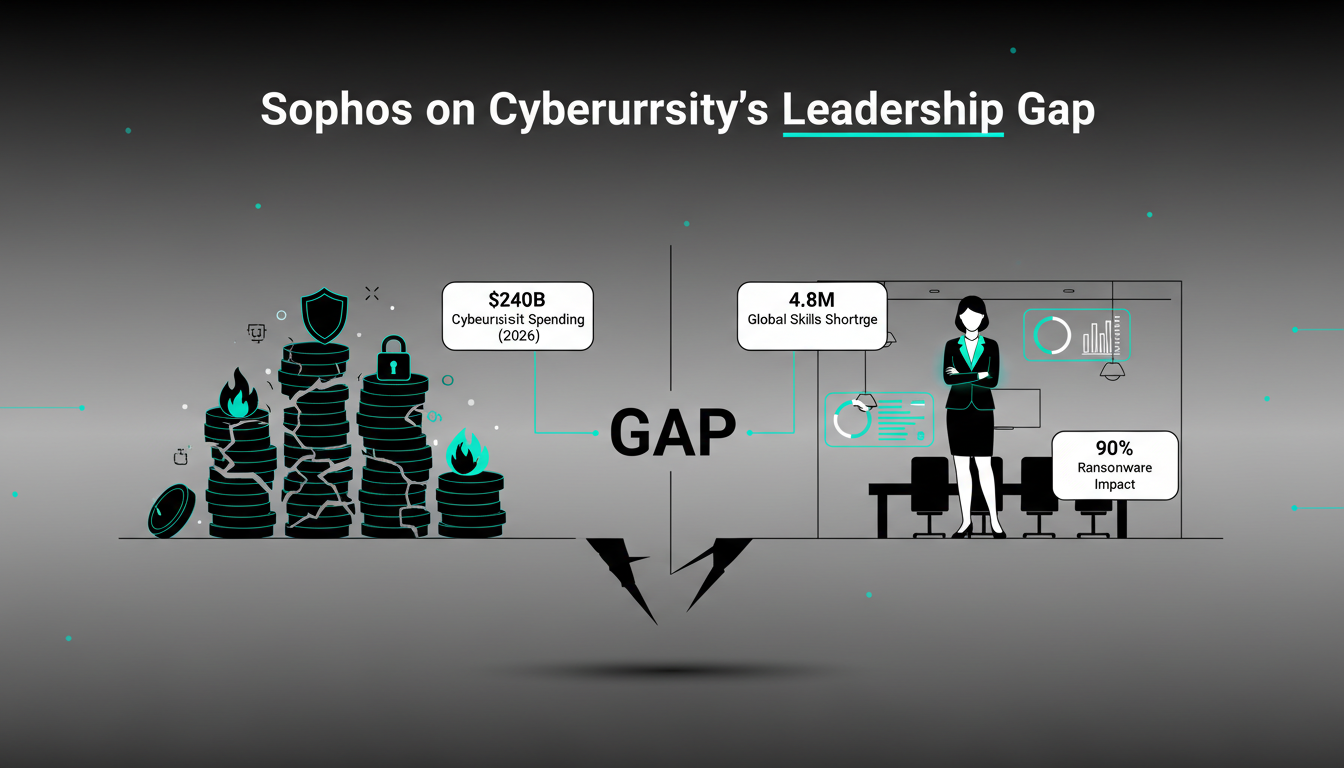
The cybersecurity landscape is at a critical crossroads, marked by a widening divide between unprecedented financial investments and persistently high risks. Sophos, a leading cybersecurity firm, has been vocal about this issue, arguing that the global spend exceeding $200 billion annually isn’t translating into meaningful risk reduction. Instead, the real shortfall lies in strategic leadership at the CISO (Chief Information Security Officer) level, where tactical tool deployment overshadows holistic strategy.
The Spending Surge
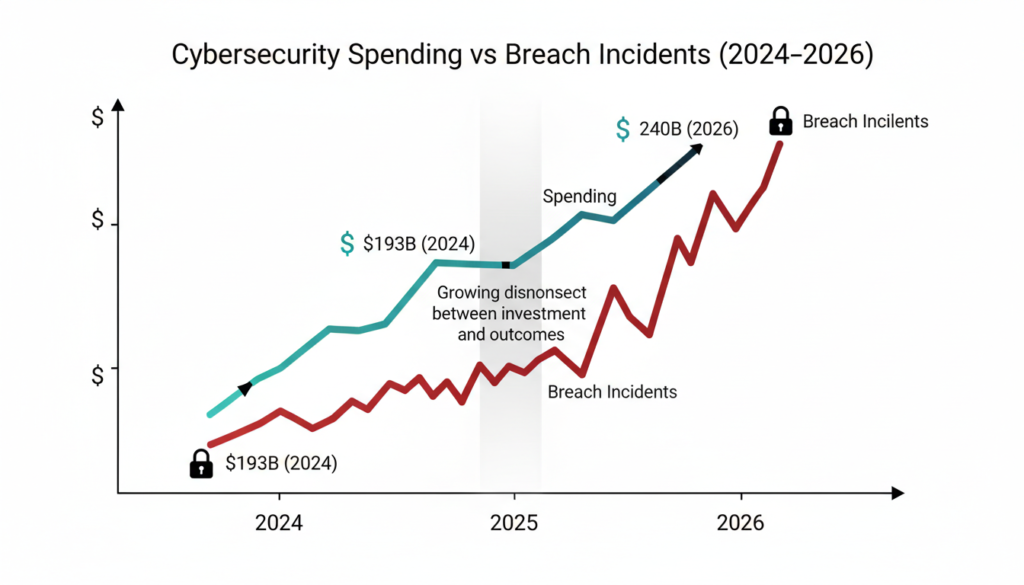
Global cybersecurity spending has skyrocketed, reaching $213 billion in 2025, a significant jump from $193 billion the previous year. Projections indicate it will climb even higher to around $240 billion by 2026, driven by escalating threats and regulatory pressures. Yet, this massive infusion of capital hasn’t stemmed the tide of breaches. The average cost of a data breach now hovers near $5 million, with some industries like healthcare and finance facing costs exceeding $10 million per incident. Sophos emphasizes that organizations are often just accumulating more tools firewalls, endpoint detection systems, and AI driven scanners without integrating them effectively. This leads to siloed security operations, increased alert fatigue, and operational complexity that hampers response times.
Ransomware remains the dominant menace, accounting for over 90% of incident response cases among midsized companies and about 70% for small businesses. Attackers frequently exploit unpatched vulnerabilities, which play a role in roughly one third of breaches, alongside weak or stolen credentials in nearly 40% of cases. Public sector entities and manufacturing firms are hit hardest, with downtime costs amplifying financial losses into the tens of millions. Sophos’ annual threat reports underscore how these attacks have evolved, incorporating sophisticated tactics like double extortion where data is both encrypted and leaked online for added pressure.
Why Tools Alone Fail
At the heart of the cybersecurity divide is a fundamental mismatch: abundant technology but deficient strategy. Even well resourced organizations struggle to measure the true effectiveness of their security controls, monitor shifting risk landscapes, or clearly articulate their security posture to boardrooms and executives. Tools are deployed reactively, often without a unifying framework, resulting in fragmented defenses. Sophos points to external remote access services such as firewalls, VPNs, and RDP as prime entry points, implicated in 56% of investigated incidents. Valid credentials fuel 41% of these initial accesses, highlighting failures in multi-factor authentication enforcement and privilege management.
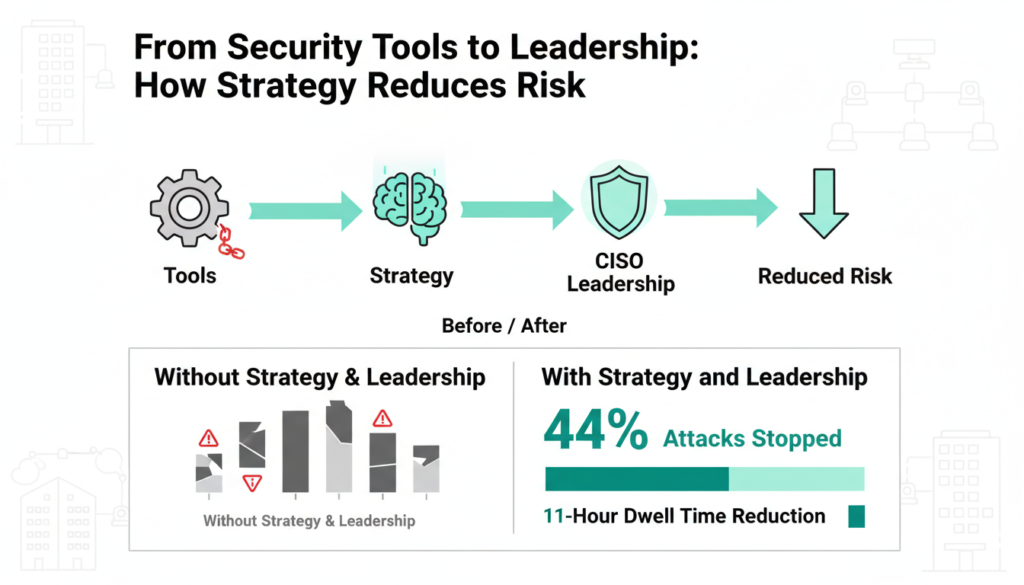
Attackers operate with alarming speed post-breach. The median dwell time before targeting critical assets like Active Directory is a mere 11 hours, giving defenders a narrow window to act. SaaS applications, cloud storage, and edge devices further complicate the picture, serving as vectors for phishing, malware distribution, and lateral movement. Sophos notes that in 2025, adversaries increasingly abused legitimate platforms for command and control, blending malicious activity with normal traffic to evade detection. This tool-centric approach also exacerbates the skills gap, as overworked SecOps teams drown in false positives, leading to burnout rates exceeding 50% in some surveys.
Moreover, the sheer volume of vendors averaging 50+ per enterprise creates integration nightmares and blind spots. Without CISO oversight, budgets balloon while coverage gaps persist, particularly in supply chain ecosystems where third party vulnerabilities cascade into major incidents.
CISO Shortage Crisis
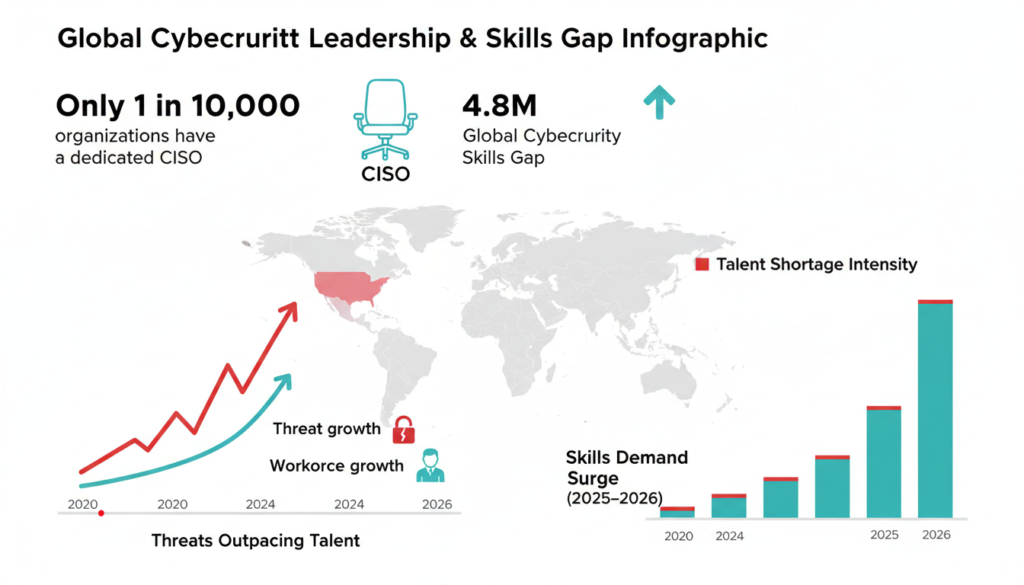
The leadership vacuum is stark: only about 1 in 10,000 organizations boasts a fully empowered CISO, leaving the majority to navigate threats with operational tactics alone. This scarcity is compounded by a global cybersecurity workforce gap of nearly 4.8 million professionals, a figure that’s grown despite aggressive hiring efforts. Burnout, high turnover (around 30% annually), and inadequate training pipelines mean response times lag, with mean time to detect (MTTD) averaging 200+ days in complex environments.
Sophos advocates for “CISO level outcomes” even in resource-strapped settings, emphasizing scalable leadership over headcount. Third party risks amplify this crisis; a single compromised vendor can unravel an entire network, as seen in high profile supply chain attacks affecting thousands. Smaller businesses, lacking in-house expertise, rely heavily on managed service providers (MSPs), yet even they struggle without strategic alignment. Regulatory mandates like GDPR, CCPA, and emerging AI security frameworks demand executive accountability, putting CISOs in the hot seat but many firms simply don’t have one.
Scaling Strategy Forward
Sophos is championing a shift from mere operations to proactive leadership, leveraging AI powered platforms for automated reporting, threat hunting, and risk quantification. Their approach has scaled protection to over 600,000 businesses via MSP channels, democratizing CISO expertise. In 2025, organizations using integrated strategies halted 44% of ransomware attacks before encryption a six year peak demonstrating tangible gains when tools align under strategy.
Essential steps forward include rigorous patch management (reducing exploit risks by up to 80%), robust credential hygiene with passwordless auth, and fostering collective defense models like information sharing alliances. Sophos recommends prioritizing high impact controls: segmenting networks, enforcing zero trust, and simulating attacks via red teaming. AI emerges as a force multiplier, predicting threats and prioritizing alerts, but only under human-led governance.
For CISOs and aspiring leaders, Sophos stresses board level communication translating tech risks into business terms like revenue impact and compliance fines. Training programs, certifications (e.g., CISSP, CISM), and mentorship pipelines are vital to close the talent chasm. As threats evolve with AI driven attacks and quantum risks on the horizon, bridging the spend-security divide demands visionary leadership that turns investments into resilience.
In summary, Sophos’ insights reveal that cybersecurity’s future hinges not on spending more, but spending smarter through elevated leadership. By emulating CISO strategies at scale, organizations can finally close the gap, transforming defense from reactive firefighting to strategic fortification.
Check out more on our blog page now → AI, Tech, Cybersecurity