WeRide continues to pioneer autonomous driving by leveraging AI for massive cost reductions and fleet growth. CEO Tony Han forecasts profitability by 2030, transforming urban mobility worldwide.
AI Slashes Data Expenses
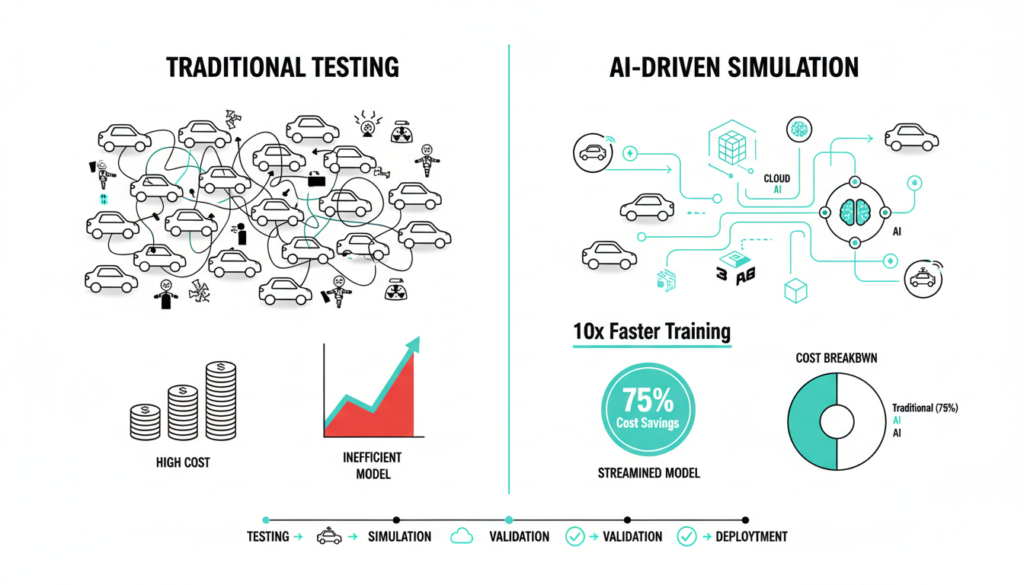
WeRide’s proprietary AI testing platform cuts data costs by 75%. It generates synthetic driving data, eliminating much of the need for costly real road miles logged by test vehicles.
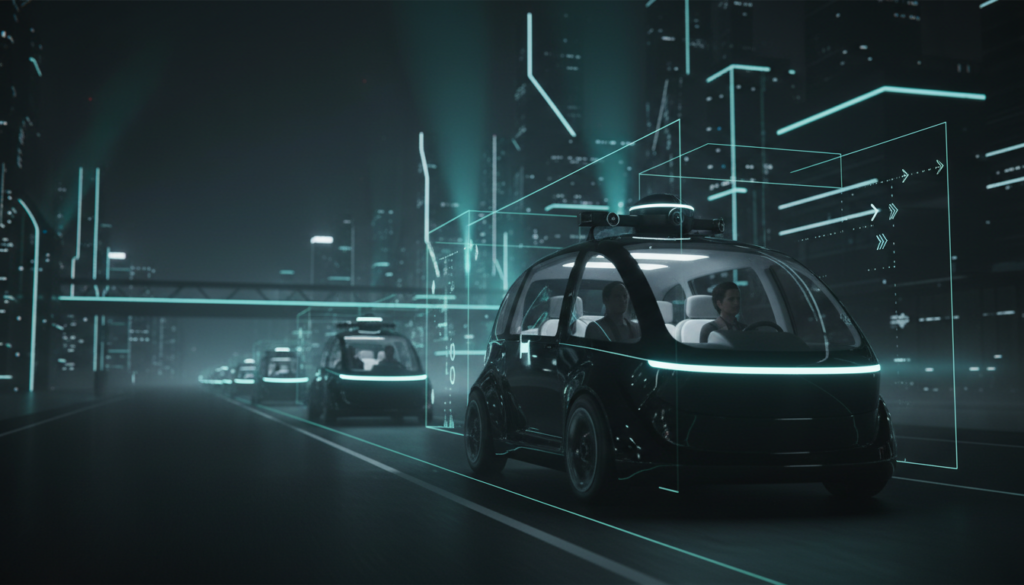
This innovation simulates hyper realistic urban chaos think sudden pedestrian crossings, erratic scooters, and monsoon downpours. Traditional methods demand fleets of human driven cars equipped with sensors, burning fuel and time; WeRide’s virtual realms train models 10x faster.
Beyond savings, the platform boosts safety. AI models iterate through millions of edge cases virtually, refining responses before deployment. This positions WeRide ahead in Level 4 autonomy, where vehicles operate without human intervention in complex environments.
Rapid Fleet Doubling Ahead
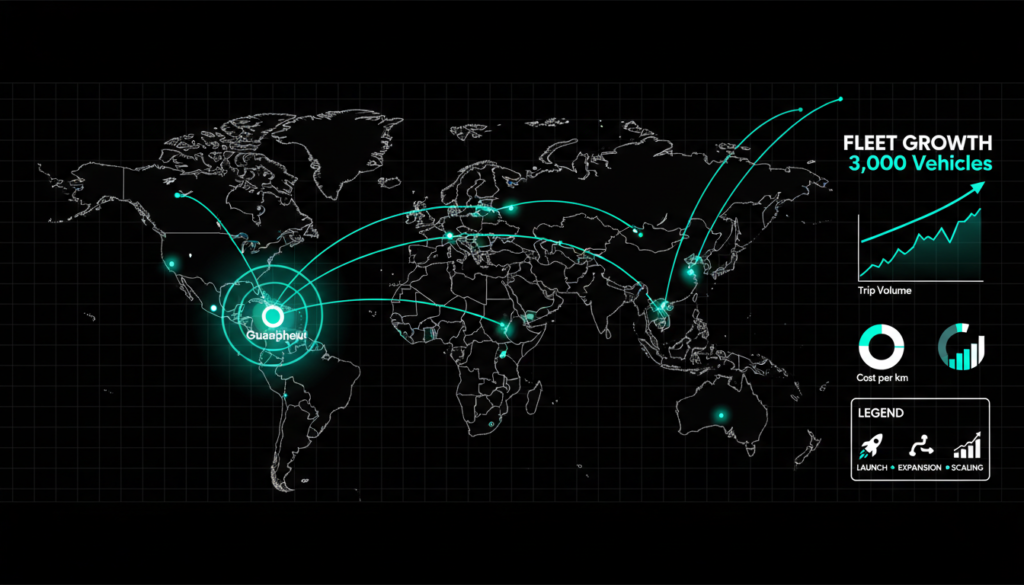
Target: 2,000-3,000 robotaxis by end-2026, doubling current operations. Abu Dhabi debut with Uber proves international scalability, handling peak hour downtown routes flawlessly.
Permits across eight countries unlock diverse markets from Guangzhou’s density to Middle Eastern expanses. Each new city adds data variety, strengthening AI resilience against local quirks like roundabouts or wildlife.
Economically, break even nears in select zones. Low per mile costs (under $0.30) undercut human taxis, drawing riders via apps. WeRide’s GXR model, purpose built for ridesharing, maximizes uptime with swappable batteries.
NVIDIA Powers Next Gen Compute
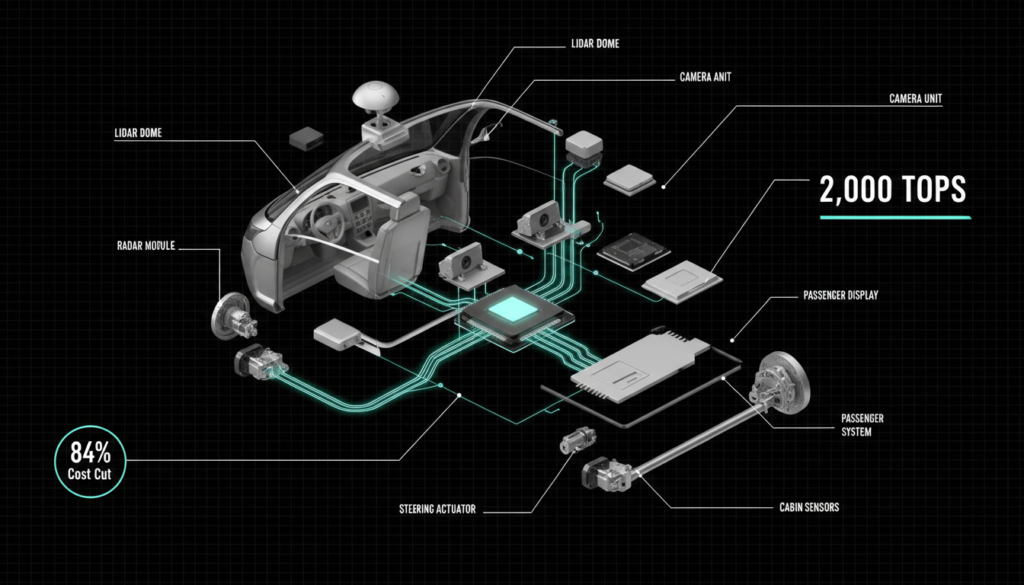
Dual NVIDIA DRIVE AGX Thor chips deliver 2,000 TOPS per GXR vehicle. This halves Level 4 hardware costs and slashes total ownership by 84% through efficiency.
HPC 3.0 clusters process petabytes of fleet data centrally, pushing OTA updates overnight. Imagine: Nightly AI tweaks based on global rides, deployed by dawn human drivers can’t compete.
GENESIS simulator blends physics engines with generative AI for photoreal worlds. It recreates rare events like black ice or protests, training models humans rarely encounter.
Profit Path Crystal Clear
Tony Han’s 2030 profitability call rests on diluted fixed costs. As fleets scale, per vehicle AI expenses plummet, margins soar past 30%.
Revenue diversification shines: Ridesharing core, plus logistics pilots and tech licensing. Uber tie ups multiply reach without owned fleets.
Unit economics evolve: Gen 1 robotaxis hit profitability; Gen 2 promises 2x efficiency via next gen sensors.
China’s Robotaxi Supremacy
Regulatory green lights fuel dominance national AI strategies prioritize autonomy. Dense populations provide endless testbeds; WeRide logs billions of virtual + real miles yearly.
Rivals like Baidu Apollo Go, Pony.ai complement, creating ecosystem effects. Shared mapping data accelerates all, but WeRide’s vertical integration (hardware to cloud) edges ahead.
Safety stats dazzle: Incident rates 10x below human averages. AI excels at prediction anticipating swerves seconds early via multi sensor fusion.
Tech Stack Deep Dive
Sensors: 5D LiDAR, 12 cameras, radar array for 360° perception up to 300m. Edge AI processes locally, cloud syncs for fleet learning.
Software: WeRide One unifies planning/control. Modular architecture swaps modules for regions e.g., snow-handling for northern ops.
Energy: Efficient motors yield 400km range, fast-swap stations cut downtime to 5 minutes.
Global vs. Local Challenges
US hurdles: Strict regs demand fenced zones; high wages inflate ops. China embraces open streets, low costs enable scale.
WeRide adapts: Abu Dhabi tests heat/dust resilience; Europe pilots eye pedestrian heavy zones.
Public trust builds via ride alongs, transparent dashboards showing AI confidence scores.
Sustainability Edge
Robotaxis slash emissions 70% vs. personal cars optimized routing, EV powertrains. Fleet sharing maximizes utilization, curbing urban sprawl.
Data centers green up via NVIDIA’s efficient chips, renewable-powered clouds.
Future: Hydrogen pilots for ultra long hauls, V2G charging feeds grids during peaks.
Competitive Landscape
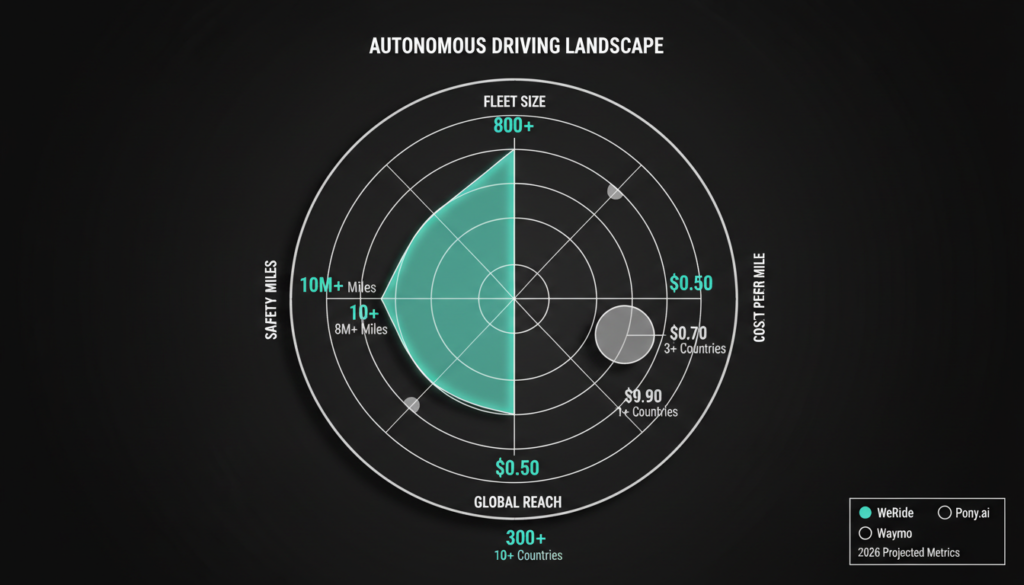
Waymo leads US but scales slowly; Cruise rebuilds post incidents. WeRide’s cost edge targets $1/km globally.
Pony.ai, AutoX nip heels in China. Partnerships (Uber, NVIDIA) widen moats.
M&A potential: WeRide eyes mapping startups, logistics tie ins.
2030 Vision Unfolds
Exponential ramps: 10k vehicles by 2028, IPO fuels hypergrowth. Cities transform fewer parking lots, seamless first/last-mile.
Tony Han: “AI isn’t just driving; it’s rearchitecting transport.” Profitability unlocks R&D for robotics beyond wheels.
Industry S-curve accelerates: From niche to 50% rideshare share.
Check out more on our blog page now → AI, Tech, Cybersecurity