
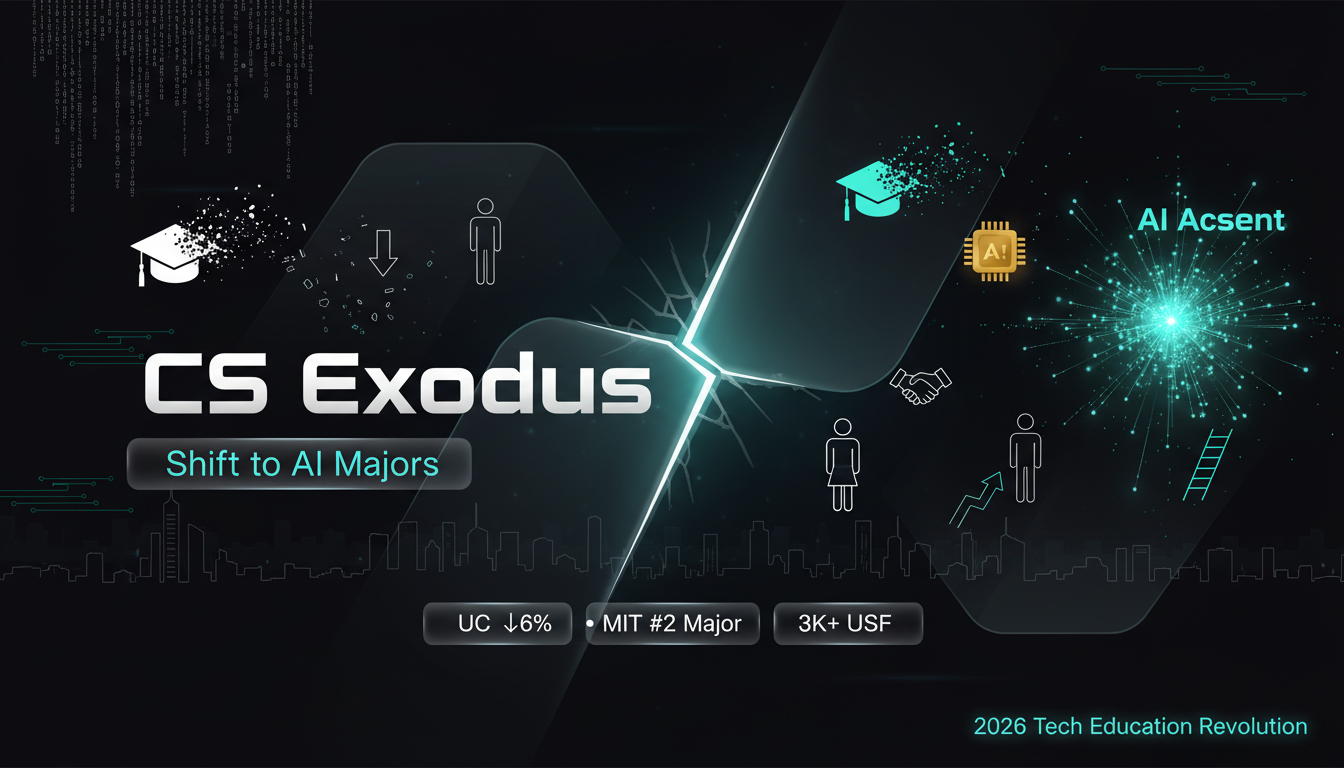
Computer science(CS) enrollment has notably declined across major US universities, particularly at University of California campuses, signaling the first significant drop since the dot com crash over two decades ago. This fall, UC system wide CS enrollment fell 6% following a 3% decline in 2024, even as overall national college enrollment climbed 2%. Far from abandoning technology altogether, students appear to be strategically shifting toward specialized AI programs, driven by evolving job markets, AI’s explosive growth, and concerns over traditional CS saturation.
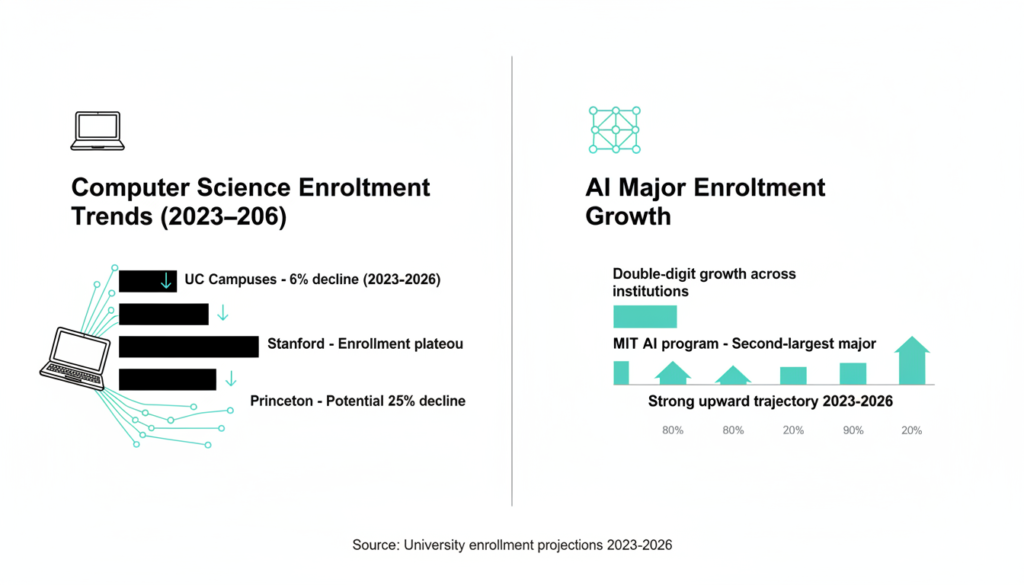
UC Campuses Lead the Decline
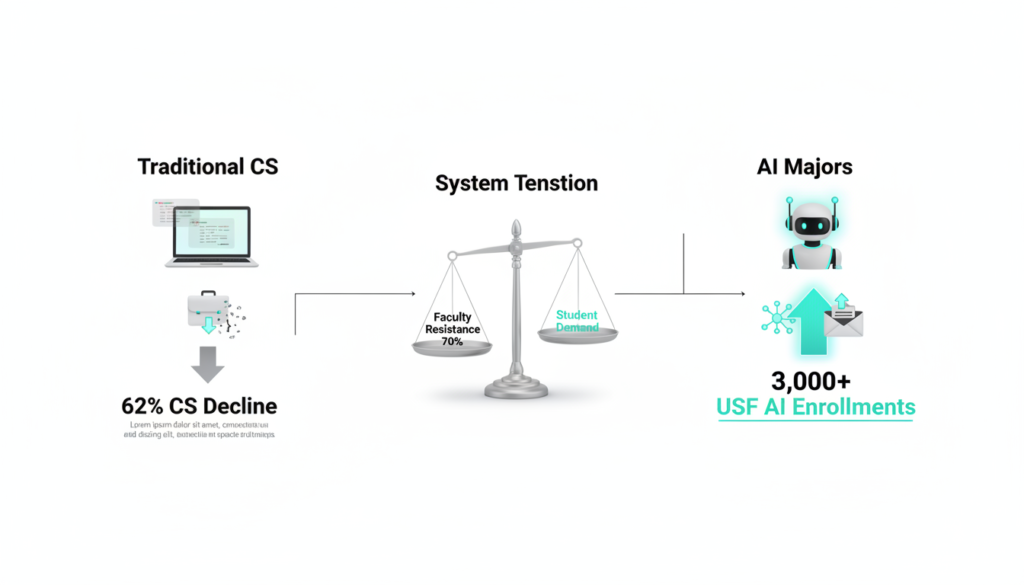
University of California schools experienced the sharpest CS drops this fall, with UC San Diego standing alone as an exception due to its pioneering dedicated AI major launch. Data from the Computing Research Association reveals that 62% of computing programs nationwide reported undergraduate enrollment declines this term. Compounding this, college deposit data indicates CS major commitments plunged over 25% year over year across both public and private institutions.
These trends stem from challenging job prospects for recent CS graduates, marked by widespread tech layoffs and an oversupply of entry level software engineering roles that have eroded confidence in traditional paths. Parents, previously vocal advocates for CS degrees, are now redirecting their children toward fields perceived as more resilient to AI automation, such as mechanical and electrical engineering, according to admissions consultant David Reynaldo. This parental influence underscores a broader recalibration in career advice amid rapid technological disruption.
AI Programs Explode in Popularity
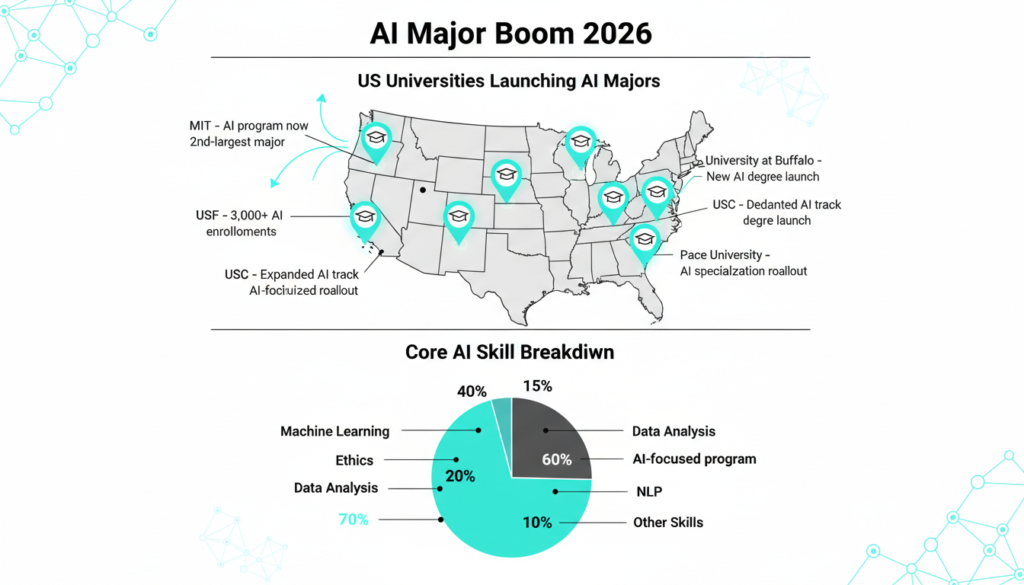
American universities are responding aggressively by rolling out dedicated AI degrees to capture this momentum. MIT’s “AI + Decision Making” major has skyrocketed to become the campus’s second most popular undergraduate program. Similarly, the University of South Florida’s freshly launched AI and cybersecurity college attracted over 3,000 students in its inaugural fall semester alone. The University at Buffalo’s new “AI and Society” department secured more than 200 applicants for its seven specialized undergraduate tracks even before officially opening.
Looking ahead to fall 2026, institutions like USC, Columbia University, Pace University (emphasizing machine learning and AI ethics), New Mexico State University, and Stevens Institute of Technology plan to introduce bachelor’s programs in AI. These initiatives reflect double digit enrollment surges fueled by lucrative salary prospects, often exceeding $100,000 starting offers, and by booming demand for expertise in machine learning, natural language processing, and ethical AI deployment. Elite schools such as Stanford and Carnegie Mellon are bolstering their offerings with expanded tracks in AI applications, societal impacts, and interdisciplinary ethics.
China’s AI Education Edge
In stark contrast, China has aggressively positioned AI as foundational infrastructure rather than a disruptive threat. Nearly 60% of Chinese students and faculty now integrate AI tools multiple times daily, with universities like Zhejiang mandating AI coursework across curricula and Tsinghua University establishing full interdisciplinary AI colleges. Leading institutions including Peking University, Shanghai Jiao Tong University, Westlake University, and South China University of Technology excel in specialized programs blending AI with smart manufacturing, advanced robotics, and ethical frameworks, often in close partnership with industry giants like Huawei and Alibaba.
This proactive approach projects China’s AI market to expand at 120% annually, drawing global talent through its emphasis on hands on skills, real world industry collaborations, and scalable infrastructure. By embedding AI literacy as a core competency from day one, Chinese higher education is outpacing Western adaptations, creating a talent pipeline that’s already reshaping global tech leadership dynamics.
Challenges in the Transition
The pivot isn’t seamless everywhere, with faculty resistance emerging as a key bottleneck. At UNC Chapel Hill, Chancellor Lee Roberts a former finance executive new to academia encounters significant pushback despite bold moves like merging two schools into an AI-centric entity and appointing a dedicated vice provost for AI integration. Roberts candidly observes that while no employer will caution graduates against using AI tools professionally, some professors currently convey that message implicitly through rigid policies.
Outdated debates over banning tools like ChatGPT have given way to urgent imperatives for rapid AI curriculum integration, lest universities lose prospective students to more nimble competitors. Supporting this shift, labor market projections from the Bureau of Labor Statistics forecast above average growth for AI and data science roles, with new Stevens Institute graduates poised for starting salaries around $92,000 or higher, underscoring the tangible economic incentives.
What’s Next for Tech Education?
This phenomenon represents less a complete exodus from computing than a deliberate pivot toward AI fluency, essential in an economy dominated by frameworks like TensorFlow, PyTorch, and large language models. Forward thinking universities prioritizing swift AI program launches, robust industry partnerships, and comprehensive ethical training stand to thrive, potentially emulating China’s decisive model.
Promising early indicators include UC Berkeley’s AI integration via student petitions and Northeastern University’s fusion of AI with business disciplines. As AI continues reshaping job landscapes automating routine coding while amplifying demand for strategic oversight anticipate further migrations, with traditional CS evolving into versatile hybrid degrees. For readers immersed in AI and cybersecurity fields, this signals an opportune moment to upskill, mentor emerging talent, or capitalize on these trends through informed investment and career guidance.
Check out more on our blog page now → AI, Tech, Cybersecurity