

Fei Fei Li’s innovative AI startup, World Labs, just landed a massive $200 million investment from Autodesk, the powerhouse in design software. This move kicks off a partnership aimed at blending World Labs’ cutting edge world models AI that crafts and understands immersive 3D spaces with Autodesk’s pro level tools. They’re starting with entertainment applications, but the potential spans far beyond.
What Are World Models?
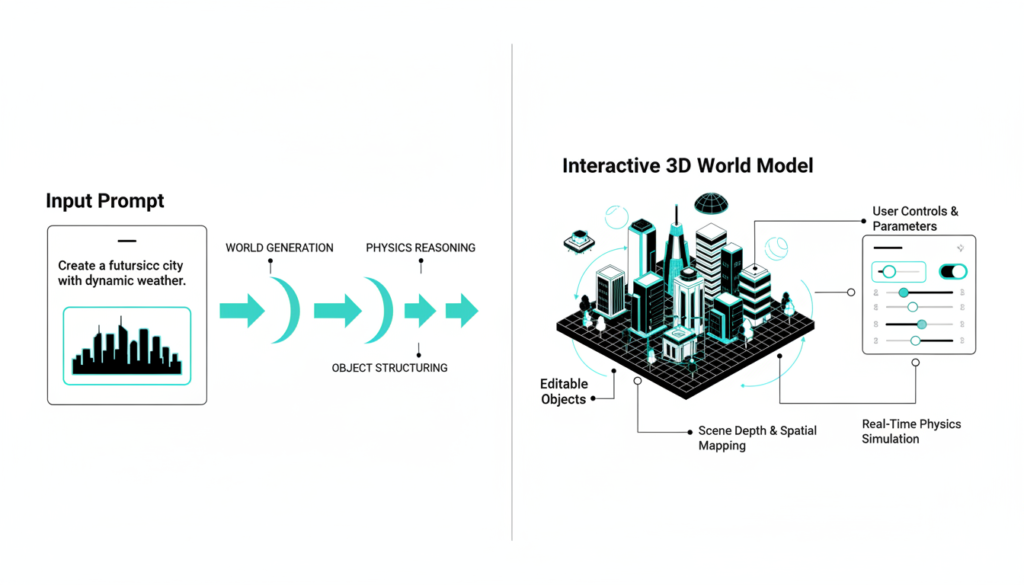
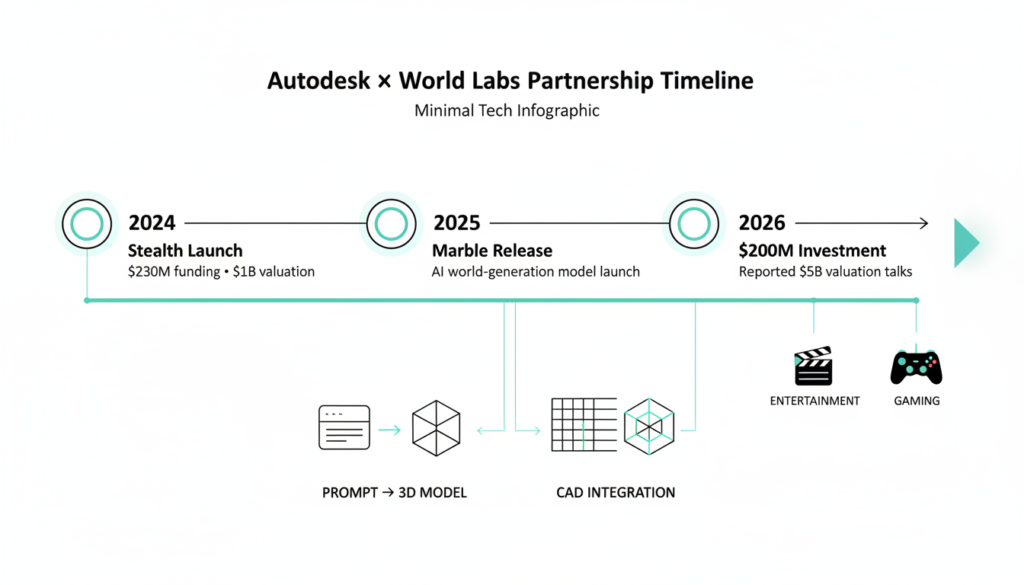
World models represent the next leap in AI, going beyond flat images or text to build dynamic 3D environments that obey real world physics, geometry, and interactions. Unlike traditional generative AI that spits out static pictures, these systems let users generate editable scenes like a bustling city street or an intricate office layout that you can tweak, explore, and export. World Labs’ flagship, Marble, launched in November 2025, makes this accessible for creators.
Think of it as giving AI a sense of space and time, much like how humans visualize before building. Fei-Fei Li, often called the “godmother of AI” for her pioneering work in computer vision at Stanford, co-founded World Labs to push this boundary. Their tech could revolutionize how we design everything from video games to virtual reality experiences.
Autodesk’s Big Bet on Spatial AI
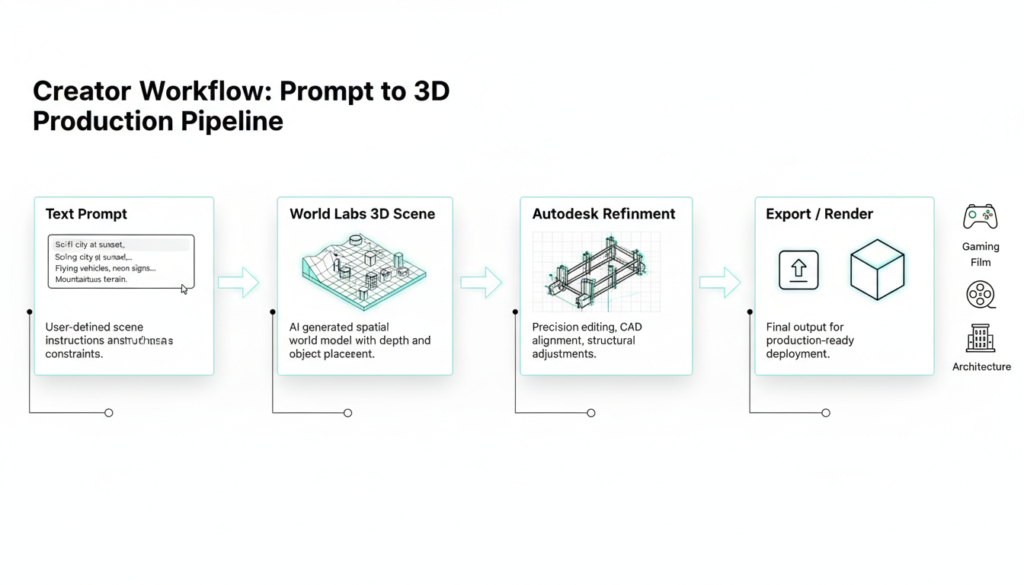
Autodesk, known for software like AutoCAD that powers architecture, engineering, and manufacturing, sees world models as a perfect fit for its ecosystem. This $200M isn’t just cash it’s a strategic alliance where Autodesk advises World Labs and both teams collaborate on research. Daron Green, Autodesk’s chief scientist, envisions seamless workflows: sketch a rough office in World Labs, then refine desks or lighting with Autodesk precision.
The investment aligns with Autodesk’s “neural CAD” push generative AI trained on 3D geometry to create functional designs that work in reality, not just look pretty. No data sharing here, but model integration could mean dropping Autodesk objects into AI generated worlds or vice versa. It’s early days, yet this combo promises to supercharge creative pipelines.
From Stealth to $5 Billion Dreams
World Labs burst from stealth in 2024 with $230 million at a $1 billion valuation, drawing big names in tech. Now, amid talks for a $5 billion round, this Autodesk deal validates their tech’s market fit. It’s part of a funding surge as investors pile into spatial AI amid booming VR/AR demand.
Li’s vision? “Building physical AI that augments human creativity.” Autodesk’s Andrew Anagnost echoes this, saying AI should expand imagination through geometry and simulation. Together, they’re tackling the “semantic, spatial, and physical” frontiers Li champions.
Entertainment First, Then Everywhere
Media and gaming lead the charge think animating characters in physics aware worlds, not rigid scripts. Autodesk already trains models for character animation, mimicking real world responses like terrain navigation. Pair that with World Labs, and you get dogs chasing balls in custom environments, not isolated loops.
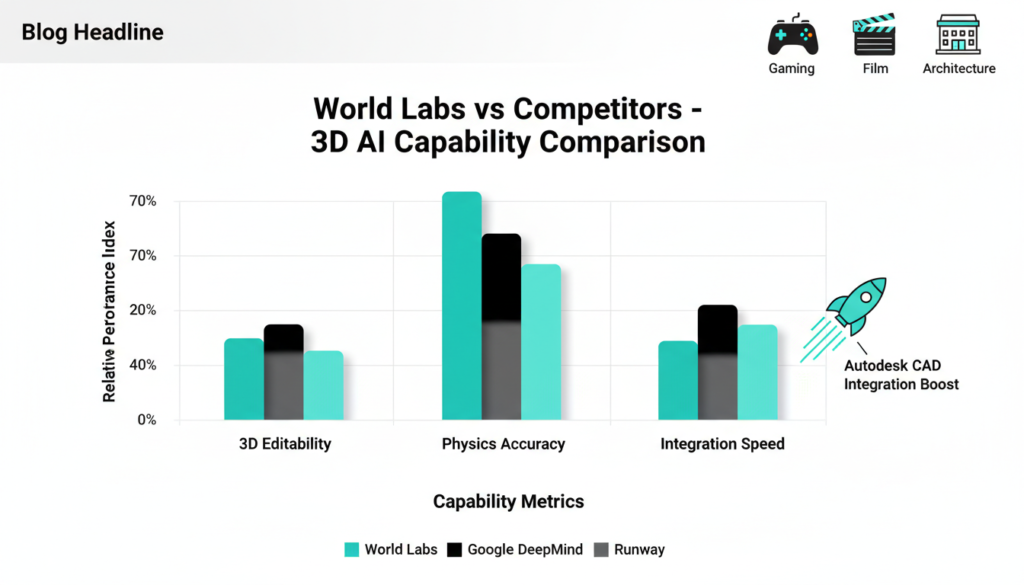
Competitors like Google DeepMind’s Project Genie and Runway’s world models eye similar plays, but Autodesk’s design dominance gives World Labs an edge in pro workflows. This could extend to construction, where AI simulates builds before a brick moves.
Why This Matters for Creators
For designers, builders, and storytellers, this fusion means faster ideation. Start with a text prompt for a sci-fi city, refine in CAD, test physics all in one flow. It lowers barriers for indie devs while empowering studios. As AI evolves, expect hybrid tools blending LLMs, world models, and neural CAD for holistic designs.
Beyond entertainment, applications loom in autonomous vehicles (simulating drives), robotics (training in virtual worlds), and urban planning (modeling cities). World Labs’ multimodal approach handling vision, motion, interaction positions it as a leader. With Autodesk’s reach, adoption could skyrocket.
Future of Physical AI
Li nails it: “AI must understand worlds, not just words.” This partnership accelerates that, merging Autodesk’s simulation prowess with World Labs’ generation magic. As valuations climb and tools mature, expect 3D workflows to feel as intuitive as sketching on paper but infinitely scalable.
Challenges remain, like computational demands and ensuring models generalize across industries. Yet, with $200M fueling R&D, World Labs is primed to deliver. Keep eyes on entertainment pilots they’ll preview the physical AI era.
Check out more on our blog page now → AI, Tech, Cybersecurity