
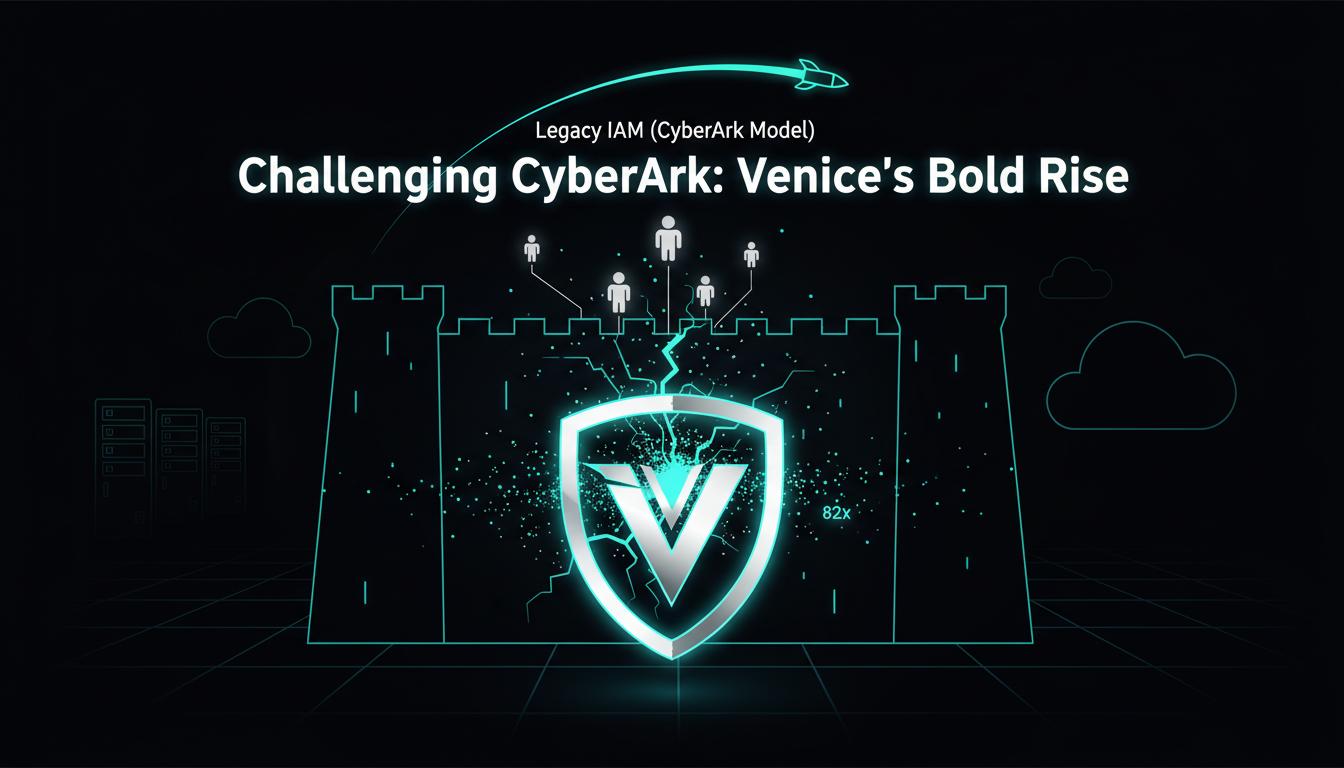
The digital world is facing a massive permissions crisis. AI agents, chatbots, and automated systems are exploding online, each needing secure identities and access controls that traditional tools can’t handle efficiently.
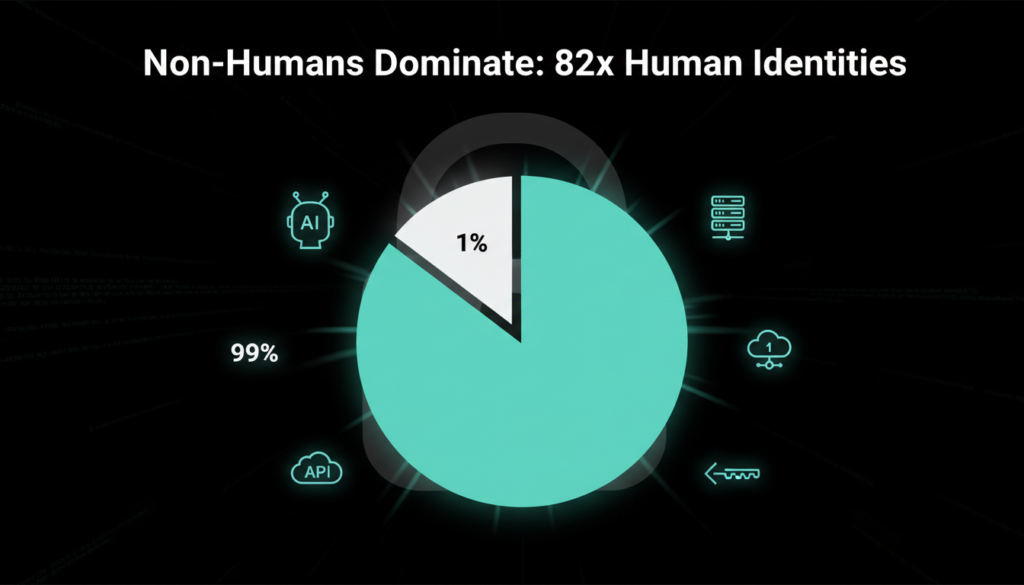
Non human identities now outnumber humans by ratios as high as 82 to 1. A single AI customer service agent alone might require 15-20 distinct machine identities, overwhelming legacy systems built for human users.
Venice Emerges from Stealth
Venice, a 35 person Israeli American startup (once called Valkyrie), claims it’s already replacing giants like CyberArk and Okta at Fortune 500 companies. Founded just over two years ago, it raised $25 million in Series A funding in December 2025.
IVP led the round, with Index Ventures participating from its prior $8 million seed. This cash fuels Venice’s push into a crowded market where rivals like Persona ($200M Series D), Veza ($108M Series D), and GitGuardian ($50M recent raise) dominate headlines.
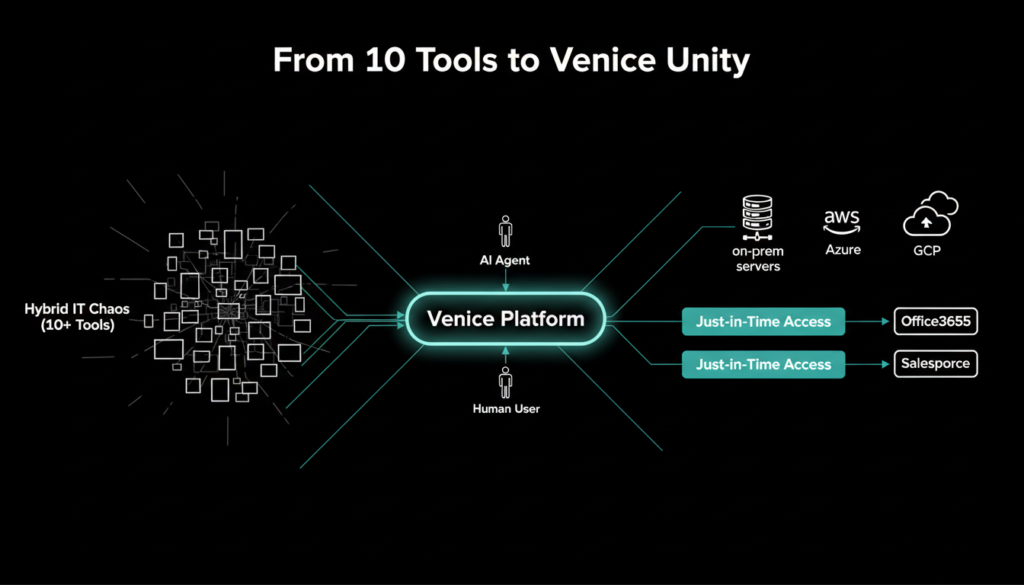
What sets Venice apart? It tackles both cloud and on-premises environments seamlessly. Many enterprises still run legacy systems alongside modern clouds, making hybrid support a game changer for smoother migrations and fewer headaches.
Early adopters love how Venice cuts through tool sprawl. Most IAM teams juggle 10 or more disjointed solutions, leading to gaps and inefficiencies. Venice consolidates everything into one SaaS platform for privileged access across servers, SaaS apps, and infrastructure for humans, machines, and AI alike.
Rotem Lurie’s Elite Path
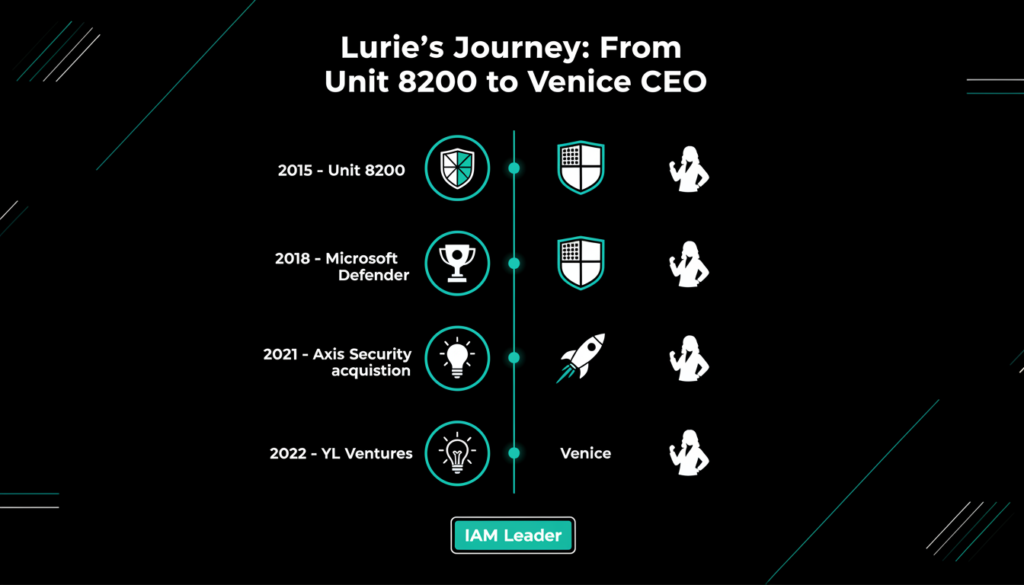
At the helm is 31 year old CEO Rotem Lurie, whose background reads like a venture capitalist’s dream. Born to Israeli programmer parents her mother was among the country’s first female software engineers Lurie served 4.5 years as a lieutenant in Unit 8200, Israel’s elite intelligence unit.
She then joined Microsoft as a product manager, helping build what became Defender for Identity. Lurie was Axis Security’s first product hire, a startup acquired by Hewlett Packard Enterprise for $500 million in 2022.
A short stint at YL Ventures, a cybersecurity VC firm, opened her eyes. “Every day, I met teams of young boys building to be acquired,” she said candidly. Their focus on quick flips not market dominance inspired Venice’s long term strategy.
Her network runs deep: investors include Wiz CEO Assaf Rappaport and CMO Raaz Herzberg, former Microsoft internship colleagues. VCs compare her audacity to early CrowdStrike or Palo Alto Networks, betting big on massive problems from day one.
Technical Superiority Explained
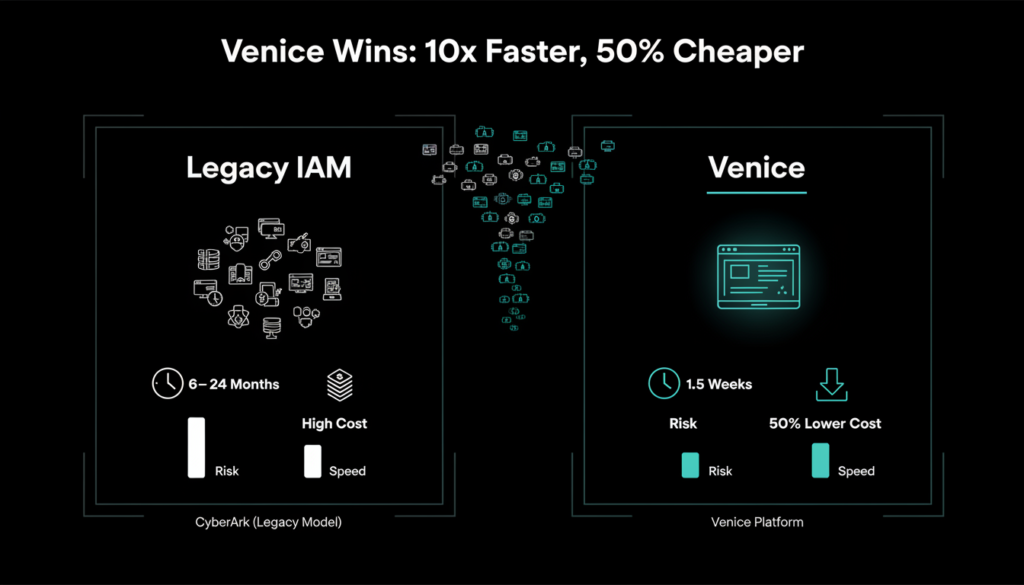
CyberArk leads with 38% of the privileged access management (PAM) market, earning top marks in Forrester’s Q3 2025 Wave through AI upgrades and acquisitions like the $1.54 billion Venafi/Zilla deal. But enterprises still struggle with fragmented tools, drawn out deployments lasting 6-24 months, and steep consultant fees.
Venice flips the script using AI automation to shrink installations to just 1.5 weeks. It’s fully replacing incumbents at Fortune 500 and 1000 clients, including a 170 year old public manufacturer and a global music powerhouse though names stay off-record.
Savings don’t come from undercutting prices. Instead, Venice eliminates overhead like endless professional services. Its core: just in time permissions tailored to the user, task, and moment, blocking breaches from stolen credentials.
IVP partner Cack Wilhelm highlights AI agents as the urgency driver. “If everyone gets tens of agents, we need identity that adapts beyond static IT pros.” Venice’s platform delivers exactly that, with plans to expand into developer tools and deeper cloud integrations.
IAM Market’s Massive Growth
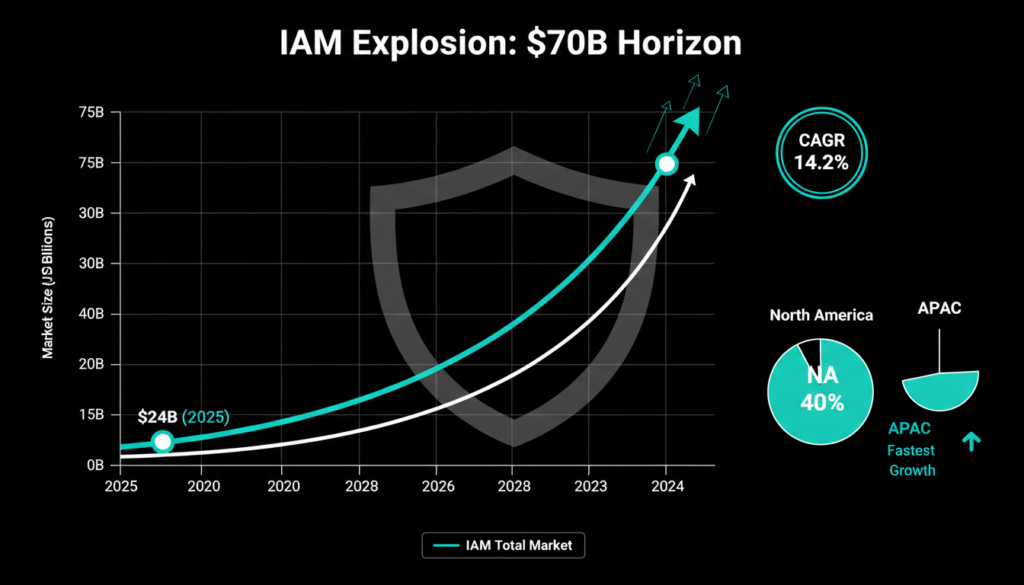
Identity and access management spending topped $24 billion in 2025, up 13% year over year. Projections show $24.3 billion to $24.8 billion in 2026, with a 14-15% CAGR pushing toward $70 billion-plus by 2034.
The PAM segment alone aims for $5.95 billion by 2031, fueled by Zero Trust mandates, AI driven identities, and regulations like GDPR and HIPAA. Cloud IAM grows fastest for its scalability, while North America holds the largest share and Asia Pacific accelerates.
Surveys reveal 87% of companies plan IAM switches, with 58% prioritizing non human security gaps. Provisioning leads components, enhanced by AI/ML for real time threat detection. Challenges like legacy integration and talent shortages persist, but zero trust architectures offer granular fixes.
Big players Okta, Microsoft Azure AD, IBM compete fiercely, yet agile startups like Venice carve niches through hybrid prowess and speed.
Diverse Team Drives Success
Venice splits operations: R&D in Israel, go to market in North America. CTO Or Vaknin teams up with Lurie on tech vision.
Standout stat: nearly 50% women employees in cybersecurity’s notoriously male dominated field. “You can’t envision what you haven’t seen,” Lurie notes, crediting role models for drawing diverse talent naturally.
This balance sparks fresh innovation, reflecting her own path as often the lone woman in tech rooms. It positions Venice not just as a tech leader, but a cultural one too.
Can Venice Dominate IAM?
Venice enters with a two year head start and blue chip wins, but faces deep pocketed foes. Will IAM consolidate around one or two giants, or support multiple winners amid AI fragmentation?
Watch for ARR growth, customer logos, certifications like SOC 2 and ISO 27001, and analyst love. Non-human identities demand dynamic controls as agentic AI redefines security perimeters.
Enterprises crave resilience against credential theft. Venice’s unification makes it a PAM contender, potentially crowning disruptors in this booming space.
Check out more on our blog page now → AI, Tech, Cybersecurity