

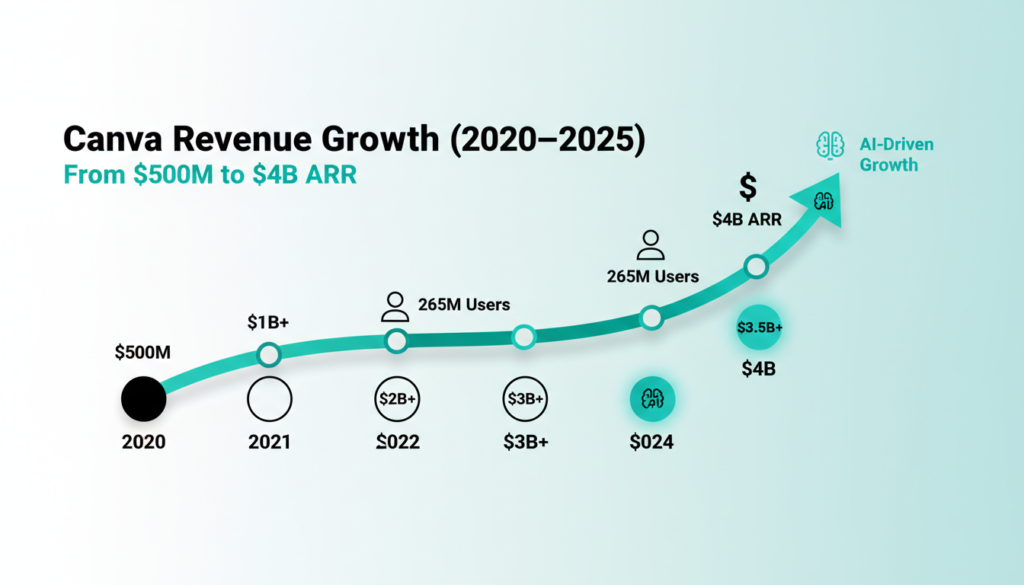
Canva wrapped up 2025 with stellar growth, hitting $4 billion in annual recurring revenue (ARR) thanks to booming AI tool adoption. Monthly active users (MAUs) soared 20% to over 265 million, while paid subscribers topped 31 million. This surge reflects Canva’s smart pivot to AI driven design, appealing to creators from casual bloggers to enterprise teams worldwide.
Founded in 2013 by Melanie Perkins, Cliff Obrecht, and Cameron Adams, Canva started as a simple drag-and-drop editor to democratize design. By late 2025, its user base and revenue trajectory positioned it as a unicorn powerhouse, outpacing many legacy players in visual content creation.

Explosive User Growth
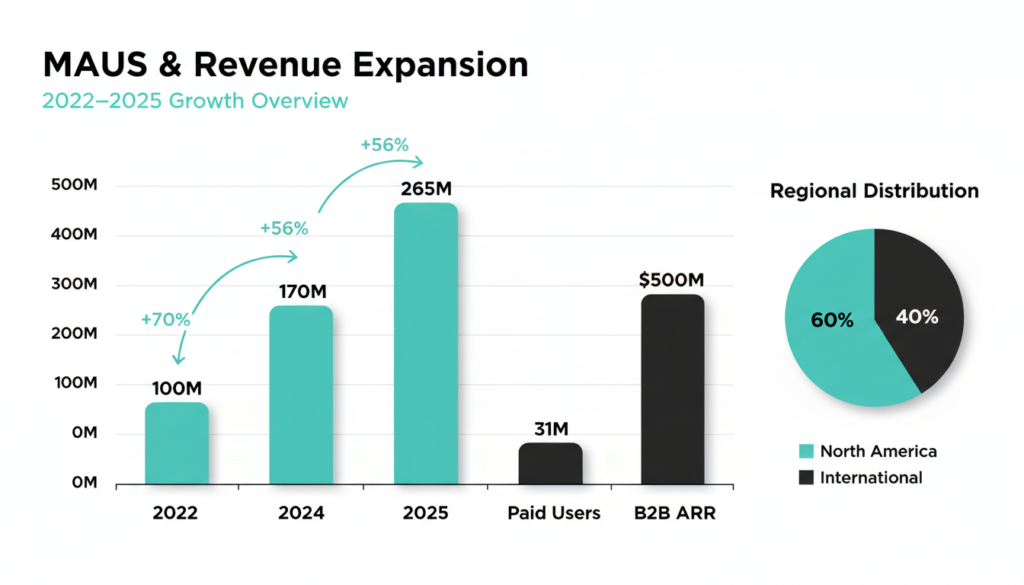
Canva’s MAUs reached 265 million by end 2025, a sharp jump from 220 million in late 2024 and 135 million in 2023. This growth stems from intuitive free tools that hook users, converting them to 31 million paid accounts. The B2B side exploded too teams with 25+ seats doubled to $500 million ARR, now comprising 20% of total revenue.
North America drives most business at around 60%, but global expansion accelerates via tiered pricing. Affordable plans in markets like Pakistan, Uruguay, Morocco, and Jamaica slash barriers, boosting conversions by tailoring costs to local economies. Enterprise deals average higher values post 2024 price tweaks, up 66%, fueling profitability across eight straight years.
From 60 million users in 2021 to today’s scale, Canva adds tens of millions annually, with 2023 alone netting over 60 million newcomers. This retention magic comes from collaborative features like real time editing, perfect for remote teams and bloggers crafting SEO visuals.
AI Innovations Fuel Boom
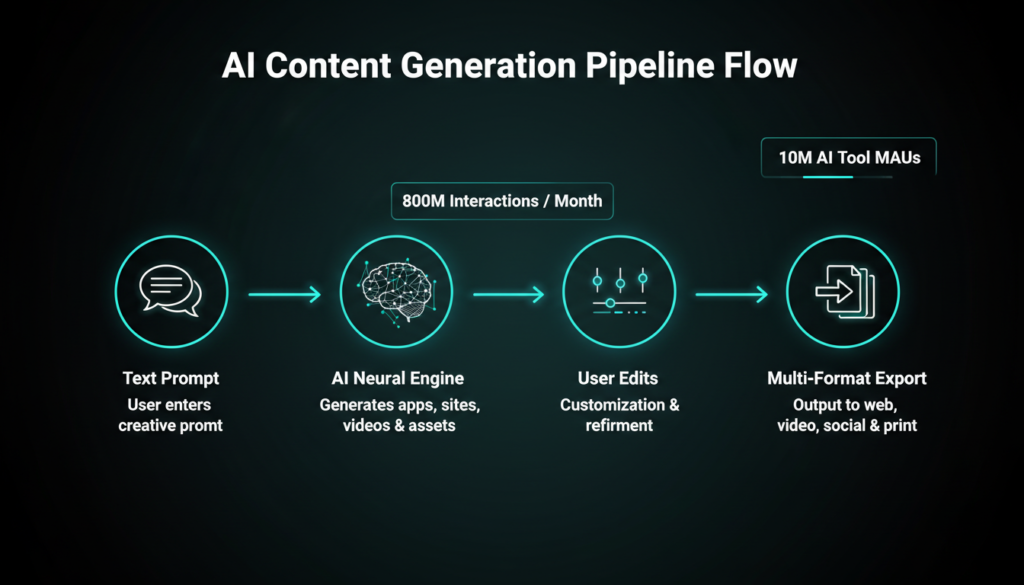
Canva’s AI push pays dividends: Magic Studio logs 800 million monthly interactions, up 700% year over year. The AI mini apps and website builder, launched in 2025, now serves 10 million MAUs, letting anyone prompt designs from scratch. Co founder Cliff Obrecht calls it a “design agency in your pocket,” inverting the platform to AI first with design as a layer like Cursor for code, but visuals.
Key features include one click video edits, background removal, and generative fills, slashing creation time by 80% for users. Last year’s additions like AI coding aids and spreadsheets extend beyond graphics into full workflows, rivaling pro suites without the learning curve. For content creators, this means faster blog thumbnails, infographics, and social assets.
Over 50 AI tools now power 70% of designs, with enterprise users leveraging Brand Kits and custom templates at scale. This innovation edge keeps engagement high, as free tiers tease premium magic.
Navigating Fierce Competition
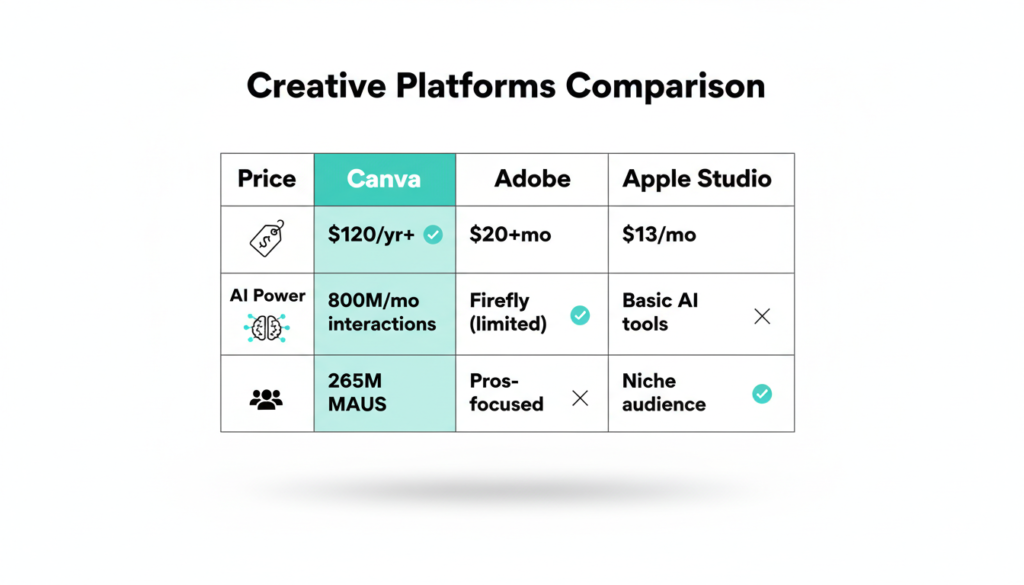
Canva battles Adobe’s powerhouse ecosystem, Freepik’s stock libraries, and Apple’s $12.99/month Creator Studio bundling Final Cut Pro, Logic Pro, and more. Yet Canva wins with accessibility web/mobile sync, no installs, and AI simplicity for non designers. Adobe suits pros; Canva empowers 99% who aren’t.
Apple’s bundle targets creators but lacks Canva’s collaboration and template library of billions. Freepik offers assets, but Canva integrates creation seamlessly. With 240-265 million MAUs, Canva’s network effect sharing, remixing creates stickiness rivals can’t match.
For bloggers, Canva’s edge shines in rapid iteration: SEO optimized images in minutes, A/B testing visuals effortlessly. This democratizes pro results, growing its moat.
LLM Referrals Supercharge Traffic
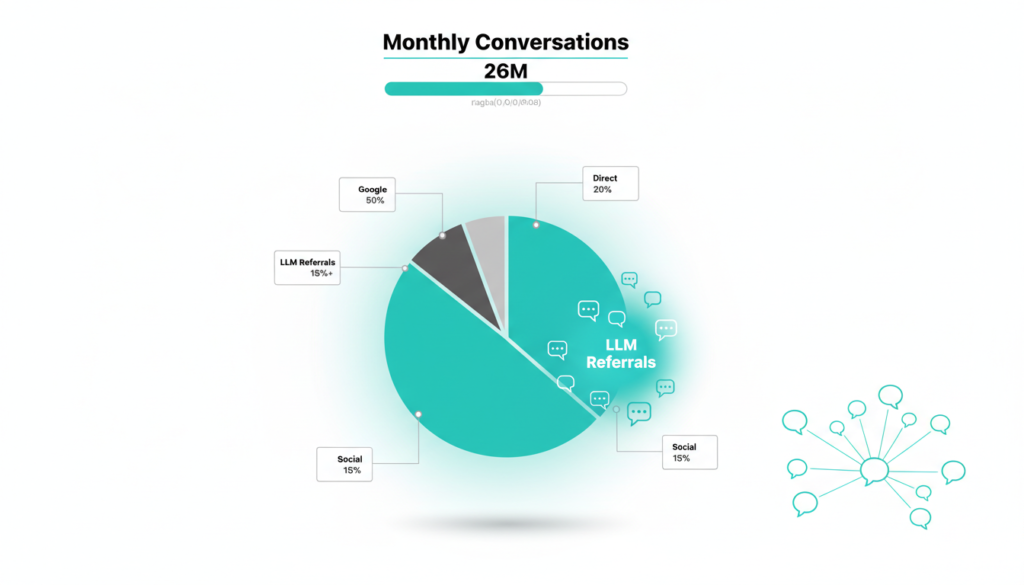
LLM integrations shine: 26 million ChatGPT conversations with Canva’s app by October 2025, top-10 referral domain. Double digit traffic from AI chats like Claude mirrors early Google SEO parse intent, deliver editable templates. Obrecht invests heavily in LLM surfacing and SEO for top funnel dominance.
This shift means prompts like “blog header” land users in Canva editors instantly. With Google still at 50%, LLMs add 15%+ and rising, blending search with generation. For tech bloggers, it’s gold: AI routes traffic to tools you already use.
Future plays include deeper bot embeds, ensuring Canva stays essential in agentic workflows.
Valuation, Profit, IPO Path
At $42 billion valuation from recent tenders up $10 billion yearly Canva boasts a 12.5x revenue multiple. Revenue rocketed: $500M (2020), $1B (2021), $2B (2023), $2.4B mid-2024, $3.3B mid-2025, $4B year-end. 44-50% YoY growth, 27 million paid seats, enterprise at 20%.
Eight years profitable sets IPO stage for 2026-2027, per Obrecht. Unlike cash burn peers, Canva scales sustainably, funding AI without dilution. For investors eyeing tech, it’s the next B2B blockbuster.
From Aussie startup to global leader, Canva’s blend of simplicity, AI, and monetization redefines creativity tools.
Check out more on our blog page now → AI, Tech, Cybersecurity