
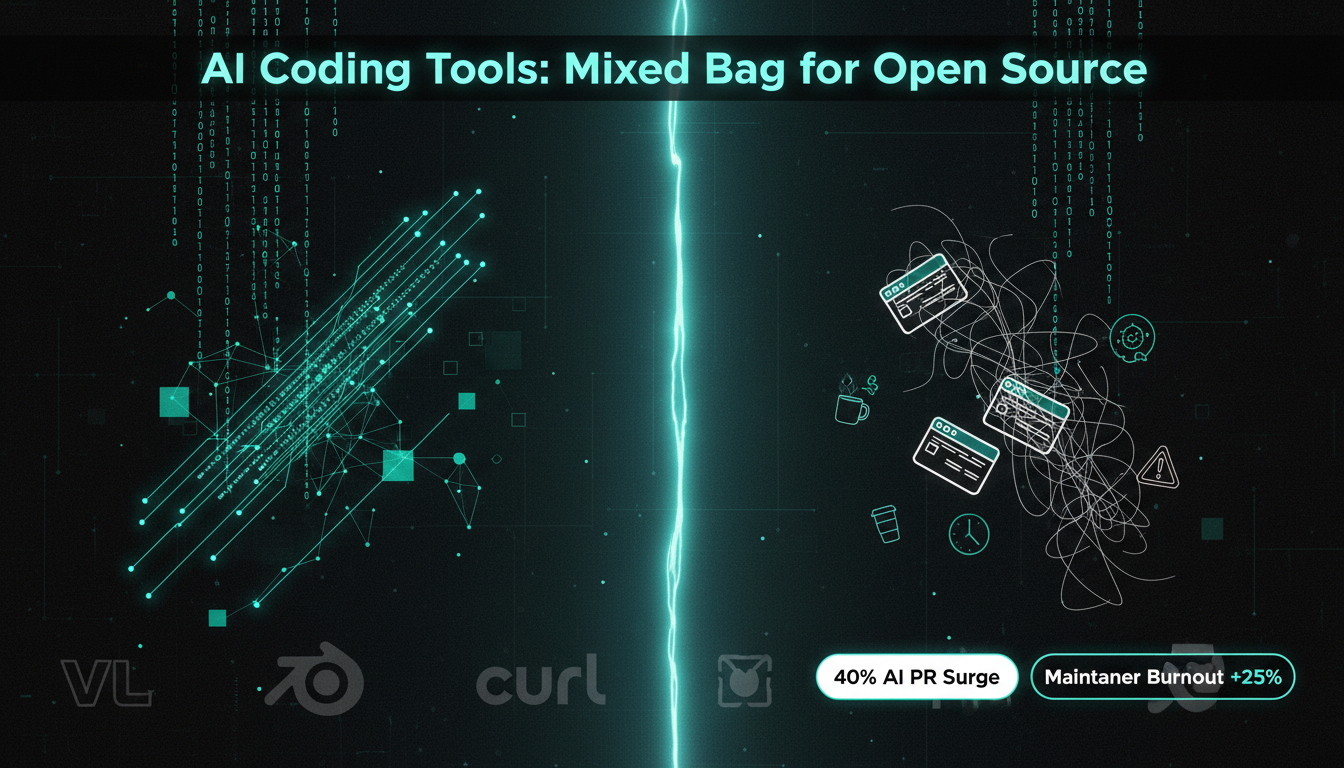
AI coding tools promise cheap, fast software development, fueling predictions that traditional companies are doomed. Startups could now “vibe code” complex features effortlessly, as one analyst quipped. Open source projects, starved for resources, should thrive in this era. Yet reality is messierAI solves some pains but creates new headaches, like floods of low quality code overwhelming maintainers.
Quality Takes a Hit
Open source projects everywhere report dropping submission quality, thanks to AI tools slashing entry barriers. Junior contributors pump out AI assisted code that’s often buggy or off base.
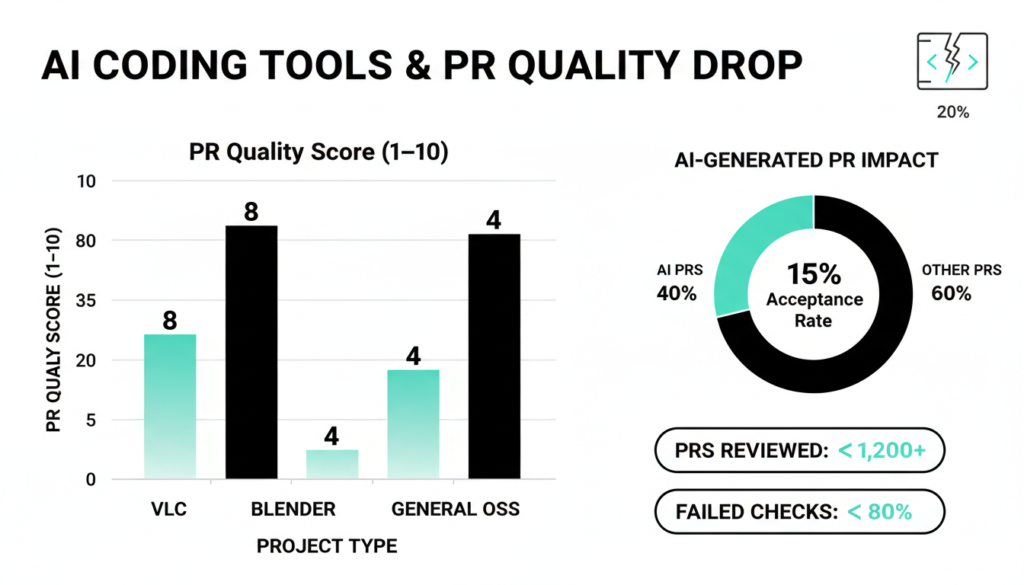
Take VLC, the popular media player. CEO Jean Baptiste Kempf notes merge requests from newcomers are “abysmal.” In a recent interview, he praised AI for senior devs prototyping ports to new OSes feed the model the full codebase, and it spits out solid starts. But without experience, it’s a mess to wrangle.
Blender, the go to 3D tool since 2002, faces similar woes. Foundation CEO Francesco Siddi says LLM contributions waste reviewers’ time and sap motivation. They’re crafting an official AI policy: not mandated, not recommended.
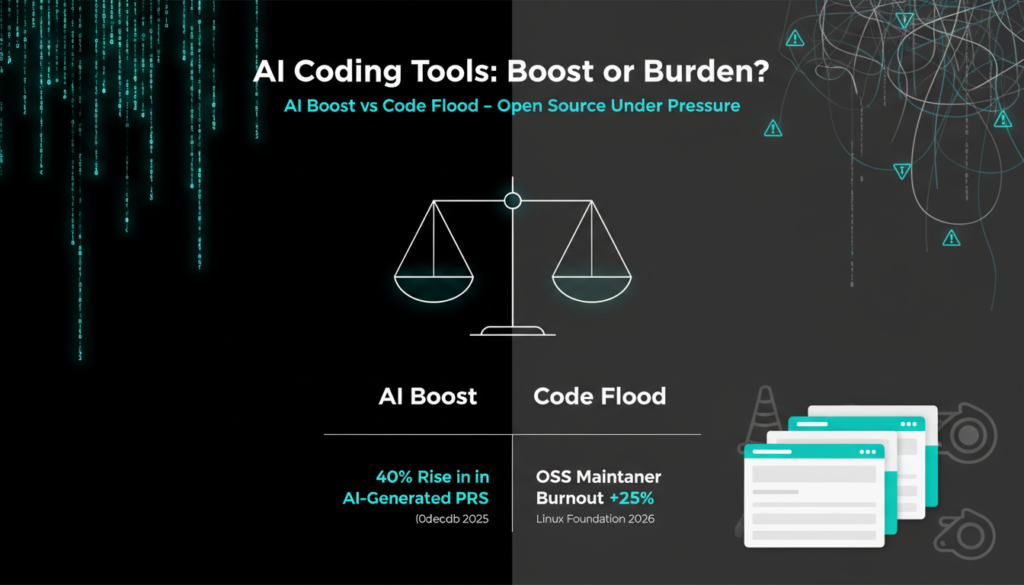
GitHub’s 2025 Octoverse report backs this: AI generated pull requests jumped 40%, but acceptance rates for them lag 15% behind human ones. A 2026 Linux Foundation survey found 62% of OSS maintainers citing “AI slop” as a top burnout factor, with review queues doubling in size.
Flood of Requests Sparks New Defenses
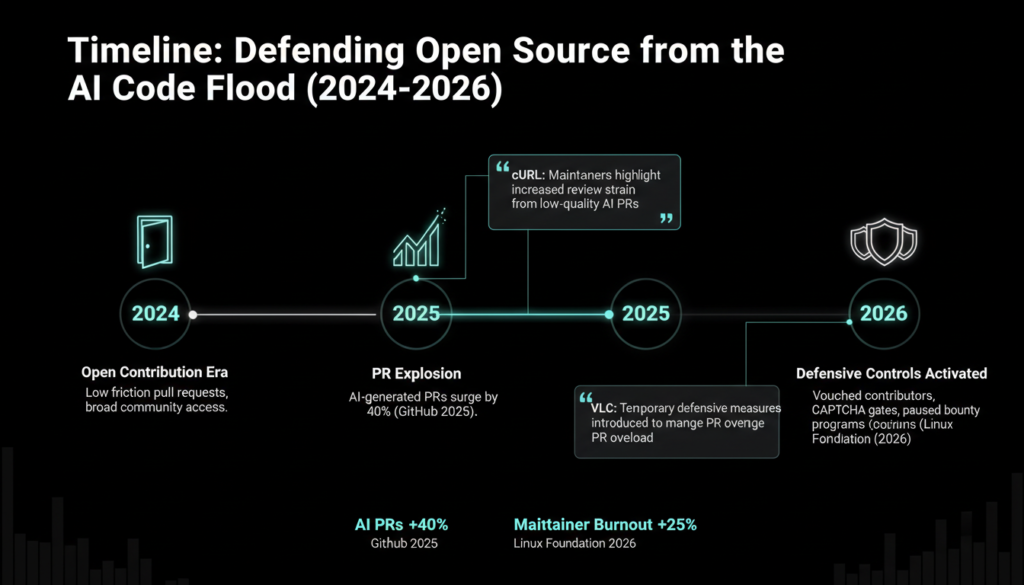
The deluge is so bad, devs are innovating fixes. Mitchell Hashimoto, HashiCorp co founder, rolled out a GitHub system limiting contributions to “vouched” users. “AI killed the trust by default barrier,” he announced.
cURL, the ubiquitous data transfer tool, paused its bug bounty after AI overwhelmed it. Creator Daniel Stenberg called it “AI slop DDOSing open source.” Pre AI, reports took real effort; now, they’re effortless noise.
O’Reilly’s 2026 AI Engineering report estimates 70% of recent OSS bug reports are AI generated junk, forcing projects to add filters like CAPTCHA or human only verification. IEEE Spectrum highlights how this fragments communities top projects like Linux kernel now reject unsigned AI code outright.
Yet upsides shine for pros. Kempf says VLC modules build faster with AI guidance. A senior dev can leverage tools like GitHub Copilot or Claude to accelerate by 30-50%, per Forrester data, as long as they review outputs.
Clashing Priorities Strain Maintainers
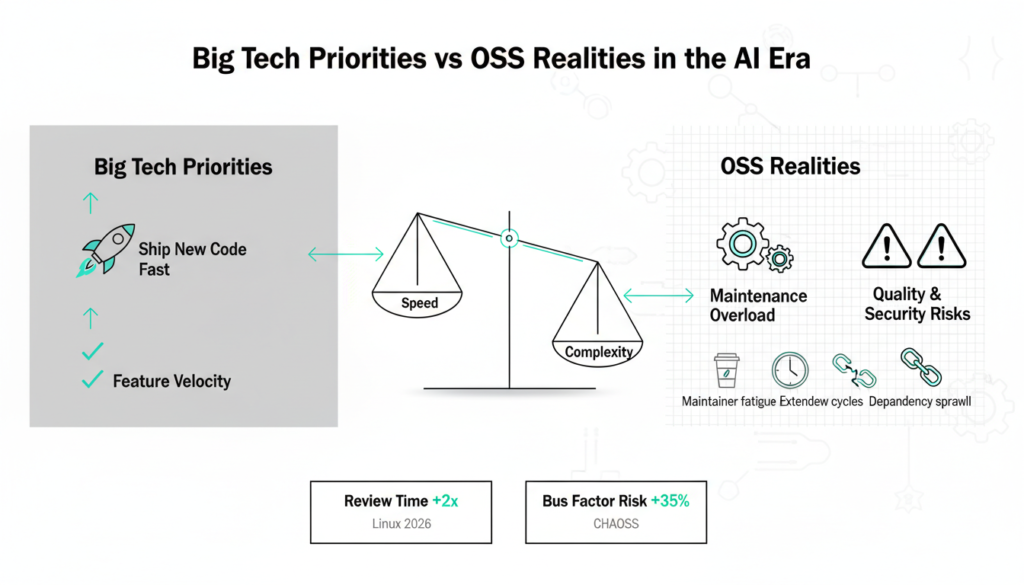
Core issue: mismatched goals. Big tech like Meta rewards shiny new code; OSS prioritizes rock solid stability.
Kempf nails it: “Companies promote for writing code, not maintaining it.” AI amps new features but ignores the grind of fixes and deps.
Investor Konstantin Vinogradov points to exploding complexity. Codebases balloon with interdependencies, but maintainers grow slowly. AI supercharges both sides good for output, brutal for upkeep.
Linux kernel maintainers echo this: a 2026 kernel.org post reports 2x review time per patch due to AI verbosity. Vinogradov warns: “AI empowers skilled maintainers but doesn’t create them.” OSS faces familiar woes: tons of work, too few hands.
Additional data from the 2026 CHAOSS metrics shows OSS activity up 25% (thanks to AI), but bus factor risk from few maintainers worsened for 35% of projects.
Broader Industry Ripples
This isn’t just OSS drama it’s a software wake up call. If engineering means cranking code, AI wins big. But if it’s taming complexity, AI complicates it without smart guardrails.
Per a 2026 McKinsey report, 55% of devs now use AI tools daily, boosting productivity 20-40% for greens but tanking it 10% for juniors without oversight. Solutions emerge: projects like Rust’s adopt AI “code linting” bots that flag hallucinations.
The software engineer obituary? Too soon. AI shifts roles toward curation, not creation empowering experts while weeding out noise.
Open source must adapt: train maintainers on AI review, build collaborative filters, and celebrate stability heroes. The future? Abundant code, if we manage the chaos.
Check out more on our blog page now → AI, Tech, Cybersecurity