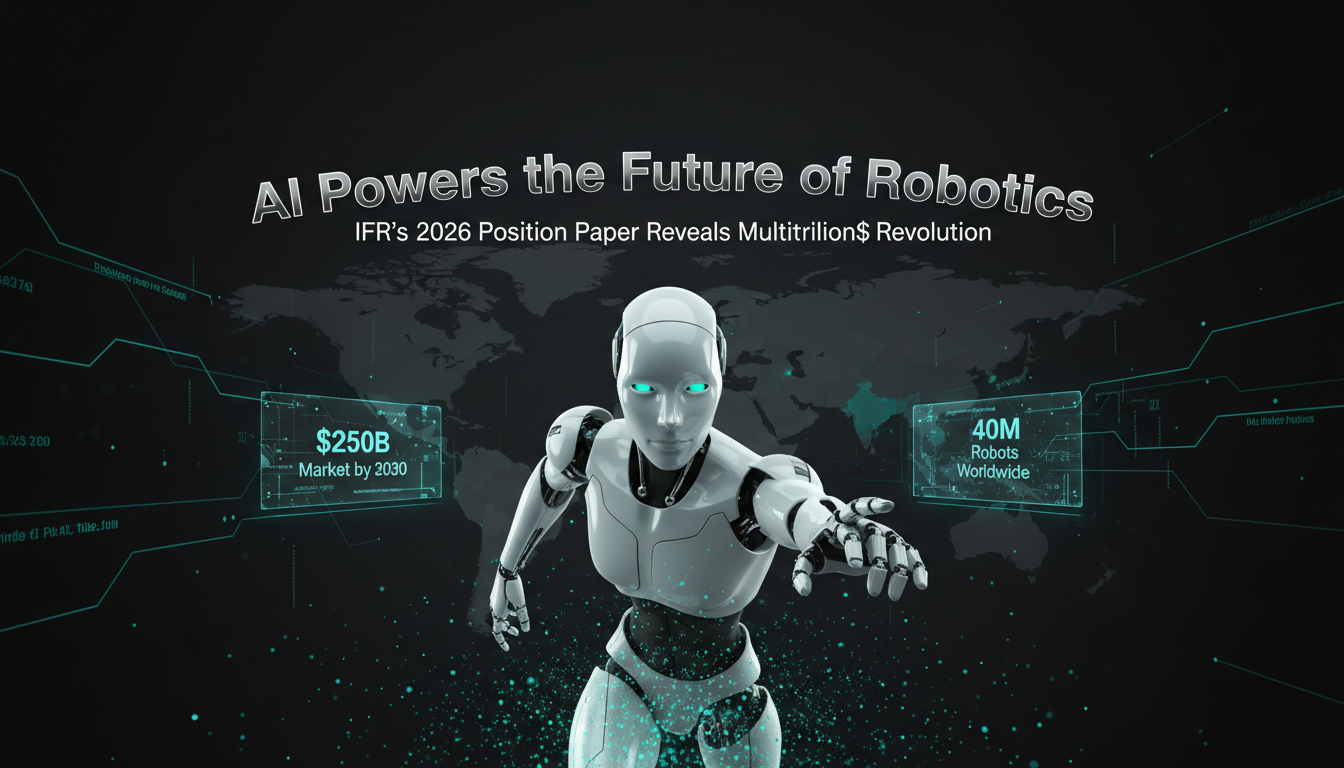
A groundbreaking position paper from the International Federation of Robotics (IFR), released today in Frankfurt, spotlights how AI is propelling robots out of labs and into everyday industries. Tech giants and analysts predict a multitrillion dollar boom, with AI giving robots their own “bodies” to sense, learn, and act in the real world. Picture humanoid bots navigating crowded streets or delicate surgical tools making life saving decisions these aren’t distant dreams anymore. But what’s driving this shift, what hurdles stand in the way, and how will it impact places like India’s manufacturing hubs in Maharashtra? Let’s dive deep.
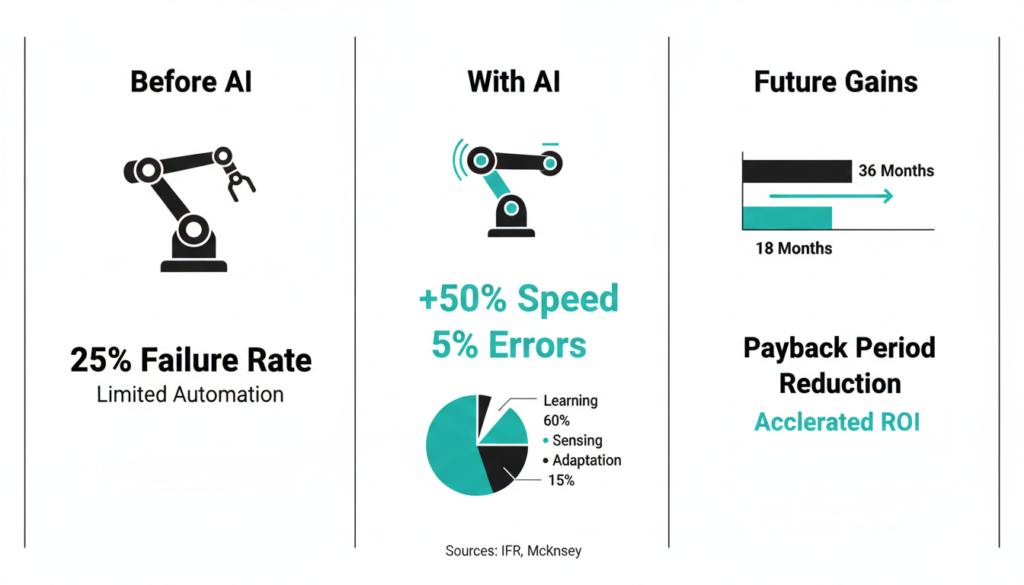
Why AI is Revolutionizing Robotics
“AI is transforming robotics at lightning speed,” says Takayuki Ito, IFR President. By blending AI’s smarts think machine learning algorithms that process vision, sound, and touch with robotic hardware, we boost capabilities, ramp up efficiency, and make machines adapt on the fly. No longer just a sidekick crunching data in the background, AI is the star enabler for robots everywhere from factories to homes and even hospitals. According to McKinsey’s 2025 Global Robotics Report, this integration could add $1.2 trillion to the global economy by 2035 through productivity gains alone, with annual growth rates hitting 25% in developing markets like India.
Early adopters are already reaping rewards. AI lets robots tackle unpredictable tasks, like navigating cluttered warehouses amid shifting boxes or assembling intricate smartphone parts under varying lights, far beyond rigid traditional programming. Take Boston Dynamics’ Spot robot: equipped with AI, it inspects oil rigs in hazardous zones, slashing human risk by 70%. Challenges do persist, however high upfront costs (often $100K+ per advanced unit), data privacy in shared spaces, and the “black box” problem where AI decisions are hard to explain. Yet, solutions are emerging fast: hardware like NVIDIA’s latest Jetson Orin chips has dropped 20% in price year-over-year (Goldman Sachs data), while explainable AI frameworks from DARPA make bots more transparent. In India, government initiatives like the National AI Strategy are subsidizing pilots, making this accessible for SMEs in agro processing sector.
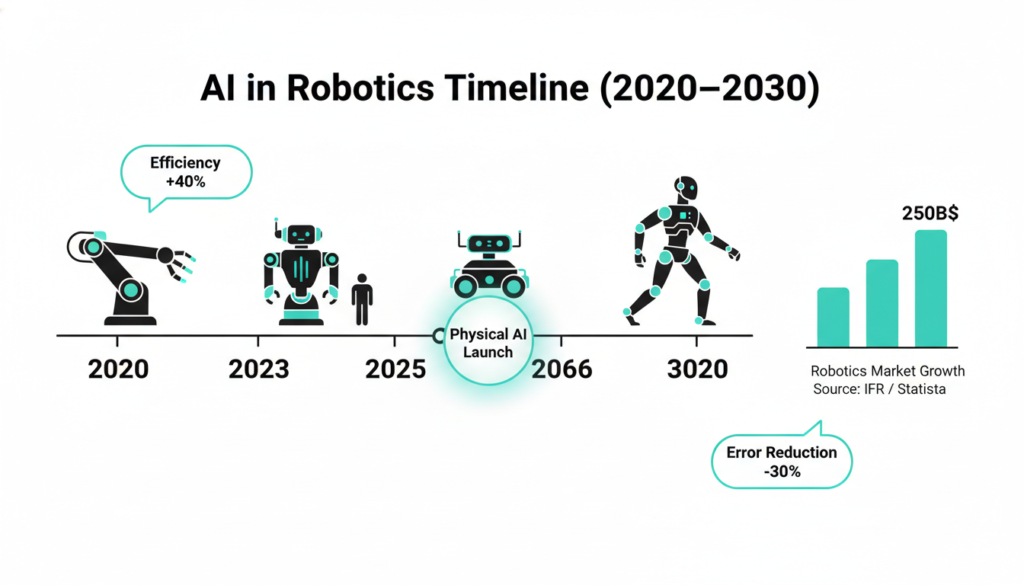
Top Industries Leading the Charge
Logistics and Warehousing
Logistics tops the list, fueled by e-commerce explosions think Amazon and Flipkart scaling to meet same day delivery demands. Controlled warehouse environments are perfect for AI robots that pick, sort, and ship with pinpoint accuracy using computer vision. Amazon’s fulfillment centers deploy over 750,000 AI driven bots daily, cutting fulfillment time by 25% and errors by 50% (IFR data). In India, Reliance Retail’s pilots in Mumbai warehouses mirror this, boosting throughput 30%. Intralogistics internal goods movement is set to hit $45 billion globally by 2028 (Statista), with AI optimizing routes via real time traffic prediction.
Manufacturing Automation
Factories follow closely, where AI revolutionizes high precision work across automotive, electronics, and pharma. Tesla’s Optimus humanoid uses AI vision and reinforcement learning to weld car frames and inspect welds 30% faster than skilled humans, per Tesla’s Q4 2025 earnings. In electronics, Foxconn’s AI arms place microchips with 99.9% accuracy, vital for India’s growing semiconductor push in Gujarat. General industries benefit too: predictive maintenance via AI sensors cuts factory downtime by 40% (IFR), as seen in Bayer’s pharma lines where bots flag equipment faults hours early. For mango farms processing plants, similar tech could automate sorting, reducing waste by 15-20%.
Service Sector Surge
Services are surging amid post pandemic labor shortages, with 40% of hospitality firms citing worker gaps (World Economic Forum). Restaurants deploy AI servers like Bear Robotics’ Servi, which converse naturally in multiple languages, boosting table turnover by 20%. Hybrid models excel: robots handle repetitive chores (dishwashing, stocking), while humans focus on empathy driven service. In Japan, Hennna Hotel runs almost fully robotic, cutting labor costs 30%. Europe’s aging demographic accelerates this IFR forecasts 1.5 million service robots by 2030 while India’s urban cafes in Mumbai experiment with order-taking bots to combat 25% staff turnover.
Physical AI: Training Robots Like Humans
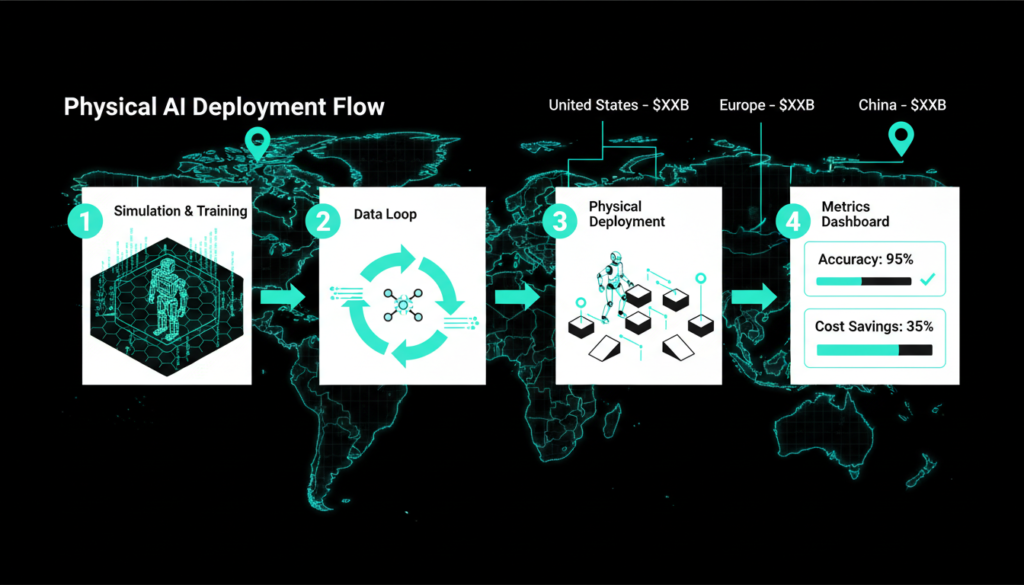
Enter Physical AI, the true breakthrough. Robot and chip manufacturers craft dedicated hardware-software stacks that simulate physics-rich virtual worlds. Robots train millions of “hours” in these sims learning to grasp fragile eggs or dodge pedestrians then transfer skills to reality without trial and error disasters. This embodied AI frenzy draws massive bets: U.S. leaders like Amazon ($4B robotics R&D in 2025), Tesla (Optimus scaling to factories by 2027), and NVIDIA (Isaac Sim platform bridging virtual-real gaps).
Europe’s ABB divested its robotics division to SoftBank, fusing Swiss engineering with Japanese AI for next-gen cobots. China’s MIIT rolled out a “future industry” plan with $100B+ funding, aiming for AI robot exports dominating 40% of global market by 2030. Venture capital poured $12B into startups last year (Crunchbase), birthing gems like elderly care bots that adapt to users’ routines via gait analysis.
Yet hurdles abound: accurate physics simulation lags (causing “reality drift,” where sim trained bots stumble 15-20% in tests), energy demands spike for onboard AI (solved by edge computing), and ethical dilemmas like bias in training data. Reinforcement learning fixes much now in 70% of new bots (IFR) while global standards from ISO ensure safe human interaction.
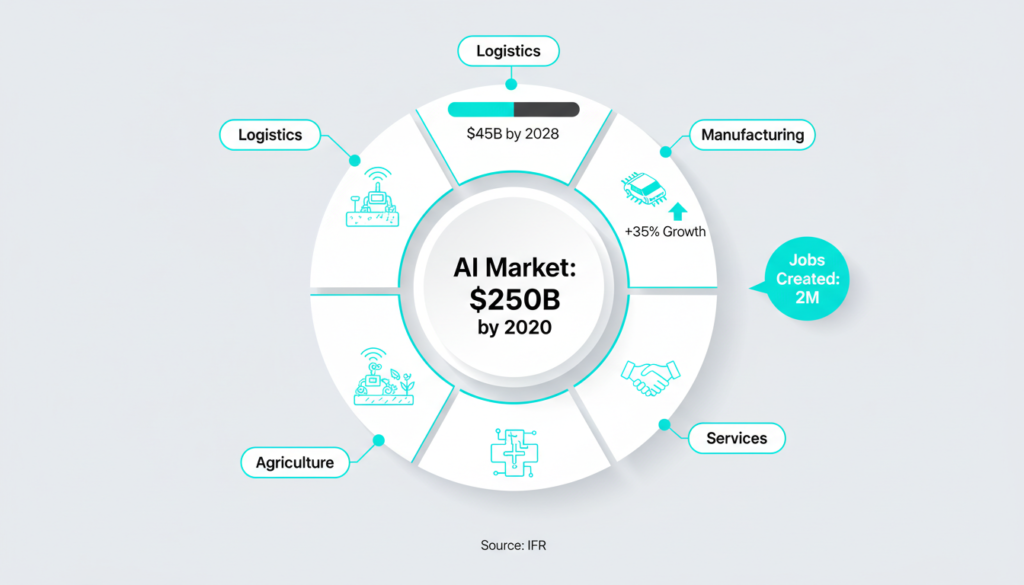
Emerging Frontiers and Challenges
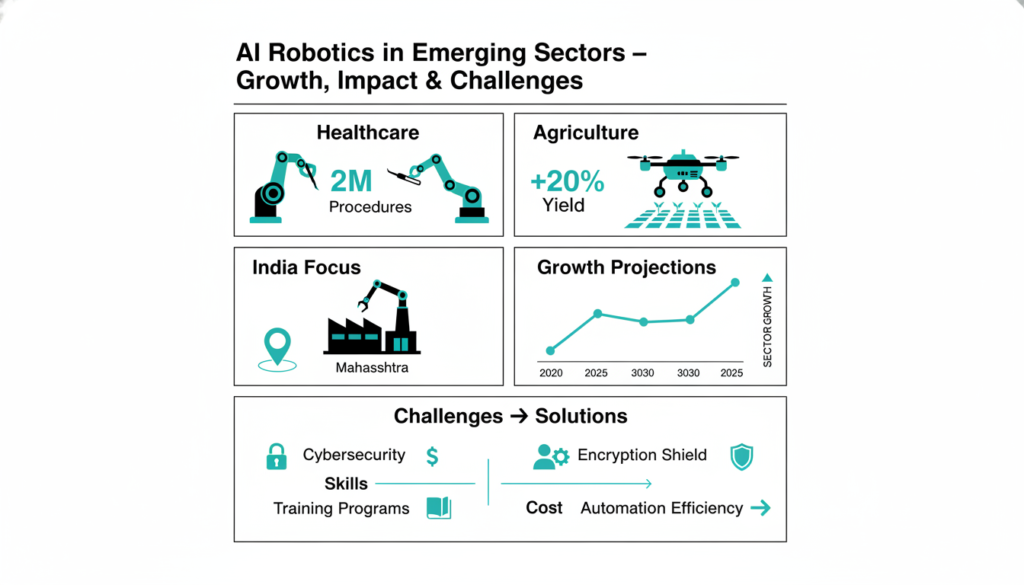
Beyond core sectors, healthcare beckons: AI surgical robots like Intuitive Surgical’s da Vinci perform 2 million procedures yearly with 1% complication rates vs. 5% manual. Agriculture sees autonomous tractors from John Deere using AI for precision planting, yielding 20% more in India’s fields. Challenges? Cybersecurity threats (rising 50% per Cybersecurity Ventures) demand robust encryption, and job shifts require reskilling IFR estimates 2 million new roles in robot maintenance by 2030.
What’s Next for AI Robotics
The 5-10 year outlook dazzles: AI adoption across all robotics, with efficiency soaring 50% (McKinsey), errors below 2%, and maintenance down 30% ROI in 18 months vs. 36 for legacy systems. IFR eyes 40 million industrial robots by 2030, services equaling them. In India, with 10% global robotics growth (highest in Asia), hubs like Ratnagiri could lead in food tech bots.
Triumph depends on partnerships: governments funding R&D (India’s $1B AI mission), ethical scaling, and safety standards. This era isn’t dystopian sci fic, it’s a collaborative leap where robots supercharge human ingenuity.
Check out more on our blog page now → AI, Tech, Cybersecurity