
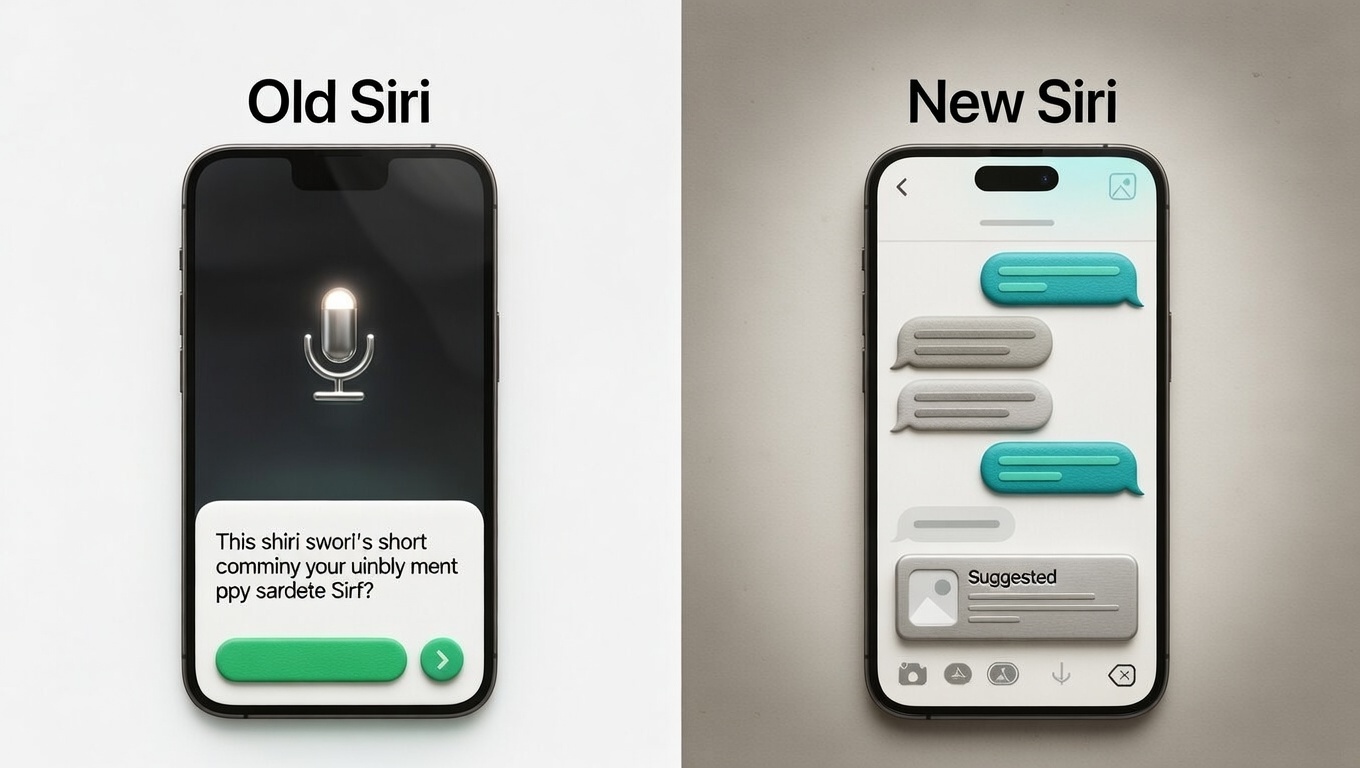
Apple is quietly planning one of the most ambitious upgrades to Siri in years, turning it from a simple voice assistant into a full, AI powered chatbot that could stand toe to toe with ChatGPT, Google Gemini, and other leading AI tools. With the upcoming iOS 27 update, Apple aims to enter the generative AI race seriously, and the new Siri is expected to be available on iPhone, iPad, and Mac later in 2026.
What’s changing with Siri?
Apple is reportedly working on a project internally called “Campos,” focused on transforming Siri into a powerful, context aware AI assistant. Instead of just answering basic questions like “Set an alarm” or “What’s the weather?” the new Siri will support long, back and forth conversations, much like chatting with ChatGPT or Gemini.
This upgraded Siri will still work with existing activation commands like “Hey Siri” and the side button, but it will add a new chatbot mode that understands natural language in a much deeper way. Users will be able to ask complex questions, have multi turn discussions, and even get help with planning, writing, and problem solving right from their Apple devices.
New AI features coming to Siri
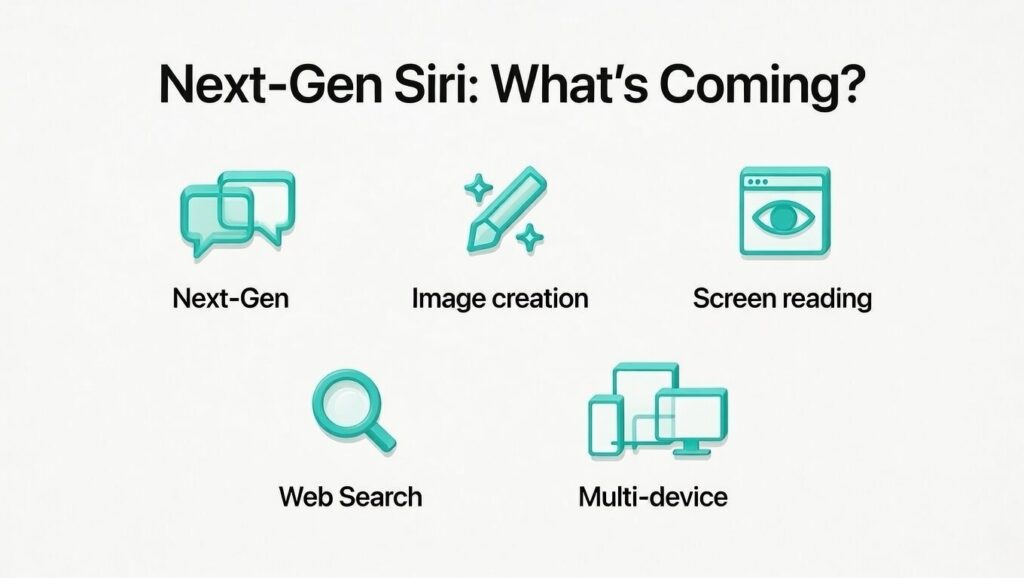
Apple’s new chatbot style Siri is expected to bring a range of advanced AI capabilities that today’s Siri only dreams of. Some of the key features under development include:
- Back‑and‑forth conversations: Ask a question, then follow up with more details, and Siri will keep the context and respond intelligently.
- Image generation: Siri might be able to create simple images based on text prompts, similar to DALL·E or Gemini Image Generation.
- On‑screen content analysis: Tap and ask Siri to summarise web pages, documents, or messages visible on your screen, making it far more useful for work and study.
- Improved web search: Better understanding of queries and more accurate, cited answers pulled from the web.
- Flexible input: Use both voice and text to interact with Siri, so it fits different situations hands free while driving or typing quietly in a meeting.
These features will be driven by a strong AI model, reportedly a partnership with Google to use a model that’s performance wise close to Google’s Gemini 1.5 / Gemini 3 family, rather than Apple building everything from scratch in the short term.
How Siri will use on device data
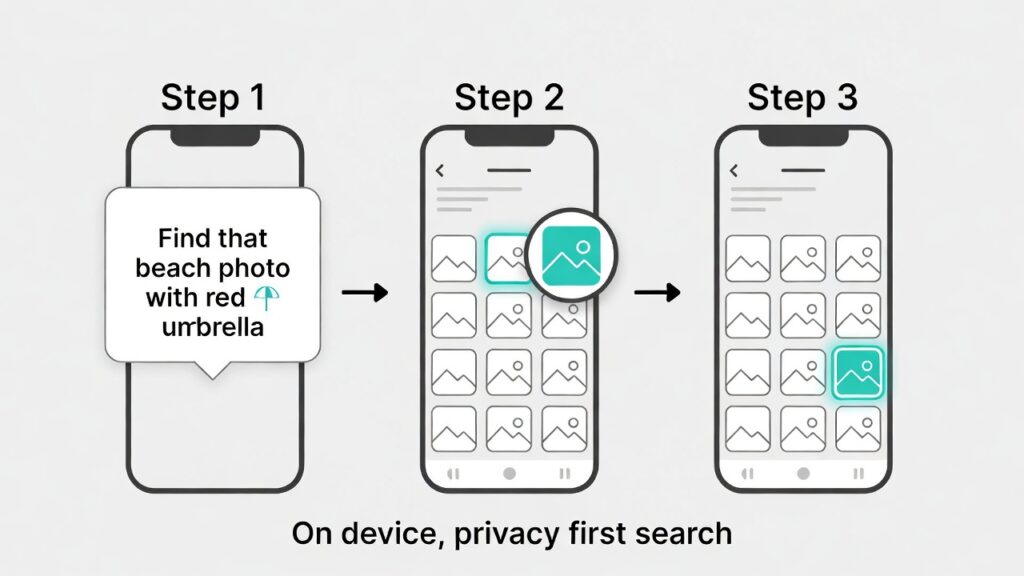
One of Apple’s biggest promises with AI is that it will protect user privacy by keeping data on the device whenever possible. The new Siri is expected to rely heavily on on‑device processing, so it can understand photos, messages, emails, and notes without sending everything to the cloud.
For example, a user could say something like:
“Hey Siri, find that photo of my friends at the beach last summer, you know the one with the red umbrella.”
Siri will then search the Photos app, look for images matching “friends,” “beach,” “summer,” and “red umbrella,” and return the right picture without uploading it to Apple’s servers. This kind of natural‑language search across personal data is a huge leap from today’s Siri, which mostly only understands direct commands.
iOS 26.4 vs iOS 27: Two stages of the upgrade
Apple is taking a two‑phase approach to this major Siri upgrade.
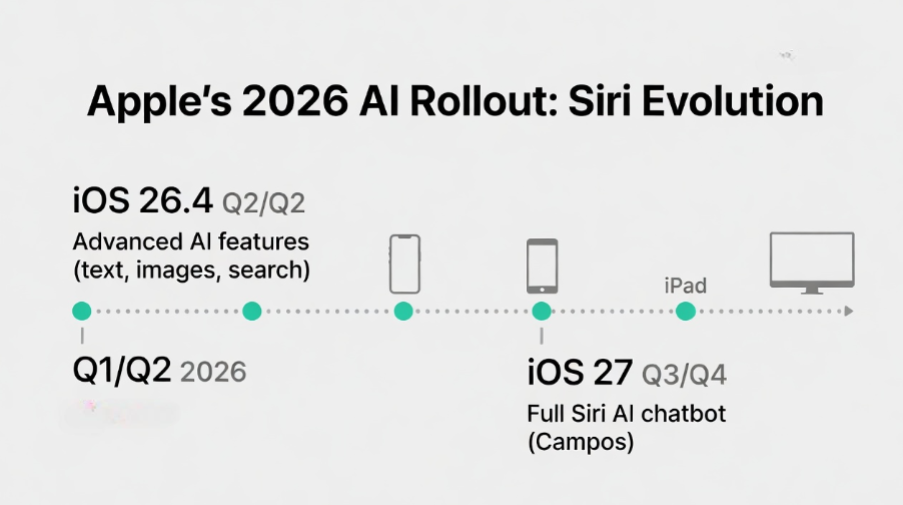
- iOS 26.4 (Spring 2026): An earlier update expected this spring will bring advanced AI features, but not the full chatbot version of Siri. This will likely focus on smarter search, writing suggestions, image effects, and some basic AI assisted tools.
- iOS 27 (Second half of 2026): The full “Campos” chatbot version of Siri is expected to launch with iOS 27 and the matching updates for iPadOS 27 and macOS XYZ. This will be the big reveal a Siri that feels like a proper AI chatbot, available across all Apple devices.
Interestingly, this shift is a big change from what Apple’s software chief Craig Federighi once said. He had previously dismissed “bolt‑on chatbots,” arguing that simply adding a chat window on top of existing apps wasn’t how Apple wanted to build AI. Now, with Campos, Apple appears to be doing exactly that but with deep integration into iOS, iPadOS, and macOS to make it feel native.
Why Apple is entering the AI race now
Apple is famously cautious when it comes to new technologies, especially if they conflict with privacy or user experience. For a long time, Apple stayed somewhat on the sidelines of the generative AI frenzy, while Google, Microsoft, and OpenAI pushed ChatGPT and Gemini.
However, by 2026, it’s clear that consumers expect AI to be deeply integrated into their devices. Rivals like Samsung’s Galaxy AI, Google’s Gemini, and Microsoft’s Copilot are already baked into phones, tablets, and PCs, helping users write emails, summarise articles, and create content.
Apple’s move with the new Siri shows that it can’t afford to stay behind. By making Siri a full‑stack AI assistant, Apple aims to:
- Keep iOS and Mac users engaged and loyal.
- Make its devices more useful for productivity, creativity, and daily tasks.
- Monetise AI indirectly through increased hardware sales and ecosystem lock in.
How Siri compares to ChatGPT, Gemini, and others
Once the new Siri launches, it will go head‑to‑head with:
- OpenAI’s ChatGPT (on iOS/Mac via the app) –very strong at writing, coding, and creativity.
- Google Gemini – deeply integrated into Android and Google services, strong at search and Google Workspace tasks.
- Microsoft Copilot – tied to Windows and Office 365, great for work productivity.
Apple’s advantage is tight integration with its hardware and ecosystem. A user on an iPhone or Mac won’t need to switch apps; they can ask Siri to summarise an email, create a reply, make a calendar event, or generate a simple image all within a single, familiar interface.
However, third‑party chatbots may still feel more powerful for complex writing, coding, or deep research, at least in the early days.
The bigger picture: Apple’s AI strategy
Apple’s Campos project is just one part of a broader AI push. Under the hood, Apple is building the Apple Foundation Model (AFM) and improving its on device AI chips (like the A and M series) to handle more AI tasks locally.
The company’s strategy seems to be:
- Start with AI features that feel useful and safe, not flashy.
- Use privacy as a selling point: your data stays on your iPhone, iPad, or Mac.
- Gradually integrate AI into core apps like Messages, Mail, Photos, Notes, and Maps.
If this works, Siri won’t just be a voice assistant anymore it could become the central AI brain of the Apple ecosystem.
What to expect from iOS 27 and beyond
With iOS 27, Apple is expected to:
- Launch the full Campos chatbot version of Siri across iPhone, iPad, and Mac.
- Unveil new AI‑powered features in Photos, Messages, and Notes.
- Possibly introduce a dedicated AI app or hub for managing AI tasks and history.
For developers, iOS 27 will likely bring expanded AI APIs, allowing third‑party apps to tap into Siri’s chatbot and image generation capabilities.
For everyday users, the change will feel like Siri finally “gets” what they mean and can actually help in a meaningful way, not just set reminders.
Apple’s plan to turn Siri into a full AI chatbot in iOS 27 is a big step in the AI race, and it could finally make Siri a real rival to ChatGPT and Gemini. If you enjoyed this breakdown, do visit our other blog posts on our page under the tags AI, TECH, and CYBERSECURITY, where we break down the latest tech trends, security tips, and what’s really coming next in 2026 and beyond.