Western AI giants like OpenAI, Anthropic, and Google are pulling back from fully open models due to regulations, safety concerns, and business pressures. Meanwhile, Chinese developers are stepping up, releasing powerful AI that runs smoothly on everyday hardware. This shift is reshaping the open source landscape.
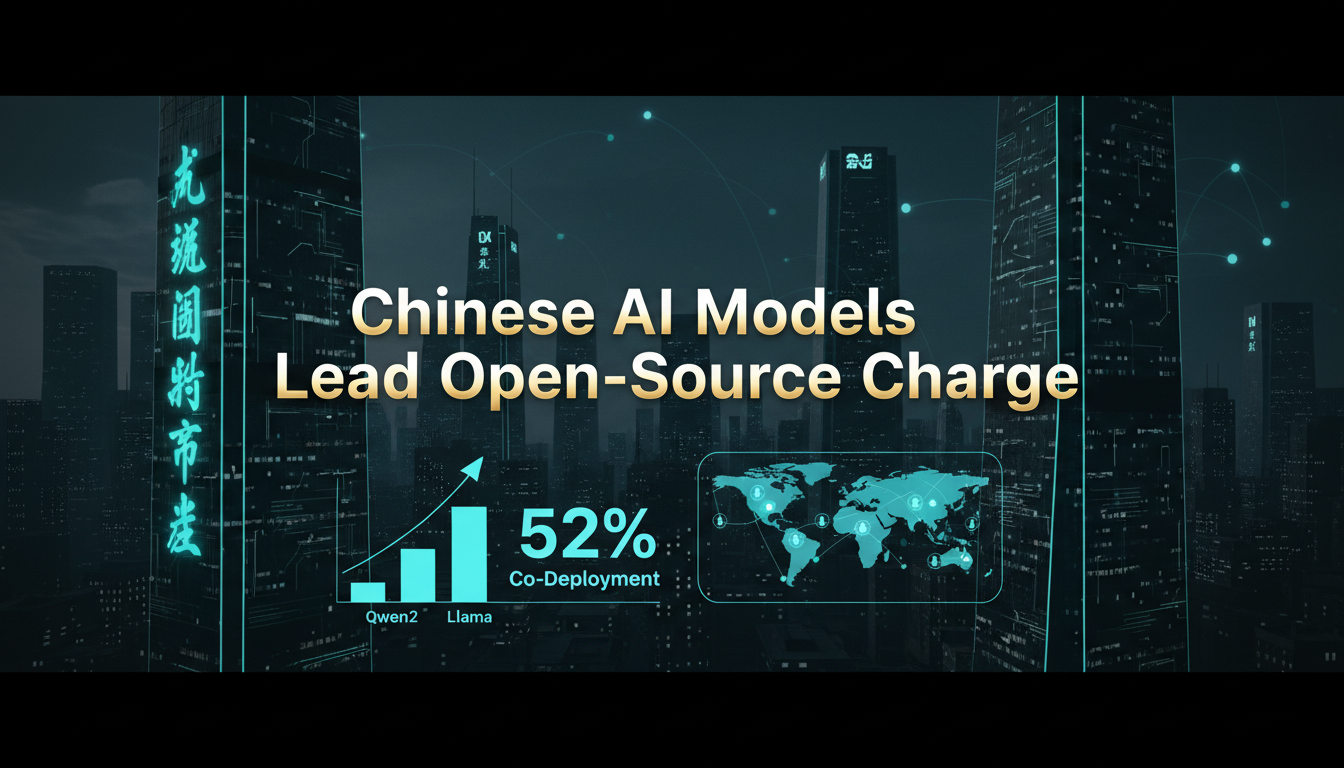
A recent SentinelOne and Censys study scanned 175,000 exposed AI hosts across 130 countries over 293 days. It found Alibaba’s Qwen2 ranking second only to Meta’s Llama in global use. Even more striking, Qwen2 shows up on 52% of systems running multiple models, making it the go to alternative.
“Over the next 12-18 months, Chinese models will dominate open source LLMs as Western labs tighten releases,” says Gabriel Bernadett Shapiro, a distinguished AI research scientist at SentinelOne.
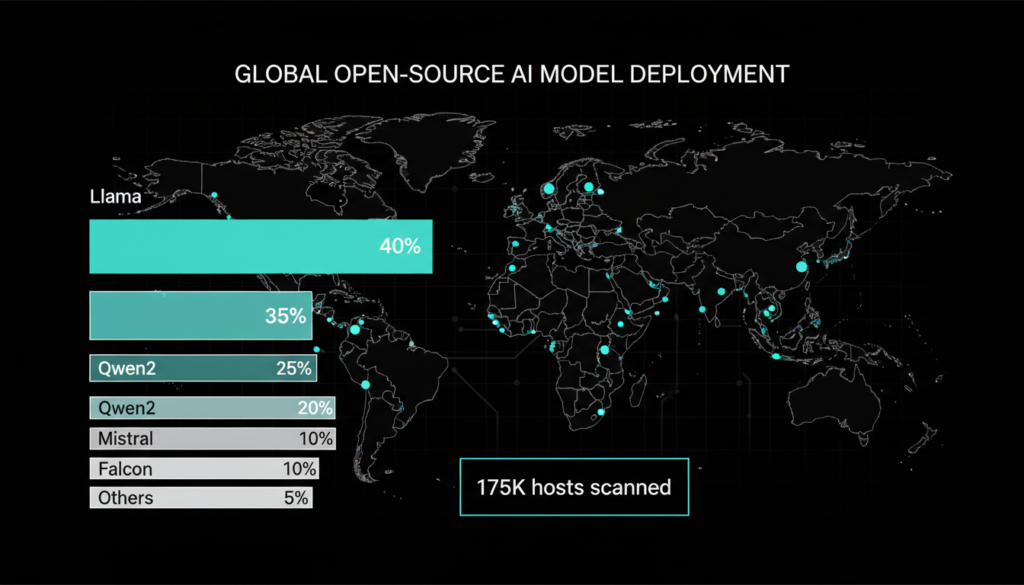
Why Chinese Models Win on Practicality
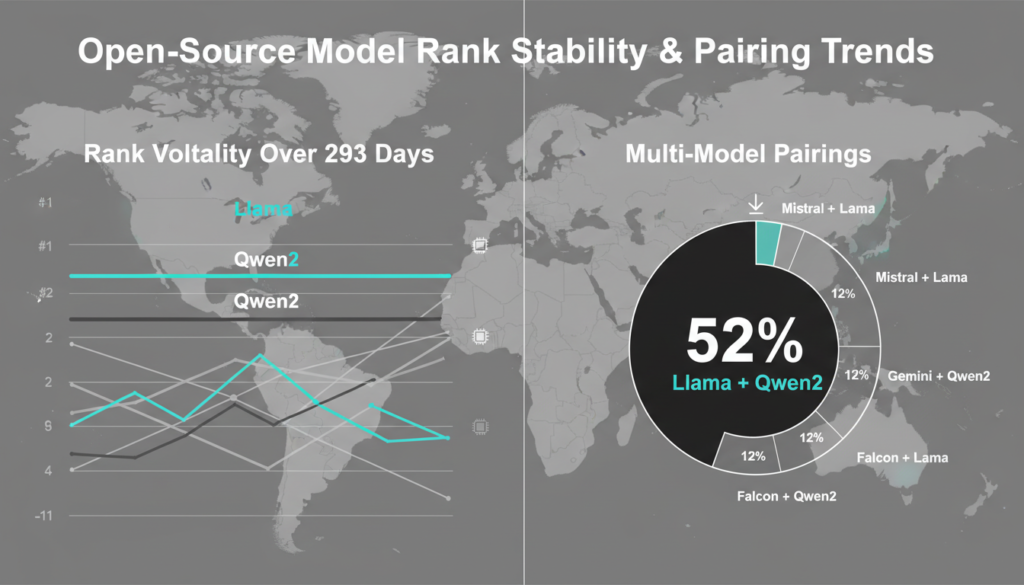
This isn’t about politics it’s pure pragmatism. Chinese labs like Alibaba prioritize models optimized for local runs, quantization (shrinking them for efficiency), and cheap hardware. Qwen2 shows “zero rank volatility” it’s steadily #2 across total observations, unique hosts, and host days, with no dips by region.
On multi model setups, Llama + Qwen2 pairs dominate 40,694 hosts (52% of cases). Geographically, China’s Beijing leads with 30% of hosts, followed by Shanghai and Guangdong (21% combined). In the US, Virginia’s AWS hubs claim 18%.
Hugging Face’s Open LLM Leaderboard backs this: As of February 2026, Qwen2.5 variants top charts in multilingual tasks and efficiency, outperforming Llama 3.1 in speed on consumer GPUs. Alibaba’s recent Qwen3 preview promises even better edge deployment, trained on 20 trillion tokens with built in tool calling.
“If release speed and hardware fit keep diverging, Chinese models become the default,” Bernadett Shapiro notes. Western labs face API only pushes, but developers crave downloadable power.
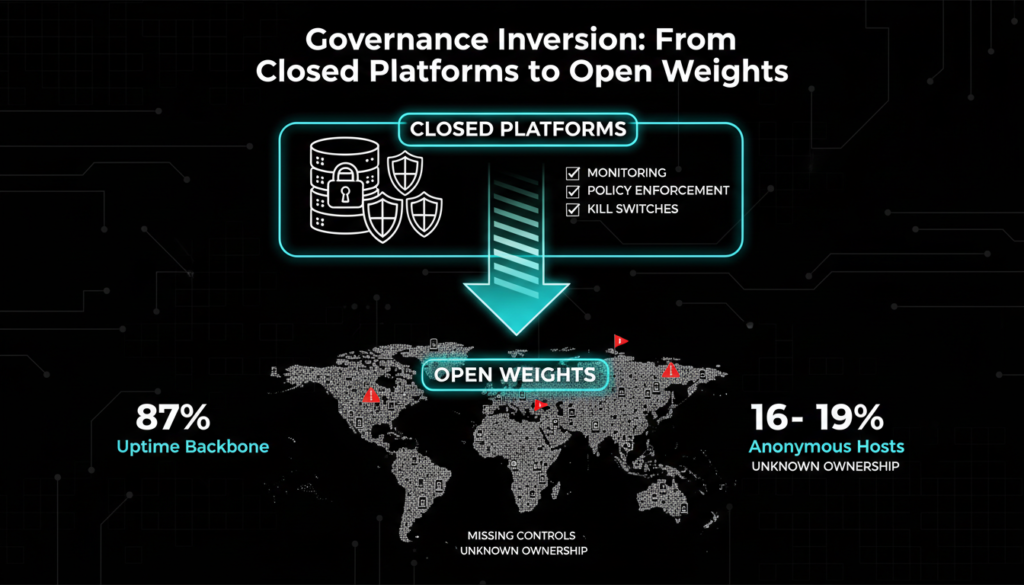
The Governance Flip in AI Control
Open weight models flip traditional safety on its head what Bernadett-Shapiro calls a “governance inversion.” Closed platforms like ChatGPT let one company monitor and shut down abuse. Open models scatter control across thousands of hosts, with power concentrating in fewer suppliers now mostly Chinese.
These 175,000 hosts lack logins, rate limits, or kill switches. A core of 23,000 hosts runs at 87% uptime, handling real workloads with multiple models. Alarmingly, 16-19% have unknown owners, complicating abuse tracking.
The AI Index 2025 reports open weight releases surged 40% from Chinese labs in 2025, versus a 25% drop from the US. Once released, safety layers vanish easily via fine tuning. Frontier labs must treat models as “long lived infrastructure,” per Bernadett Shapiro.
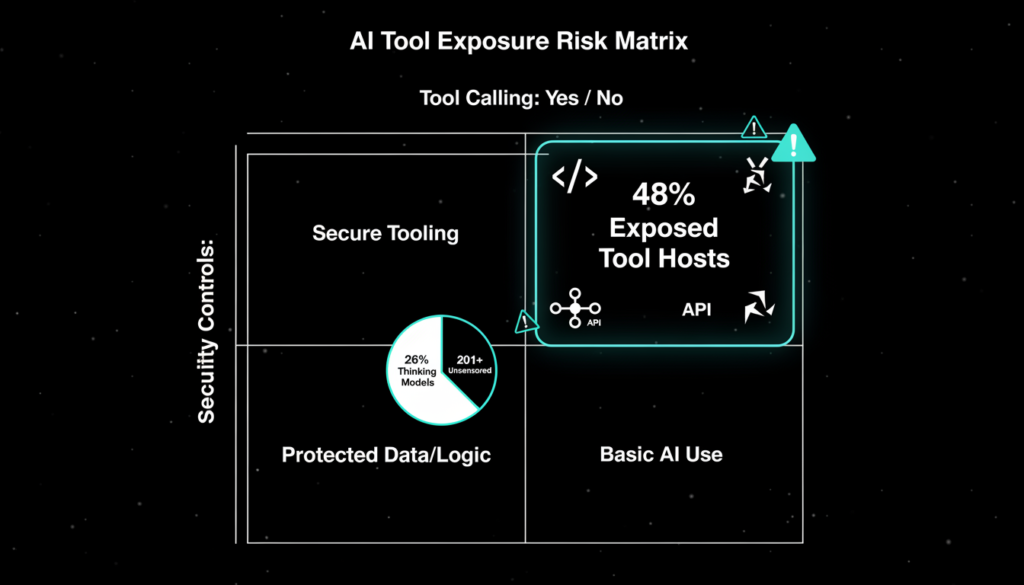
Hidden Risks in Tool-Enabled Hosts
Nearly half (48%) of hosts support tool calling executing code, hitting APIs, or acting autonomously. “Text models harm with words; tool models act,” warns Bernadett-Shapiro. No password? Attackers prompt for document summaries, API key grabs, or service calls.
26% run “thinking” models for step by step reasoning, and at least 201 have “uncensored” setups stripping guardrails. Exposed RAG endpoints could chain into attack layers. SentinelOne notes this as unmanaged AI compute, not just misconfigs.
Additional data from Cybersixgill’s 2026 threat report flags rising exploits on Ollama hosts, with Chinese models’ popularity amplifying reach over 60% of scanned agentic setups now use Qwen variants.
What Western Labs Must Change
Western developers can’t dictate deployments but can curb released risks. Bernadett Shapiro urges “post release monitoring” of adoption and misuse, plus safety baked into weights.
Current models ignore this inversion upstream choices ripple globally when a few lineages rule commodity hardware. Labs need tracking for real world use, post quantization safety checks. Policymakers grasp this slowly, but the AI Index shows US open releases hit a 5 year low in 2025.
12-18 Month Outlook: Eastward Shift
Expect exposed hosts to professionalize: More agents, multimodals, tool use as norms. Residential/VPS setups evade controls, forming a public AI substrate. Geopolitics heightens stakes non Western dominance weakens Western leverage.
Western platform governance won’t touch this decentralized wave. The ecosystem globalizes eastward via economics: Who ships what developers need locally. These 175K hosts signal a realignment Western leaders must address now.
Hey tech enthusiasts! From Chinese AI dominating open-source to cybersecurity threats and robotics revolutions, our blog delivers deep dives, expert analysis, and actionable insights on AI trends, stock market tech plays, and emerging innovations.
Check out more on our blog page now → AI, Tech, Cybersecurity