
Picture this: Your credit card stops working, Amazon locks you out, and everyday apps vanish because they’re tied to US systems. For Canadian judge Kimberly Prost, this nightmare became real last year. The Trump administration sanctioned her for her role in an International Criminal Court probe into alleged US war crimes in Afghanistan. Suddenly, her bank froze, online shopping halted, and global transfers stalled described by Prost as “paralyzing” in a candid interview.
Why Sanctions Hit Hard
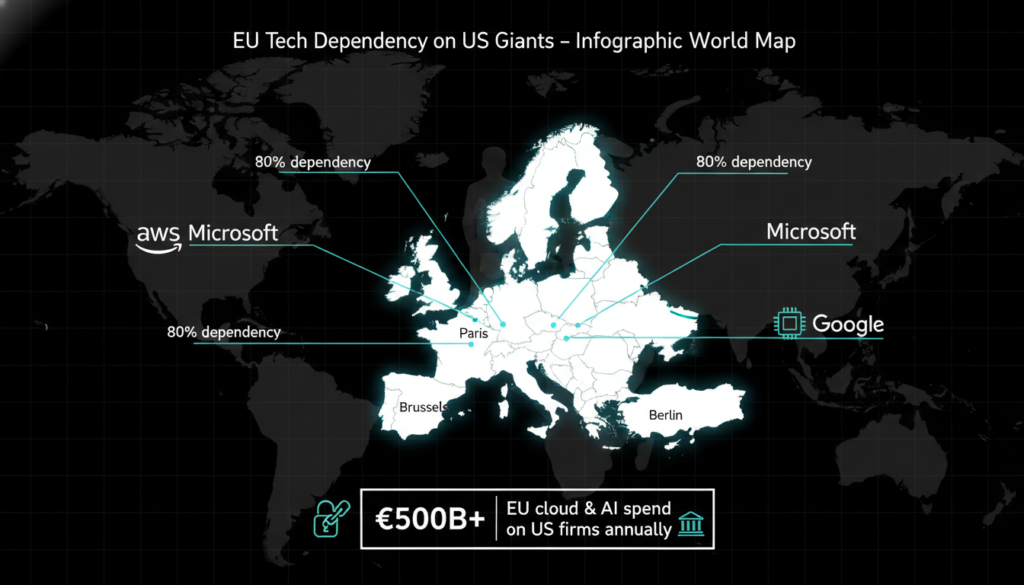
Prost’s name now sits alongside terrorists and hackers on US sanction lists, despite the US not recognizing the ICC. This isn’t isolated other ICC officials faced similar blocks. It exposes how US dominance in tech and finance can weaponize daily life. European leaders are watching closely, fearing the same for their nations amid Trump’s aggressive diplomacy, like threats against NATO allies and foreign leader captures.
Belgium’s cybersecurity chief Miguel De Bruycker recently admitted Europe has “lost the internet” to the US, which controls most global digital infrastructure. Storing data fully in Europe? “Currently impossible,” he said, pushing the EU to build its own tech stack.
Key Moves by EU Leaders
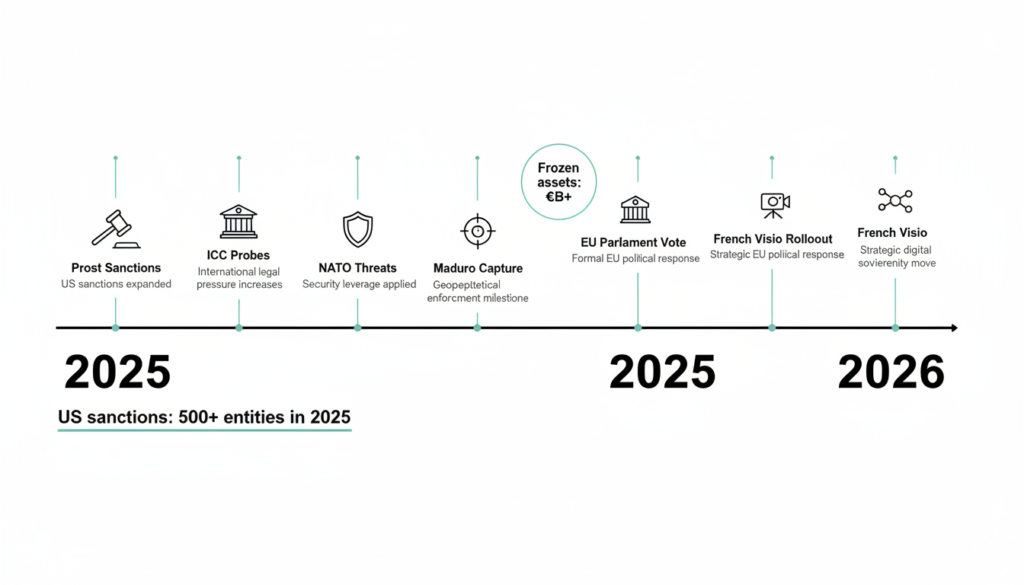
- Parliament Vote: On January 22, 2026, the European Parliament passed a non binding report urging the Commission to cut reliance on foreign tech. It highlighted over 80% dependency on non EU providers for digital products.
- French Switch: France announced it will replace Zoom and Microsoft Teams with homegrown Visio software, prioritizing “digital sovereignty” for government use.
- Broader Push: The EU Commission is drafting tougher rules for AI and networks, aiming to onshore more tech by 2027.
Roots of Europe’s Tech Vulnerability
Digital sovereignty fears aren’t new. They trace back to 2001’s Patriot Act post 9/11, which supercharged US surveillance. By 2011, Microsoft admitted US agencies could seize EU cloud data via secret orders. Edward Snowden’s 2013 leaks exposed the scale, revealing NSA spying on European allies despite GDPR privacy laws.
Fast forward to 2026: EU data shows member states spend €500 billion annually on US cloud services (per ENISA 2025 report), with AWS alone holding 32% market share. A 2026 Gartner analysis warns that US export controls on chips and AI could cripple Europe’s growth, projecting a 15% GDP hit without alternatives. Germany’s Bundeswehr is already migrating 30,000 seats from US email to sovereign providers, citing “unreliable partners.”
Building EU Alternatives
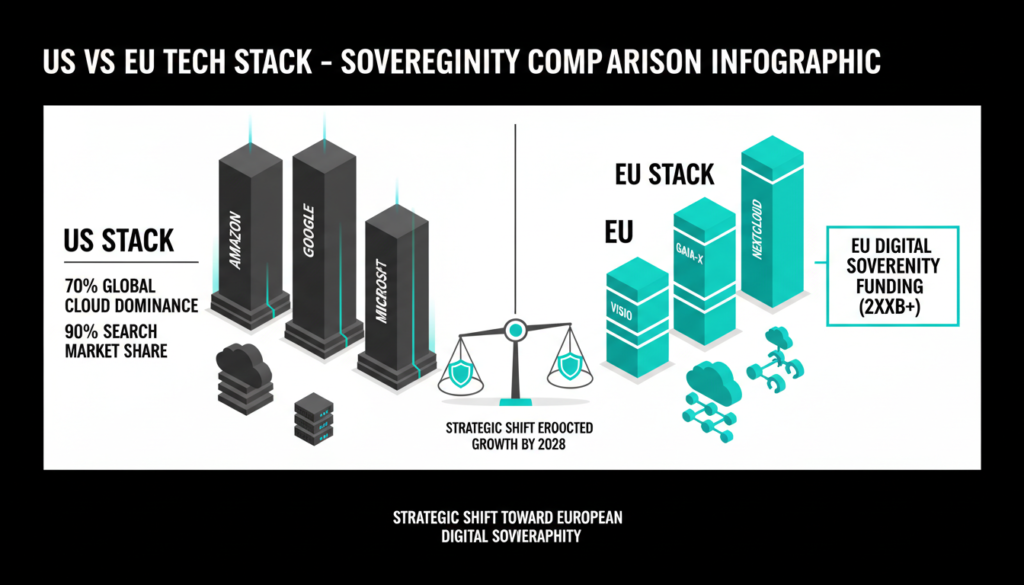
The EU’s Gaia X project, relaunched in 2025, aims for a federated cloud by 2028, backed by €10 billion in funding. France’s Bleu telecom and Germany’s 1&1 are testing sovereign 5G networks. Meanwhile, the Digital Markets Act (DMA) fines Big Tech billions, forcing data portability to rivals like Nextcloud or France’s Tixeo.
Grassroots Shift from Big Tech
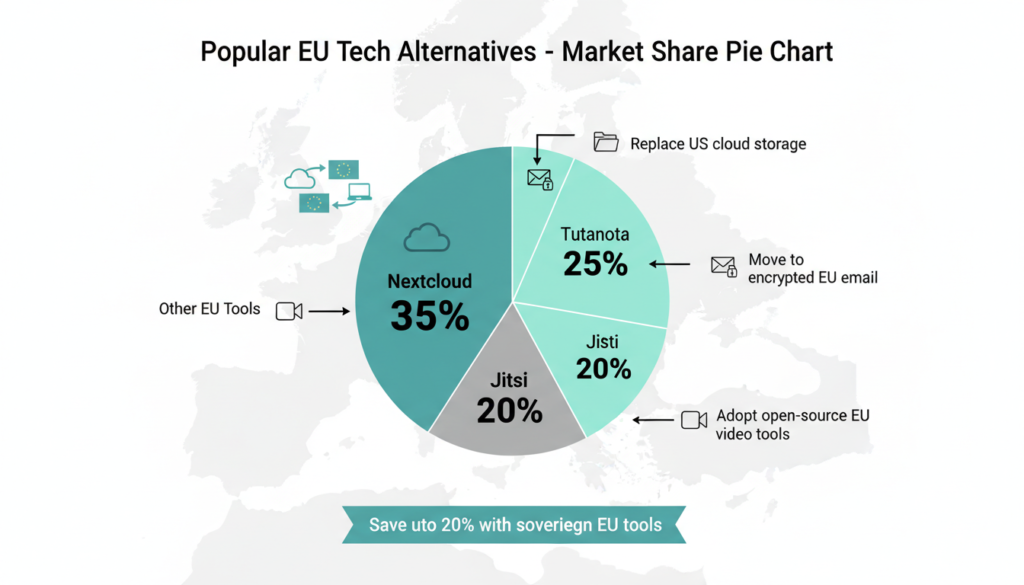
Consumers are joining in. Tech workers urge CEOs to resist US policies, while guides like Paris Marx’s “Getting Off US Tech” promote switches. Sites such as European Alternatives list open source gems: Mullvad VPN over ExpressVPN, Tutanota email instead of Gmail, and Signal (EU hosted) for chat.
In India, where you’re based, similar vibes echo with Data Protection Bill pushes for local servers. Globally, Brazil’s LGPD fines US firms for data exports. A 2026 Forrester report predicts 40% of enterprises worldwide will prioritize sovereign clouds by 2027, driven by geopolitical risks up from 15% in 2024.
What’s Next for Digital Independence?
Europe’s pivot signals a multipolar tech world. Challenges remain US firms lead in AI (OpenAI’s 60% global share per Statista 2026) but investments like the €100 billion EU AI Act fund could close gaps. For businesses, this means auditing dependencies now. Stay tuned as sovereignty reshapes cybersecurity and innovation.
Europe Cuts US Tech Ties: Quick Summary
Amid escalating US sanctions under Trump like those freezing Canadian judge Kimberly Prost’s finances European nations are racing toward digital sovereignty. Fearing disruptions to banking, cloud services, and apps dominated by US giants (80%+ of EU digital infrastructure), leaders are acting fast.
Key highlights:
- Sanctions Shock: Prost’s story spotlights real pain—blocked cards, Amazon shutdowns mirroring threats to Europe from US diplomacy.
- EU Pushback: Parliament urges cutting foreign reliance; France swaps Zoom/Teams for local Visio; Belgium admits “lost internet” to US.
- Historical Roots: Patriot Act and Snowden leaks exposed surveillance risks; now €500B yearly EU spend on US clouds fuels urgency.
- Alternatives Rising: Gaia X cloud, Nextcloud, Tutanota gain traction; 40% global firms eye sovereign tech by 2027 (Forrester).
- Future Outlook: €100B AI investments aim to challenge US leads, reshaping cybersecurity worldwide.
Loving this deep dive into Europe’s tech rebellion? Don’t stop here head to our home page now for fresh reads on game changing AI breakthroughs, hottest TECH trends, and must know CYBERSECURITY tips that’ll keep you ahead. Discover your next favorite post today!