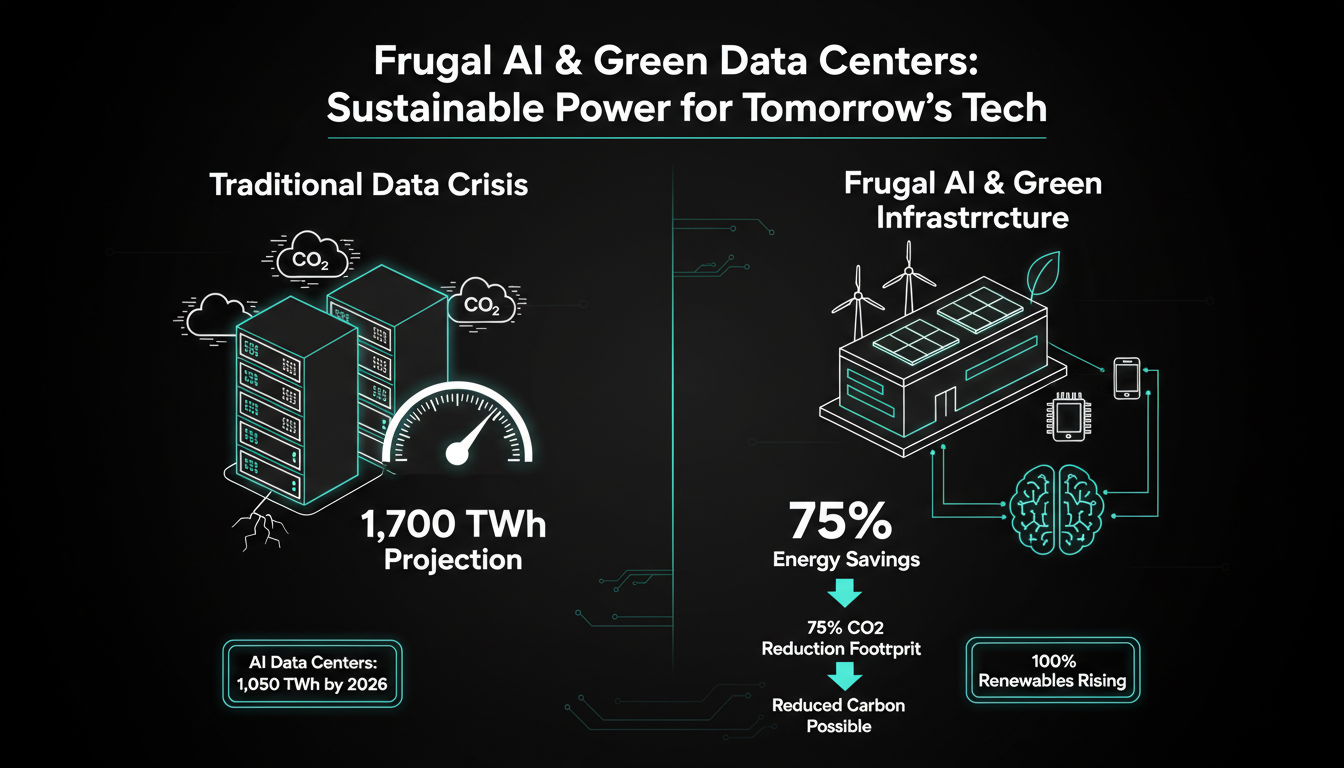
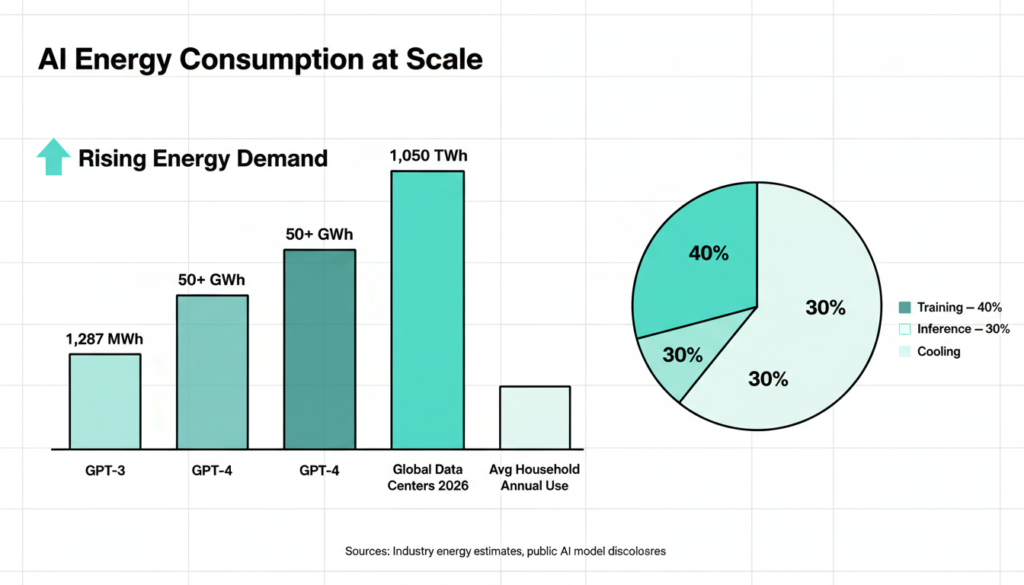
AI’s rapid growth is driving massive energy demands, with global data centers projected to consume up to 1,050 TWh by 2026, pushing the need for frugal approaches and sustainable infrastructure. Frugal AI focuses on efficient models using fewer resources, while green data centers optimize power and cooling to cut carbon emissions.
What is Frugal AI?
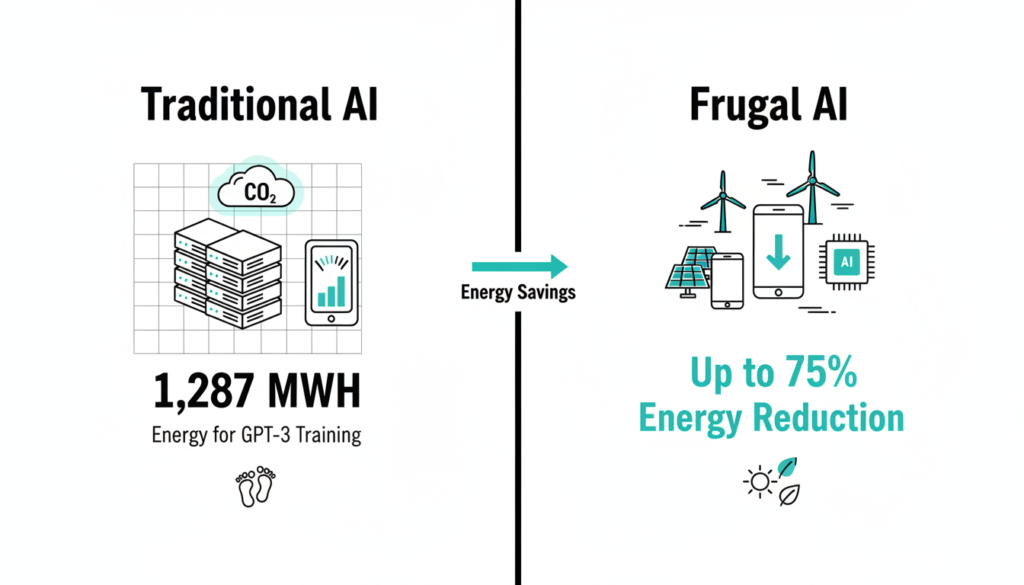
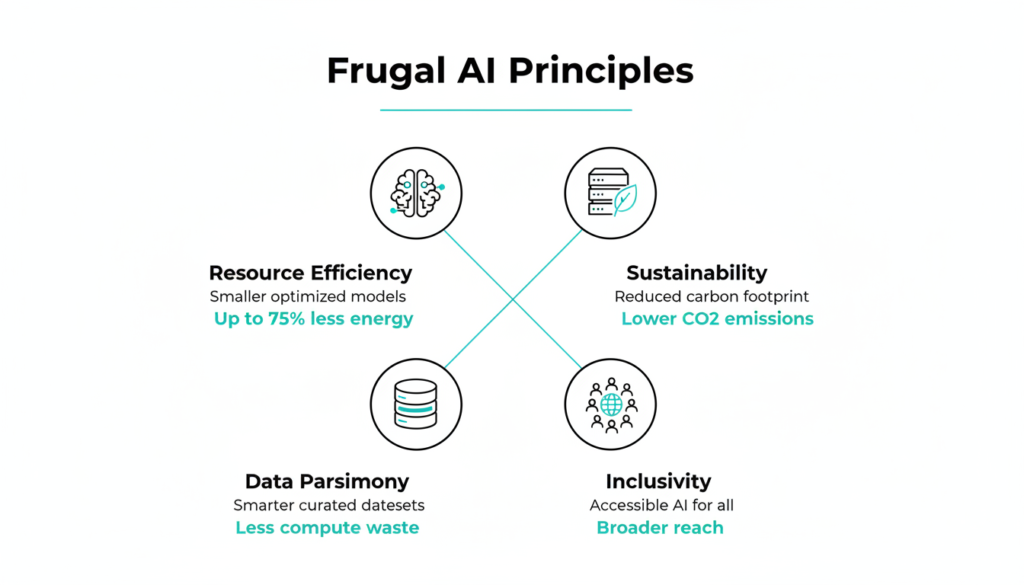
Frugal AI prioritizes resource efficiency and sustainability by designing AI systems that deliver strong results with minimal data, compute power, and energy. It counters the skyrocketing costs of training large models like GPT 4, which consumed over 50 GWh enough to power San Francisco for three days. Core principles include data parsimony, transfer learning, and edge AI to make technology accessible in resource limited settings.
This approach reduces financial burdens and environmental harm, aligning with ESG goals and regulations like the EU’s CSRD. Startups like Frugal AI raised $5M in 2025 to optimize code for cloud savings, showing real world momentum.
AI’s Soaring Energy Crisis
Training one frontier AI model can emit as much CO2 as five cars over their lifetimes, with data centers now using 2-3.7% of global electricity. By 2026, AI driven demand could hit 1,700 TWh in high adoption scenarios, straining grids and boosting emissions. Inference the ongoing use of models further amplifies this, as billions of daily queries require constant power.
Cooling alone accounts for 40% of data center energy, making efficiency urgent amid climate goals. Without changes, AI could rival aviation’s carbon footprint soon.
Frugal AI Techniques
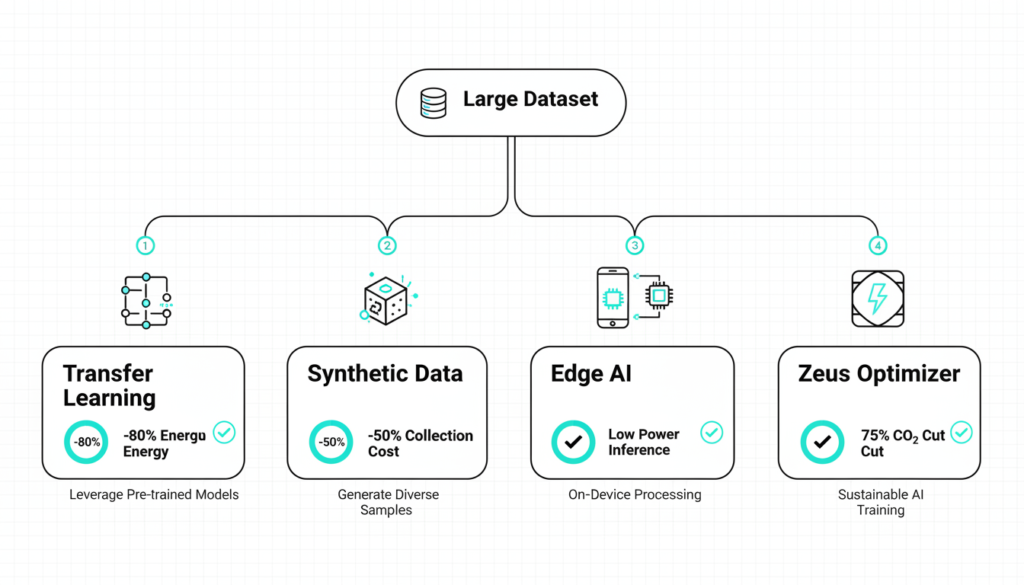
Key methods include transfer learning, where pre trained models are fine tuned on small datasets, slashing training time and energy. Tools like Zeus from the University of Michigan cut AI training carbon by up to 75% by balancing speed and efficiency no new hardware needed.
Other tactics: synthetic data generation, TinyML for edge devices, and neurosymbolic AI for lighter models. These enable high performance with 95% less energy, as seen in models like DeepSeek V3.
Building Green Data Centers
AI Driven Optimization
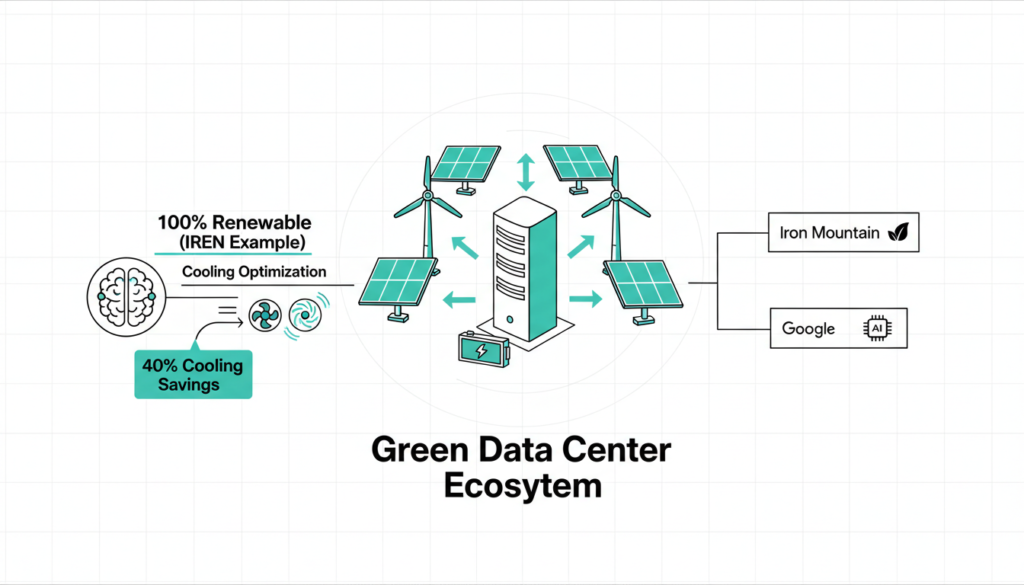
AI monitors cooling and workloads in real time, predicting needs to cut energy by dynamically adjusting systems. Predictive maintenance spots issues early, reducing downtime and waste. Intelligent automation powers down idle servers, saving substantial power.
Renewable Energy Shift
Solar farms and wind deals power many facilities; advances in photovoltaics pack more output into less space. Companies like IREN run 100% renewable data centers for AI workloads, including NVIDIA GPUs. Iron Mountain’s centers use full renewables and aim for climate neutrality by 2030.
Grid integration with batteries balances renewables, while AI enables cheap buys during peaks.
Real World Wins
Apple’s Viborg center and Moro Hub lead in sustainability, matching AI needs with green power. Soluna co locates with renewables to use surplus energy for AI. These cut emissions while supporting hyperscale AI.
Frugal AI platforms now integrate with AWS and GCP for auto optimizations. Overall, these strategies could halve AI’s footprint, making tech sustainable.
Future Outlook
Emerging tech like geothermal and advanced batteries will boost green data centers further. Frugal AI will dominate as regulations tighten, ensuring AI grows responsibly. Tech leaders must prioritize these now to avoid grid crises.
Check out more on our blog page now → AI, Tech, CybersecurityEdit