Technologies are advancing rapidly, transforming economies, governance, and everyday life across the globe. In Lithuania, this shift brings both opportunities and serious digital risks, especially from AI driven cyber fraud. The country is responding with a major national initiative to build a safer digital society.
Safe E-Society Mission
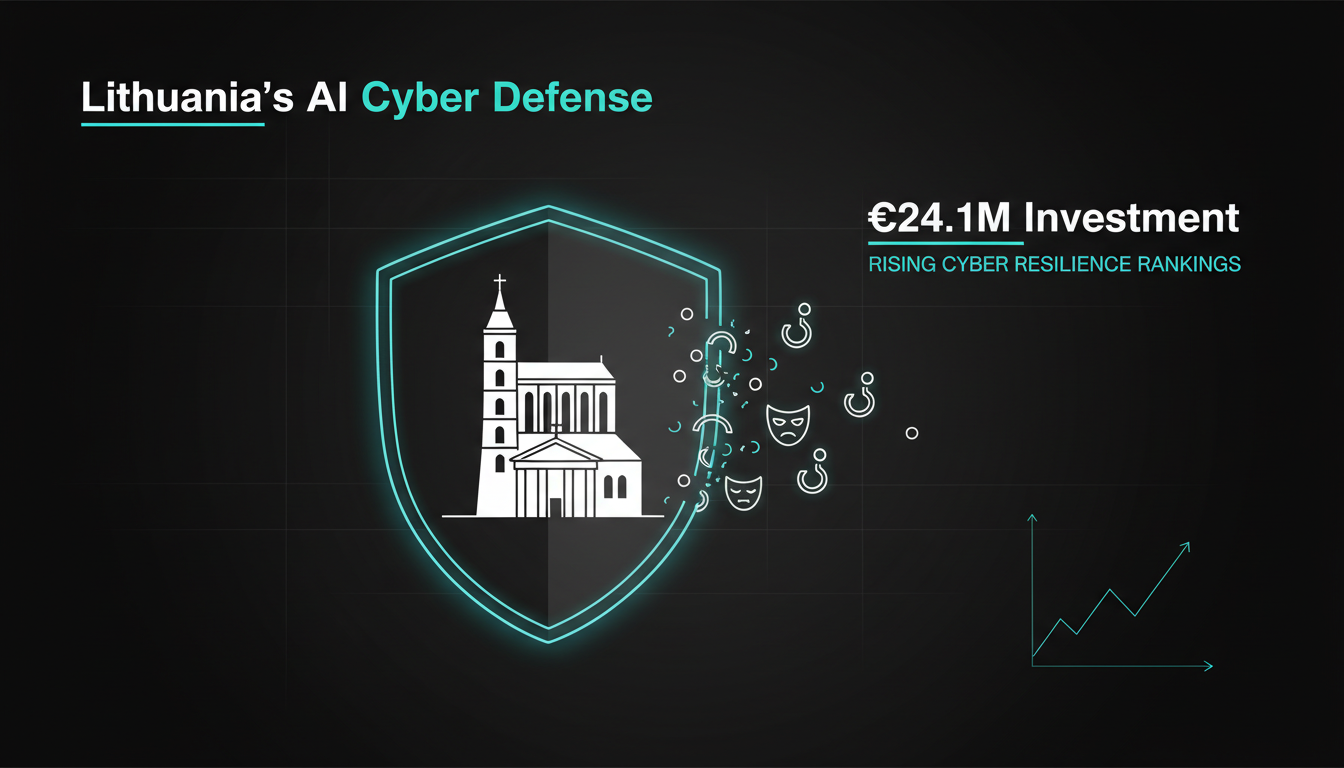
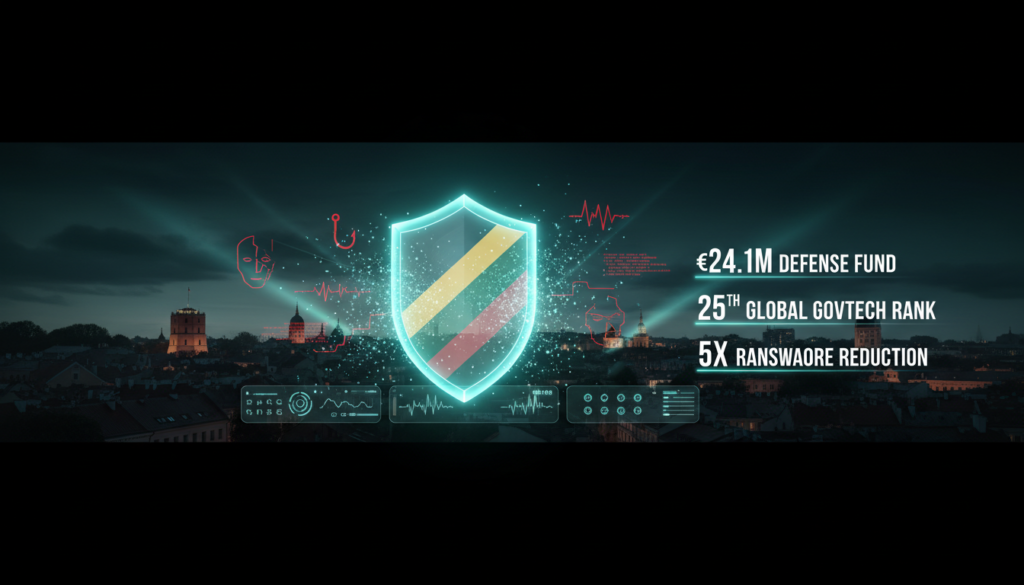
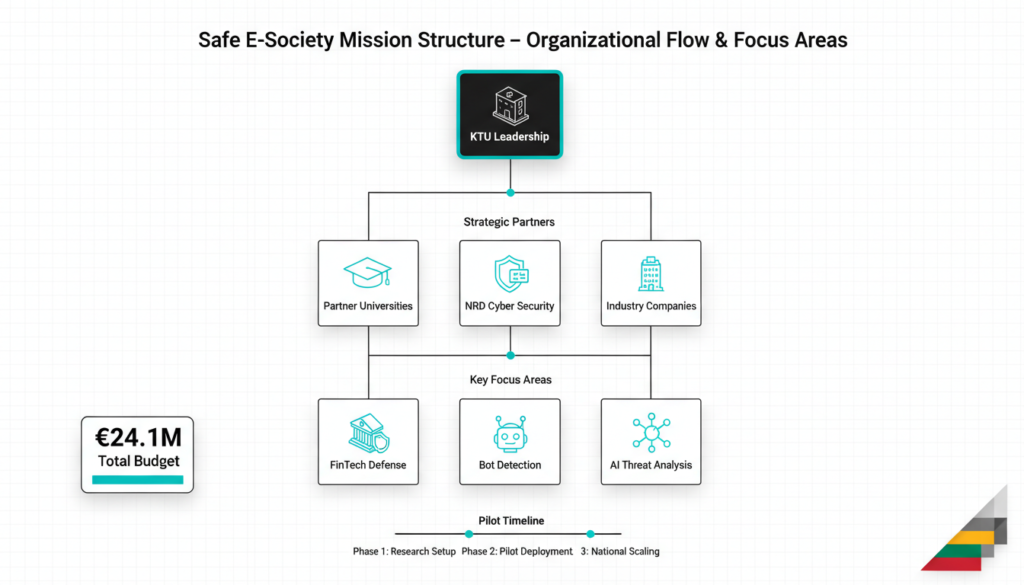
The Lithuanian government has launched a key program coordinated by the Innovation Agency, uniting scientists, businesses, and policymakers to boost e-security. A standout effort is the “Safe and Inclusive E-Society” mission, led by Kaunas University of Technology (KTU), with a budget over €24.1 million. This initiative focuses on everyday users of public and private services to cut personal data breach risks and enhance cyber resilience.
The consortium brings together top institutions like Vilnius Tech, Mykolas Romeris University, and cybersecurity firms such as NRD Cyber Security and Elsis PRO. Their work spans adaptive self learning systems for buildings, AI defenses for FinTech fraud, threat sensors for infrastructure, and AI tools to fight disinformation from bots and trolls. Real world pilots are already underway in public sectors and critical operations.
As Martynas Survilas from the Innovation Agency notes, the goal is real impact: protecting citizens, building trust in digital tools, and fostering an inclusive economy. Collaboration has replaced isolated research to tackle multilayered threats effectively.
AI Fraud’s Growing Threat
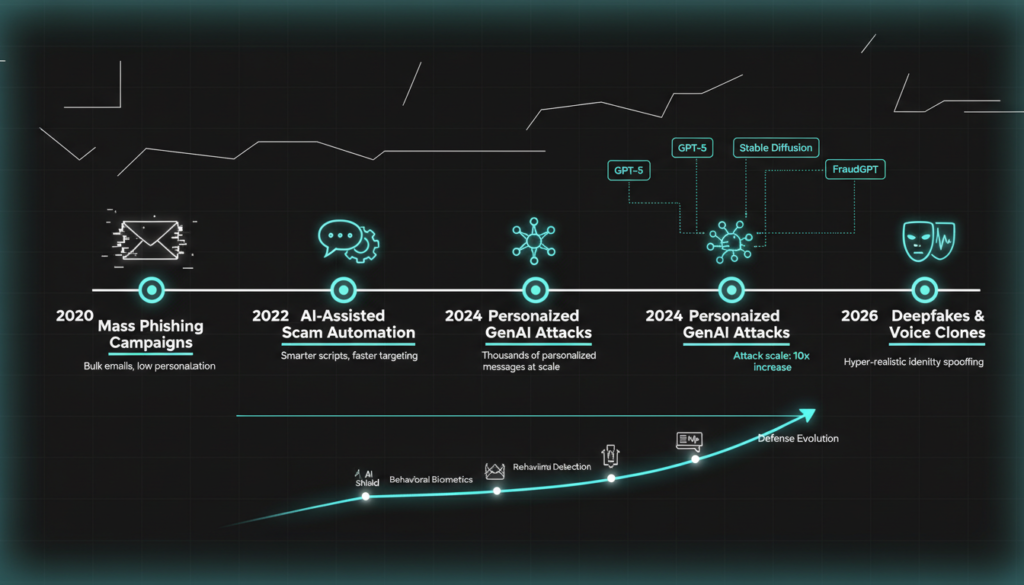
Generative AI (GenAI) and Large Language Models (LLMs) have revolutionized fraud tactics targeting e-government services. Traditional defenses like pattern-based filters fail against GenAI’s ability to craft flawless, context aware messages mimicking official styles without errors.
Dr. Rasa Brūzgienė from KTU explains that criminals now generate thousands of unique, personalized phishing attacks using public data, making them indistinguishable from legitimate communication. Tools like GPT-5, Claude, Llama, and malicious ones such as FraudGPT or WormGPT enable this shift from mass spam to hyper realistic deception.
Voice cloning via ElevenLabs or VALL-E, deepfakes from Stable Diffusion and DeepFaceLab, and lip sync tech like Wav2Lip create multimodal attacks. Fraudsters chain these fake videos, cloned voices, forged documents to bypass verifications, opening fake accounts on banks and crypto platforms effortlessly. Accessibility of these tools means one person can produce hundreds of convincing profiles quickly.
Global trends amplify this: 2026 reports highlight AI breaking identity security, with faster payments and regulations straining defenses. Lithuania’s proactive stance positions it well amid rising fraud schemes.
Real World AI Fraud Examples
In banking, Lithuania’s Bank of Lithuania issued 2025 guidelines mandating real time transaction monitoring and unusual behavior detection for payment providers. These steps counter AI orchestrated scams that mimic customer support, reducing fraud response times.
FinTech firms face AI agents automating account creation with liveness videos fooling biometrics. Ransomware dropped fivefold in Lithuania from 2023-2024 thanks to AI monitoring by the National Cyber Security Centre (NKSC), but adaptive social engineering remains a challenge.
Adaptive Social Engineering
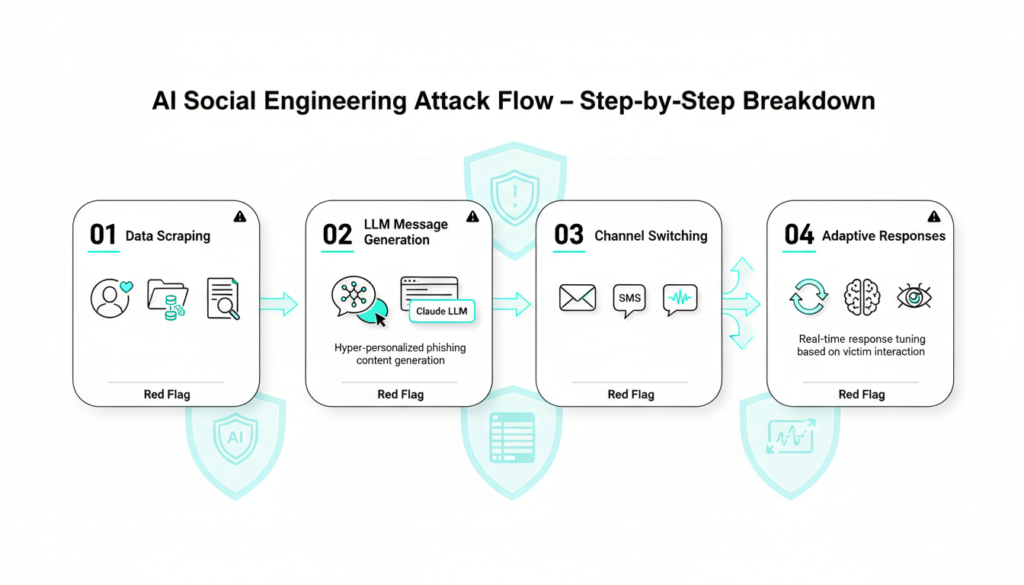
AI powered bots now personalize attacks in real-time, scraping social media and databases for victim profiles. They switch channels (email to SMS) and tones (formal to urgent), quoting real policies to build trust. A fake “colleague” might email, LinkedIn message, then voice call using clones all seamless.
Dr. Brūzgienė calls this scalable, intelligent deception exploiting psychology. It’s a cybercrime evolution where each target gets a custom script adapting to responses. Defenses must now predict behavioral patterns, not just signatures.
2026 cybersecurity trends emphasize zero trust and quantum safe measures alongside AI guards. Lithuania integrates these via NATO and ENISA ties, enhancing hybrid threat management.
Lithuania’s Defense Strategy
Lithuania ranks high globally 25th in Chandler Good Government Index, 33rd in 2025 Government AI Readiness thanks to its e-government and eID systems. The 2021-2030 AI Strategy, updated 2025, prioritizes anomaly detection and resilience.
NKSC’s AI threat monitoring slashed ransomware, while missions develop FinTech shields, infrastructure sensors, and disinformation detectors. Public safety, education, and business get hybrid systems; threat intelligence platforms enable real time analysis.
Survilas stresses cyber resilience as democracy’s base: using AI defensively through cross-sector collaboration and education. Pilots turn research into services, empowering digital trust.
Beyond the mission, Lithuania pushes financial guidelines for 24/7 fraud reporting and transaction blocks. International partnerships fortify against quantum threats and AI arms races expected in 2026.
Future Outlook
By 2027, expect expanded AI defenses like self healing networks and predictive fraud analytics. Lithuania’s model €24M+ investments, university business synergy offers a blueprint for nations facing GenAI threats. Continuous education ensures citizens spot deepfakes, fostering true inclusion.
With tools combating bots and real time intel, Lithuania leads in turning AI risks into strengths. This balanced approach secures growth while innovating responsibly.
Check out more on our blog page now → AI, Tech, Cybersecurity