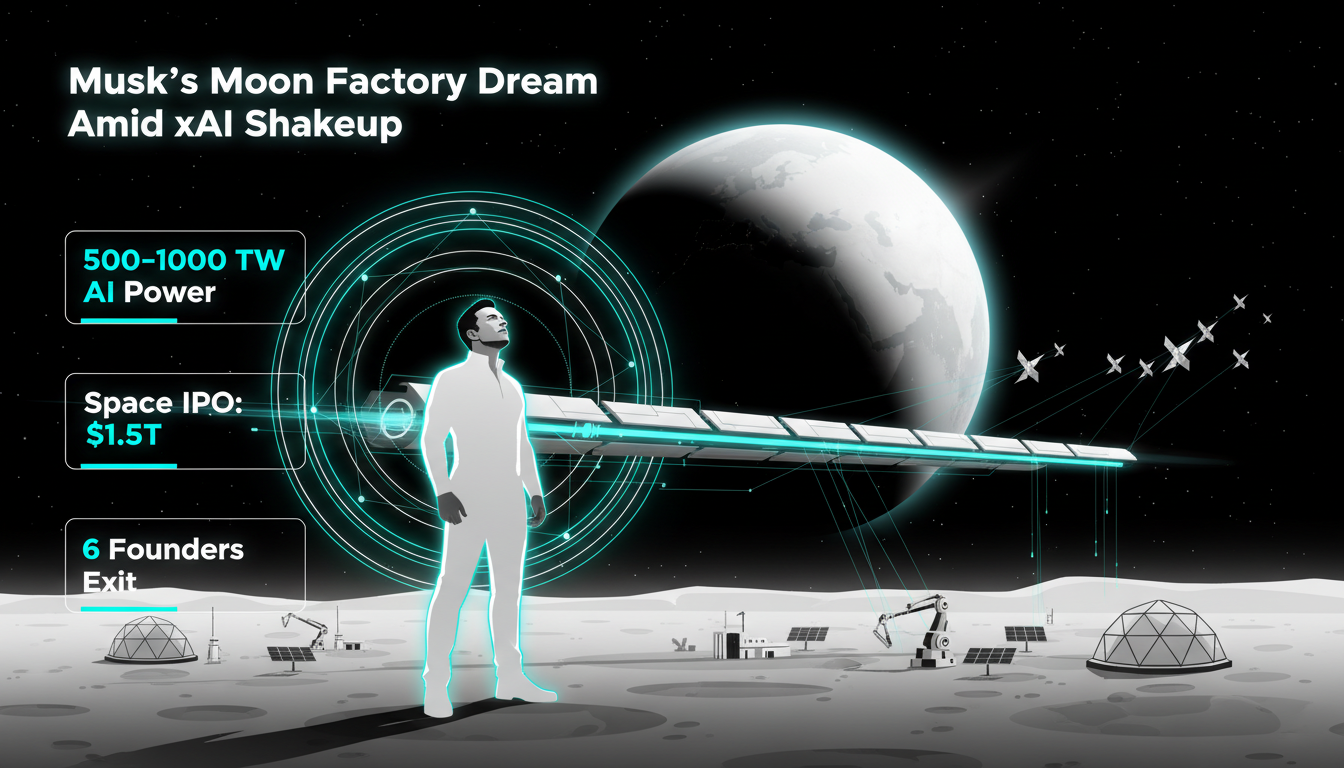
Elon Musk recently rallied xAI employees in an all hands meeting, painting a bold vision for the company’s future one that stretches all the way to the moon. With co founders exiting and a massive SpaceX IPO on the horizon, Musk doubled down on lunar ambitions, proposing a factory on the moon to build AI satellites launched by a giant catapult. This isn’t just sci-fi talk; it’s Musk’s blueprint for xAI to dominate AI computing power.
xAI’s Lunar Leap Explained
Musk told the team that a moon based facility would unlock unprecedented computing scale, far beyond any rival. “It’s difficult to imagine what an intelligence of that scale would think about,” he said, “but it’s going to be incredibly exciting.” This ties into xAI’s rapid progress with models like Grok-3, released late last year, which already outperforms competitors in real time reasoning and multimodal tasks, according to independent benchmarks from Hugging Face and LMSYS Arena.
The idea leverages the moon’s natural advantages: near absolute zero temperatures for efficient cooling, low gravity for cheaper launches, and constant solar exposure without atmospheric interference. NASA estimates lunar regolith contains abundant silicon and aluminum perfect for on site chip fabrication potentially slashing AI hardware costs by 90% over Earth based production.
Leadership Flux at xAI
Musk acknowledged the company’s chaos, boasting that xAI moves “faster than anyone else no one’s even close.” He noted some team members thrive in early stages but not later ones, hinting at transitions. Timing is telling: Just days before, co founders Tony Wu and Jimmy Ba announced departures, bringing the total to six of xAI’s original 12 founders gone since its 2023 launch.
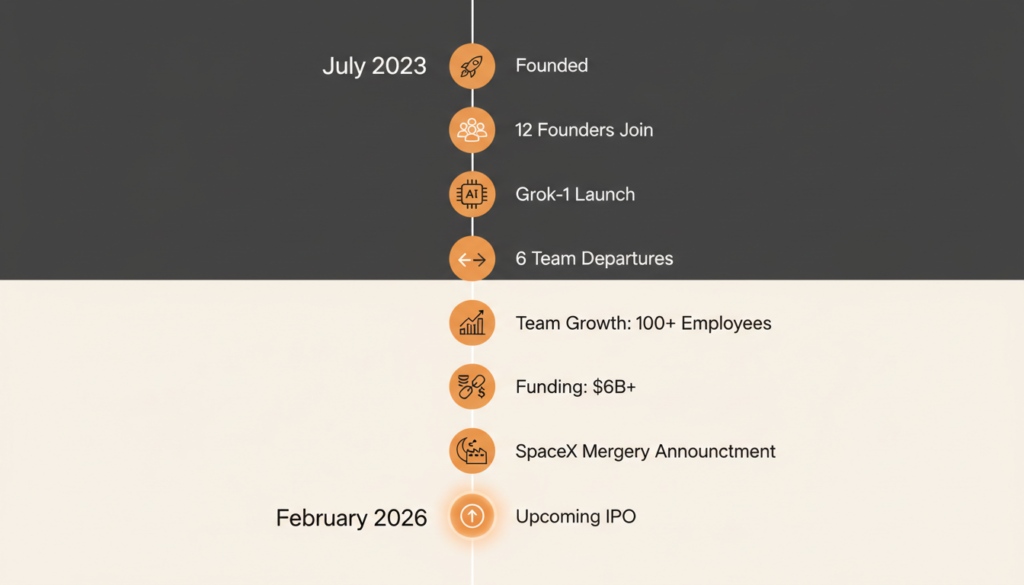
These exits are amicable, and with SpaceX eyeing a $1.5 trillion IPO this summer fueled by Starship successes like the 2025 orbital refueling demo departing founders stand to gain handsomely from equity. xAI itself has raised over $6 billion, valuing it at $24 billion post-merger with SpaceX’s data centers, positioning it as a frontrunner in the AI arms race against OpenAI and Anthropic.
From Mars to Moon Shift
Historically, SpaceX fixated on Mars colonization, but Musk pivoted sharply. In a pre Super Bowl post, he declared focus on a “self growing city on the Moon,” achievable in under a decade versus 20+ years for Mars. SpaceX has no lunar missions yet, but Starship’s reusability now landing boosters routinely after 2024 tests makes it feasible.
Investors love this: Orbital data centers promise immediate ROI over distant colonies. Lunar factories align with xAI’s edge in “world models” AI trained on real world data from Musk’s empire. Tesla feeds road and energy data; Neuralink, brain interfaces; SpaceX, orbital physics; The Boring Company, tunneling tech. A moon base adds extraterrestrial datasets, like vacuum manufacturing and low grav dynamics, irreplaceable for next gen AI.
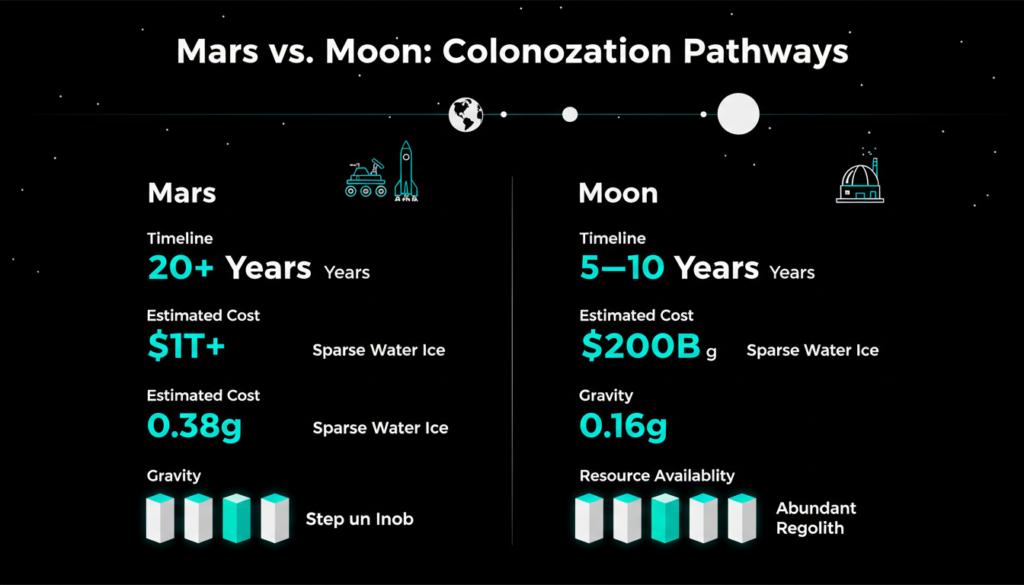
Building the Moon Factory: Tech and Logistics
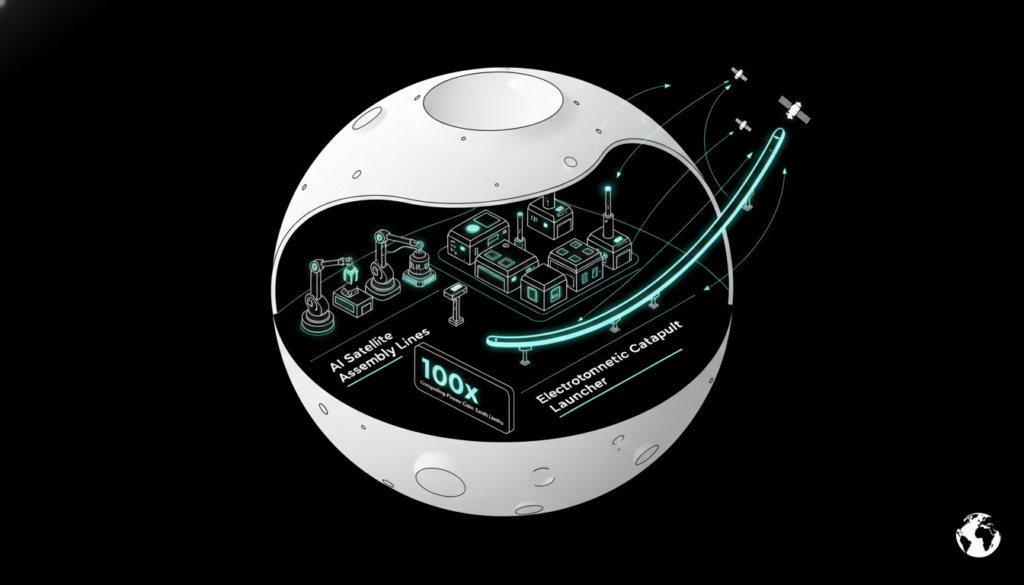
How would it work? Musk envisions robots mining regolith for semiconductors, assembling AI optimized satellites in vacuum sealed domes, then catapulting them via electromagnetic rails similar to NASA’s proposed mass drivers but scaled up. Power from solar arrays and potential helium 3 fusion (lunar soil holds trillions in value, per DOE estimates) could fuel exascale computing clusters.
SpaceX’s merger integrates xAI’s Grok inference with Starship payloads; first uncrewed lunar Starships could deliver prototypes by 2028. Challenges abound: radiation shielding via regolith bricks, autonomous ops to minimize humans, and seismic “moonquakes” from thermal expansion.
Legal Hurdles in Space
Is it legal? The 1967 Outer Space Treaty bars sovereignty claims no flags, no ownership. But the 2015 U.S. Commercial Space Launch Competitiveness Act lets companies own extracted resources. As Wesleyan professor Mary-Jane Rubenstein notes, it’s like “owning the floorboards but not the house,” since regolith is the moon itself.
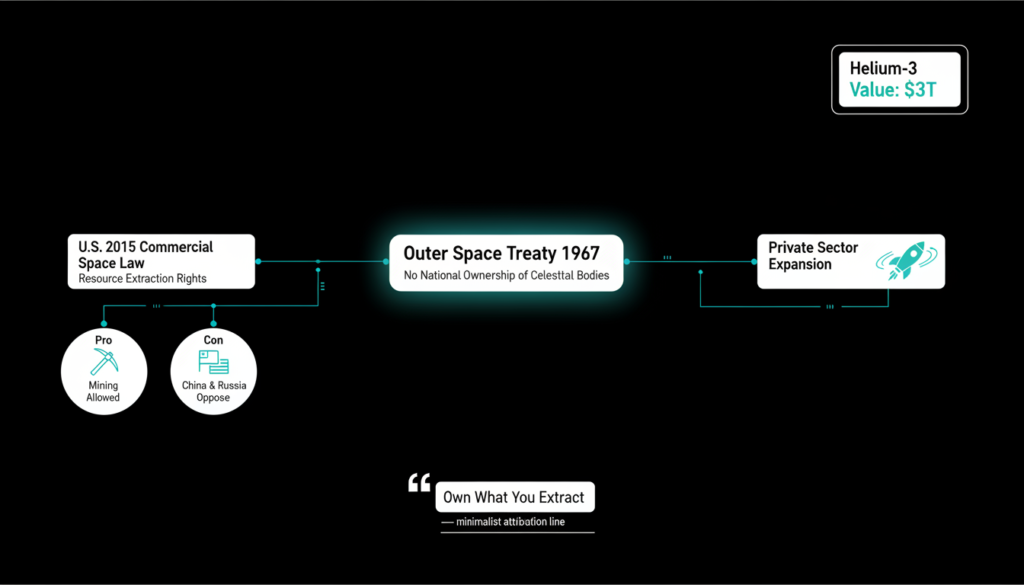
Russia and China reject this, pushing their own lunar pacts. Experts like those at the Secure World Foundation warn of “space resource rushes,” but Musk’s teams drawing from xAI’s 100+ PhDs could test via Starship sample returns, building precedent.
Musk’s Grand AI Vision
This lunar push isn’t a distraction; it’s core to Musk’s “most powerful world model.” xAI’s Grok 4, teased for Q2 2026, aims for AGI level simulation using proprietary data no rival matches. Moon factories enable “planet-scale” inference, processing petabytes from orbital sensors.
Critics question feasibility amid talent drain, but Musk’s track record Falcon 9’s 300+ launches, Tesla’s FSD v13 autonomy suggests otherwise. As xAI hurtles toward IPO synergies, the moon might just power the next AI revolution.
The team may shrink, but Musk’s ambition grows. Watch for Starship lunar tests they could redefine AI’s frontier.
Check out more on our blog page now → AI, Tech, CybersecurityEdit