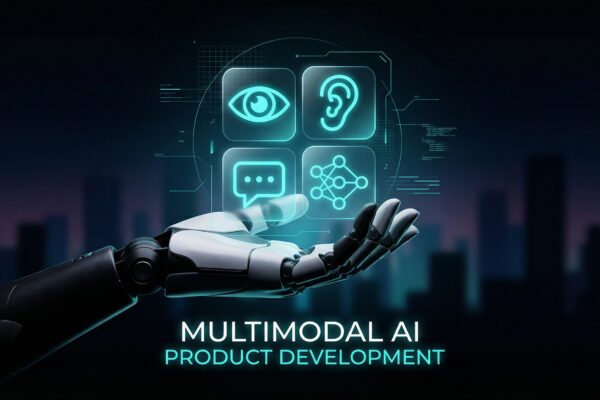
AI has evolved far beyond processing text and numbers alone. Multimodal AI integrates vision, speech, text, and sensory data, allowing systems to see, hear, speak, and reason across multiple inputs at once. In 2026 and beyond, this shift is redefining how digital products are conceived, designed, and delivered. For product teams, Multimodal AI is not just another trend; It fundamentally changes prototyping speed, user personalization, and real time decision making, enabling experiences that feel more intuitive, adaptive, and human than ever before. Multimodal AI Basics Traditional AI systems are typically built to process a single data type at a time, whether that’s text, images, or audio. Multimodal AI breaks this limitation by fusing vision, language, sound, and contextual signals into one unified system. Instead of switching between isolated models, it understands and reasons across inputs simultaneously. Imagine an AI that can interpret diagrams, summarize videos, analyze customer reviews, and respond through voice or text in a continuous workflow. This convergence unlocks enormous potential across the product pipeline, accelerating insights, improving user experience, and enabling smarter, more adaptive products. Why Product Teams Need It Now From SaaS to eCommerce, multimodal AI delivers real wins: Top Use Cases Today Leading teams apply multimodal AI across: Use Case How It Powers Products Product Discovery Analyzes images, videos, and reviews for insights. Feature Prioritization Scores ideas from voice feedback…