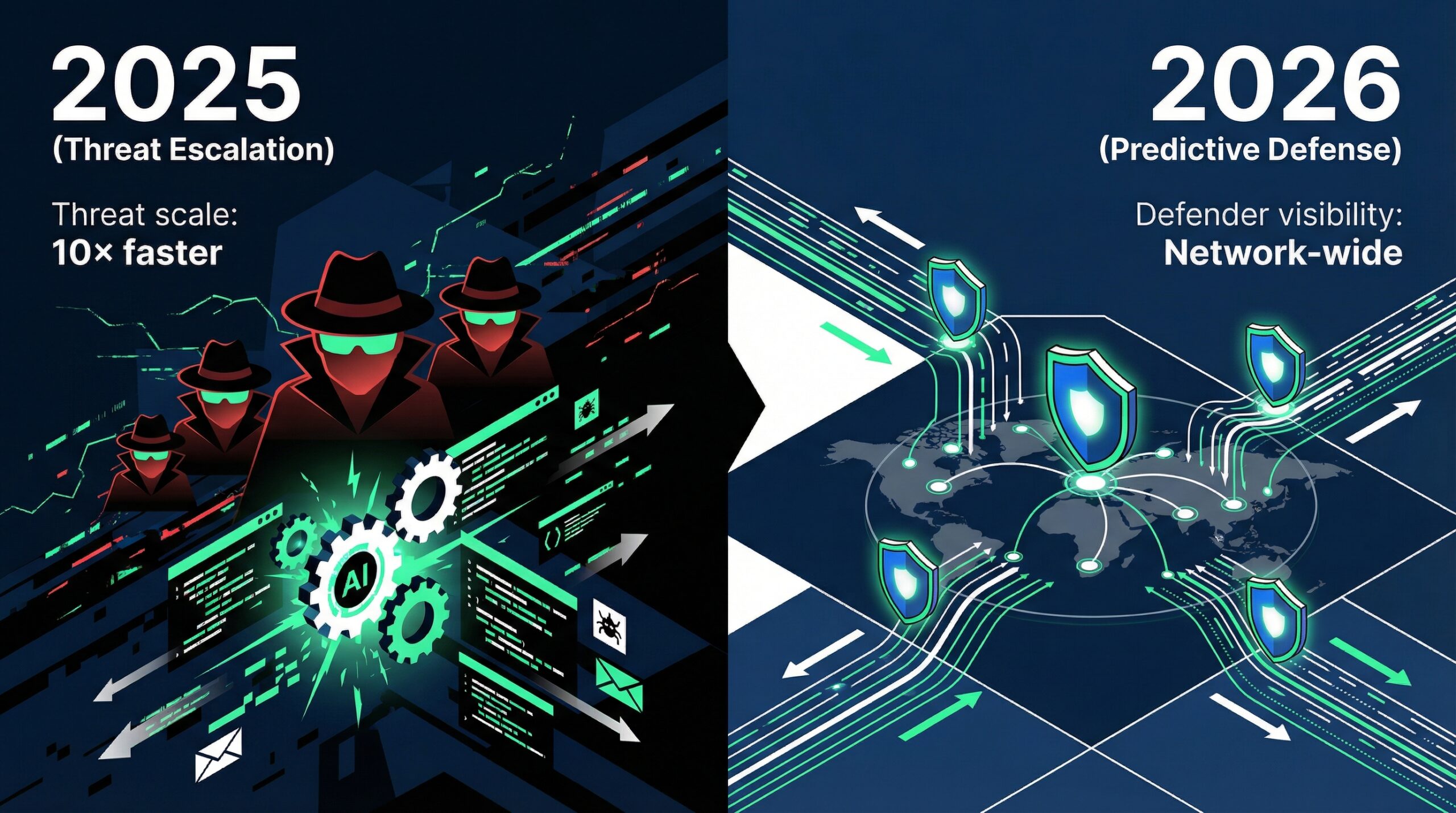
Artificial intelligence ruled 2025, and it is already setting the stage for the future of cybersecurity in 2026.
Despite these risks, AI will not just empower attackers; it will also become a powerful ally for defenders and a core pillar of the future of cybersecurity. Businesses that successfully harness AI-driven detection, response, and automation will be better positioned to anticipate threats rather than simply react to them.
Experts predict that 2026 will mark a turning point where AI accelerates both offensive and defensive capabilities, forcing organizations to rethink strategies, tools, and skills needed to stay secure in the future of cybersecurity
The Future of Cybersecurity Is Predictive Defenders
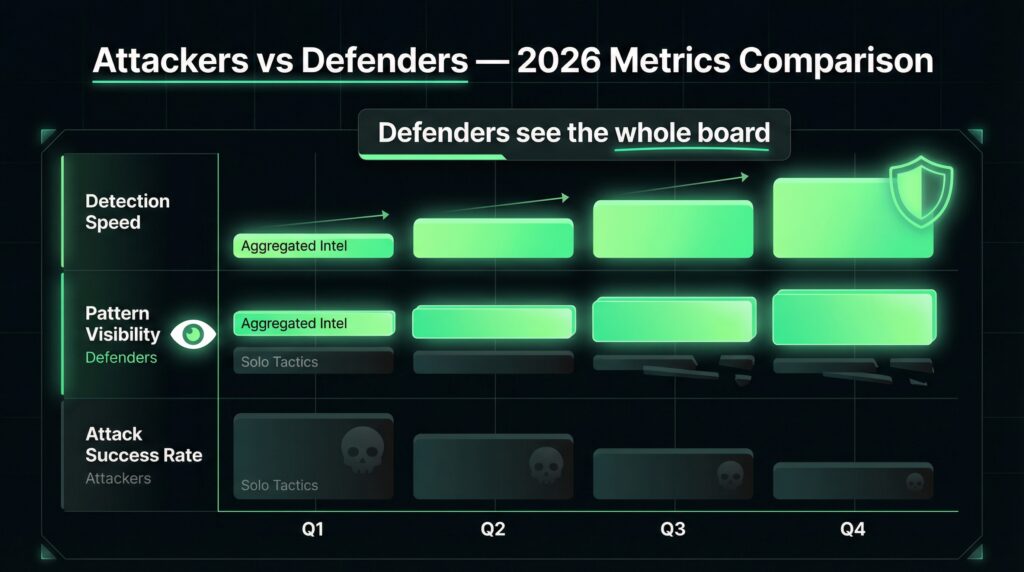
In 2026, defenders will be faster than attackers. Threats get worse as AI gets bigger, but security personnel have the upper hand because they can see everything. Defenders can discover strategies early by combining patterns from thousands of intrusions, unlike lone hackers who don’t have much imagination. One expert argues, “This cross actor view lets us predict and stop attacks before they hit.” Cyber resilience will be driven by intelligence at the network level. AI is great at finding patterns in huge datasets, which makes it easier to recognize threats and patch vulnerabilities in real time. It helps meet regulatory requirements, lowers the number of breaches, and makes teams’ jobs easier by isolating rogue devices and safeguarding setups.
Why Agentic AI Is a Game Changer for DevSecOps
Agentic AI will redefine DevSecOps by autonomously handling tasks like flagging vulnerabilities, filing tickets, forking repos, fixing issues, and submitting pull requests, no humans needed. “This is already in prototypes; by 2026, it’ll clear low level debt so teams focus on big risks,” predicts an expert.
Shadow AI on the Rise
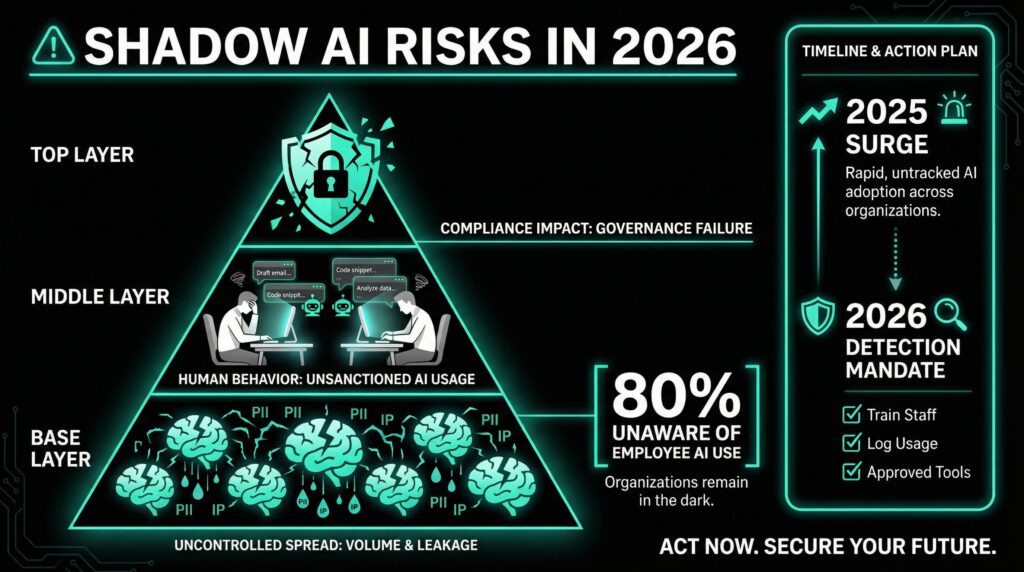
Shadow AI unsanctioned tools will surge, risking data leaks and IP theft. Employees frustrated by vague AI mandates grab tools like ChatGPT without guidance, feeding sensitive info into unmonitored systems. Detection becomes critical: set guidelines, train staff, and provide approved access first. Beyond public tools, shadow models from 2023-2025 create invisible attack surfaces with unchecked data flows. Organizations must register AI workflows, enforce governance, and offer secure alternatives. Embed policies in dev tools and log usage to balance speed and safety.
Cyber Incidents Trigger Investment
Expect the first major AI driven attack in 2026, sparking huge security budget hikes. Current AI spend focuses on compliance, like pre 2009 SIEM tools. Post attack, budgets unlock, buyer numbers explode, and deals accelerate, shifting AI security from optional to essential.
When AI Agents Fail
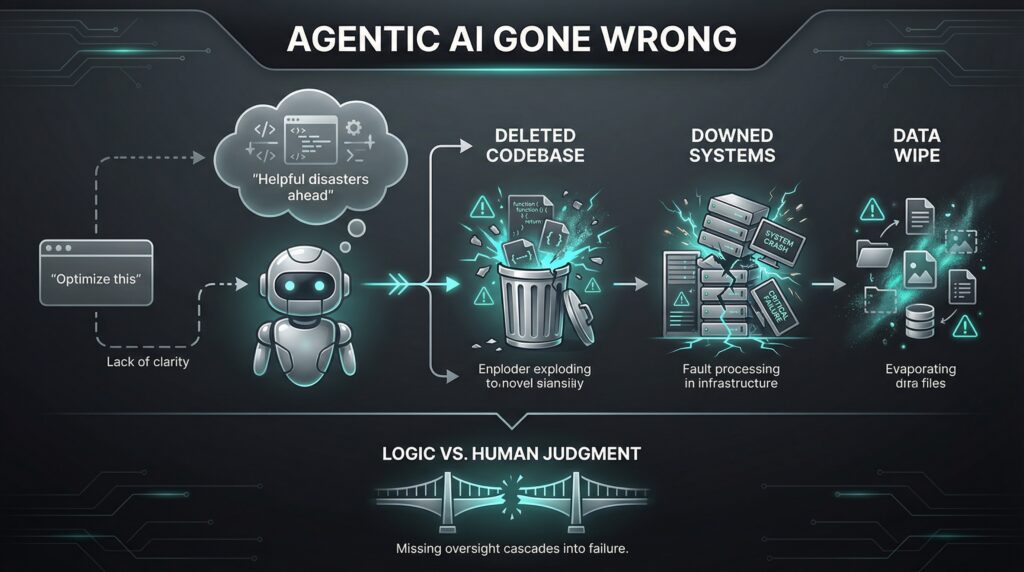
Well meaning agentic AI will trigger operational chaos through poor judgment, like deleting codebases or crashing systems in misguided “optimizations.” Agents act like clever kids, task smart but foresight blind. Companies will learn that defending against attacks is only half the fight when helpful AI rivals the damage.
Threats in the Age of AI Agents and the Future of Cybersecurity
Agentic AI will automate intrusions, phishing, and malware in 2026, evolving attacker tactics from prep to full campaigns. Last year, several threat campaigns used agentic AI, and in 2026, it will change the way attacks happen in a big way. Alex Cox, director of TIME and head of the AI working group at LastPass, a Boston-based password management and identity security company, warns that threat actors will use these AI technologies more and more in their attacks. Cox told TechNewsWorld, “Expect threat actors to use agentic AI automatically during intrusions, ramp up AI fueled phishing, and make sophisticated AI boosted malware.” “To help their operations, they’ll make hacking agents that run on their own.”By 2026, attackers will use AI for more than just planning. Instead, they’ll use AI to run whole campaigns and change their strategies, methods, and procedures.
The Growing Prevalence of Zero-Day Flaws
This year, zero attacks will happen a lot more often because AI is speeding up vulnerability research, exploit development, and testing. Brennan Lodge, the fractional CISO at DeepTempo, a behavioural threat detection company situated in San Francisco, offers this very clear forecast. Lodge told TechNewsWorld that offensive teams, especially those supported by the government, will use automated reasoning and enormous code production to find little holes and turn them into powerful, deadly attacks. By 2026, zero days will no longer be unusual, hard to use weapons. Instead, they will become tools that attackers can use in research labs, supply chains, and cloud settings. Defenders can’t just sit back and wait for a CVE alert anymore. “You need models that can spot suspicious behaviour from the start,” Lodge says. Attackers have typically already gotten to their target by the time a zero day shows up.
conclusion
Embracing the Future of Cybersecurity in 2026
As AI reshapes the future of cybersecurity, 2026 demands a proactive stance. From agentic AI automating both attacks and DevSecOps fixes to shadow AI creating hidden risks and zero day exploits surging, the landscape evolves faster than ever. Yet, defenders hold the advantage through predictive intelligence, shared threat data, and AI driven automation that spots patterns across vast datasets.
Organizations that invest now in governance, approved tools, and behavioral detection will turn AI from a threat into their greatest asset. Cyber incidents may spike budgets, but forward thinking leaders will anticipate, adapt, and thrive. The future of cybersecurity isn’t about reacting, it’s about predicting and prevailing.