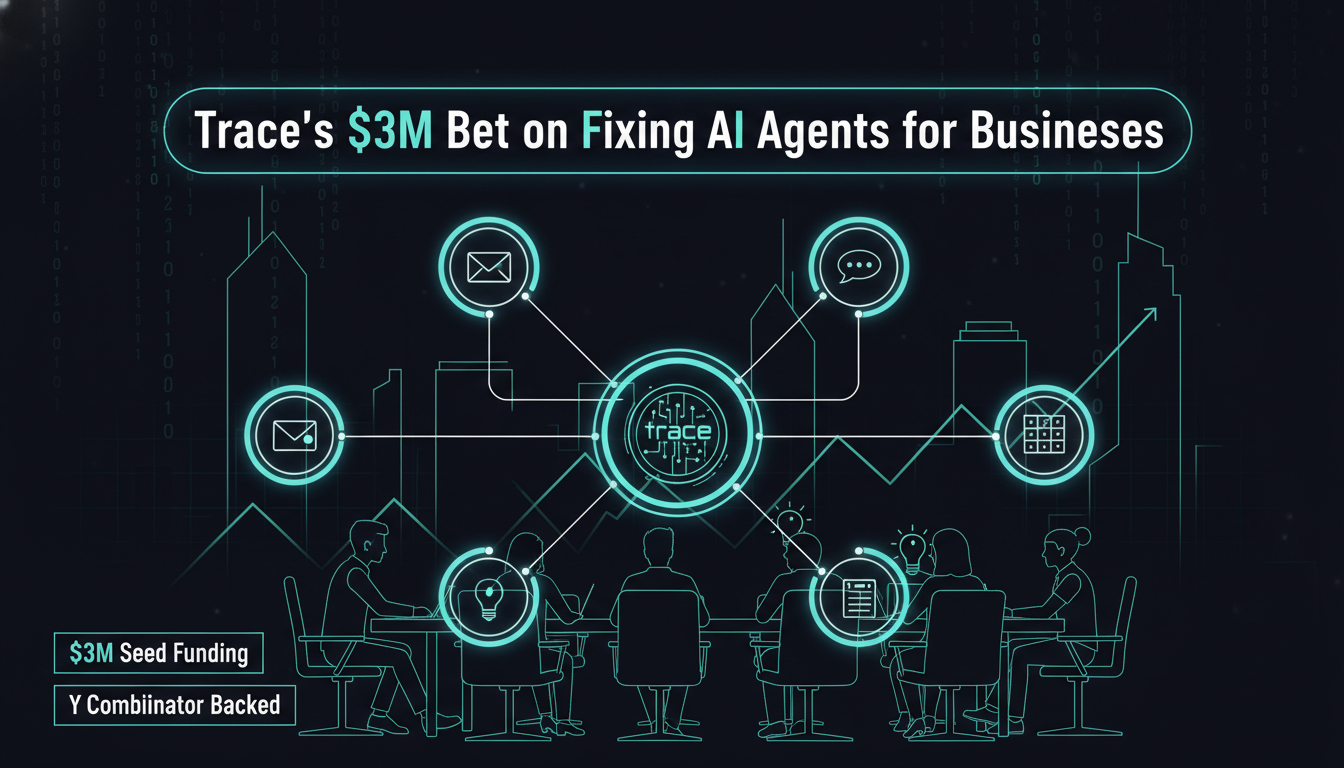
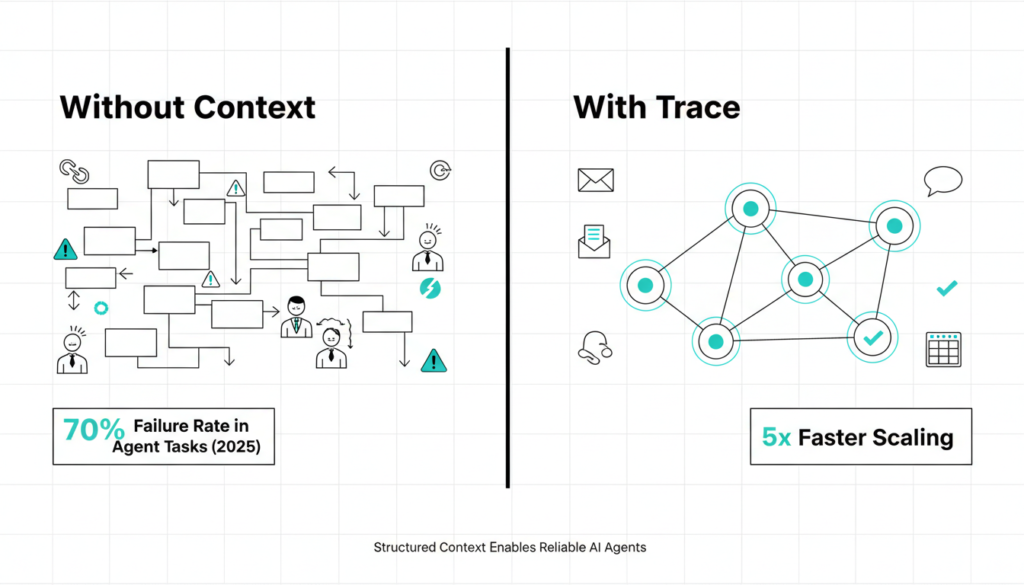
AI agents promise to revolutionize how enterprises work, but they’re stumbling in real world corporate settings. A new startup, Trace, just raised $3 million to tackle this head on. By providing the missing “context” that agents crave, Trace aims to make these smart tools scale effortlessly across complex company workflows.
What Is Trace and Why It Matters
Launched from Y Combinator’s 2025 summer batch, Trace is a workflow orchestration platform designed for enterprises drowning in tools and processes. It maps your company’s entire ecosystem into a dynamic knowledge graph think of it as a smart blueprint of your daily operations. This gives AI agents the full context they need to handle high level tasks without guesswork.
CEO Tim Cherkasov puts it simply: OpenAI and Anthropic are crafting brilliant “interns,” but Trace builds the “manager” who knows exactly where to deploy them. From London, the startup secured seed funding from top players like Y Combinator, Zeno Ventures, Transpose Platform Management, Goodwater Capital, Formosa Capital, and WeFunder. Angels Benjamin Bryant and Kevin Moore joined too, signaling strong early belief in their vision.
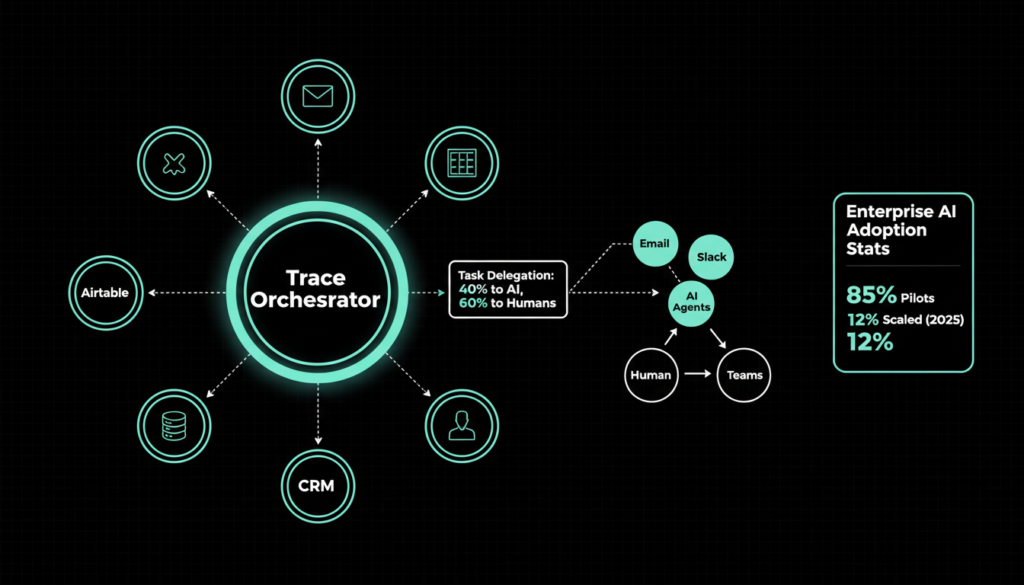
According to McKinsey’s 2025 AI report, 85% of enterprises experiment with AI agents, but only 12% achieve production scale deployment. The bottleneck? Lack of integration with legacy systems. Trace flips this by automating context building, turning vague prompts into actionable plans.
How Trace Works in Real Workflows
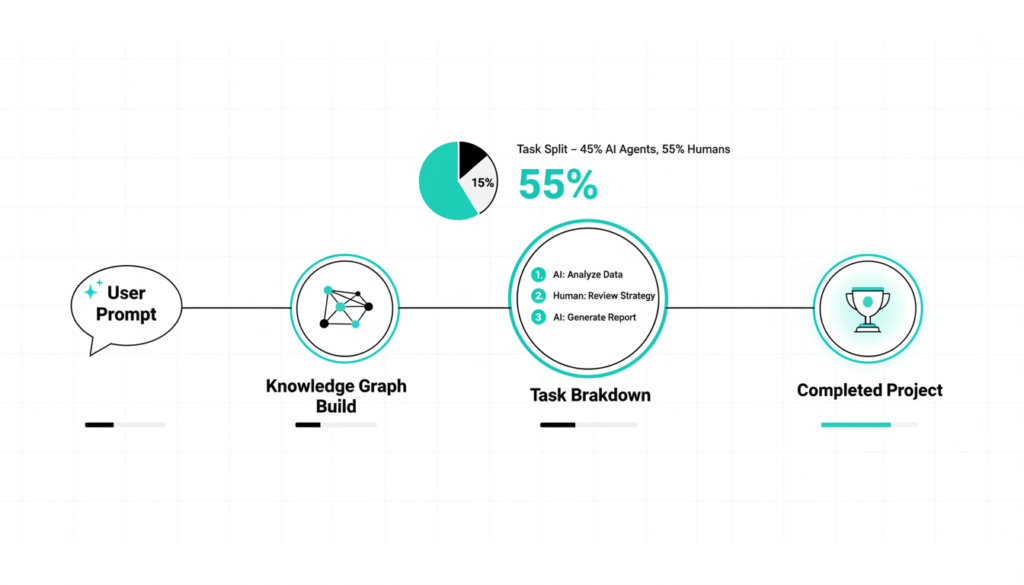
Trace kicks off by ingesting data from your core tools email threads, Slack channels, Airtable bases, and more to construct that knowledge graph. Drop in a big picture prompt like “Design our new microsite” or “Build the 2027 sales plan,” and it spits out a tailored workflow. It breaks it down step by step: delegating data crunching to AI agents with precise context, while routing creative or approval tasks to humans.
For instance, in sales planning, Trace might pull historical CRM data, Slack discussions on market trends, and email feedback loops. An AI agent gets prompted with just the relevant slices like Q4 revenue graphs and competitor intel slashing errors. Humans handle strategy tweaks. This hybrid model is key: Gartner’s 2026 forecast predicts 60% of enterprise workflows will be agent human by 2028, up from 15% today.
Additional perks include real time monitoring. Dashboards track agent performance, flagging issues like “context gaps” that cause 40% of AI failures (per Forrester). Trace also iterates: post task, it refines the graph with outcomes, making future runs smarter.
The Big Challenge: AI Agents in Enterprises
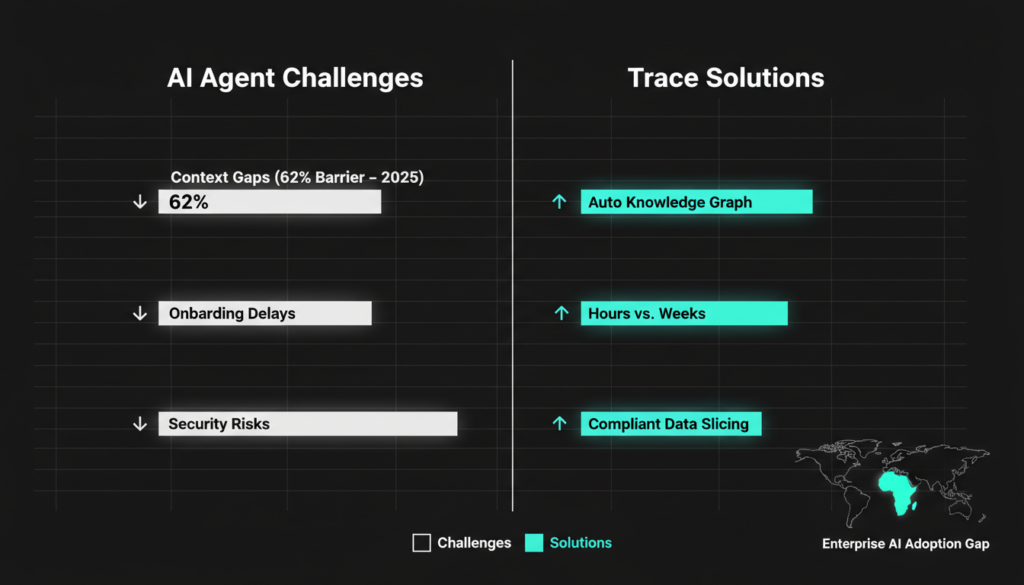
AI agents shine in labs but falter in offices. Why? Enterprises juggle siloed tools, compliance rules, and unpredictable human inputs. A 2025 Deloitte survey found 62% of IT leaders cite “context deficiency” as the top barrier agents lack the nuanced understanding of company specific processes.
Trace automates onboarding, a notorious pain point. Manual setups take weeks; Trace does it in hours by auto mapping integrations. It also handles security: graphs anonymize sensitive data before agent access, aligning with SOC 2 standards that 90% of Fortune 500 demand (IDC data).
Beyond basics, Trace eyes multi agent swarms. Future updates will let agents collaborate like one researching markets while another models forecasts mirroring trends in LangChain and AutoGen frameworks, which saw 300% adoption growth in 2025 (GitHub metrics).
Competition Heating Up
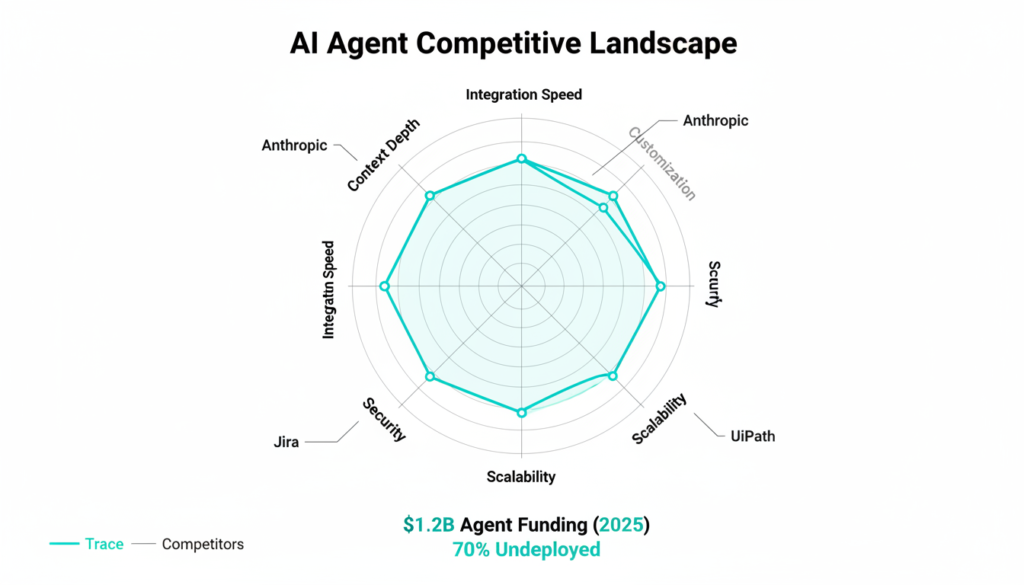
Trace enters a crowded field. Anthropic recently rolled out enterprise agents with plugins for finance, engineering, and design pre tuned for departments but rigid on custom workflows. Atlassian’s Jira now pairs AI agents with humans side by side, great for dev teams but limited beyond ticketing.
Others like Adept and Sierra.ai focus on verticals (e.g., customer service), while UiPath pushes RPA agent hybrids. Trace differentiates with universal context engineering: any tool, any task. As CTO Artur Romanov notes, we’ve shifted from “prompt engineering” (2024 hype) to “context engineering” the infrastructure for AI-first firms.
Y Combinator data shows agent startups raised $1.2B in 2025, yet deployment lags. Trace’s graph first approach could lead, especially as models like GPT-5 and Claude 4 demand richer inputs (OpenAI benchmarks).
Why Context Engineering Wins Long Term
Romanov predicts context will define AI infrastructure. Prompts alone falter on nuance; graphs provide it scalably. Think of it like GPS for agents: without maps (context), they wander; with them, they navigate mazes.
Enterprises stand to gain huge. Boston Consulting Group estimates agent orchestration could unlock $4.4 trillion in value by 2030 via 30-50% productivity boosts. Early adopters like mid sized tech firms report 3x faster project cycles with similar tools (BetaList reviews).
Trace plans expansions: API marketplaces for custom agents, enterprise grade analytics, and vertical templates (e.g., marketing campaigns). With $3M fuel, they’re poised to capture the shift.
Final Thoughts on Trace’s Enterprise Push
Trace isn’t just funding another agent hype it’s solving the adoption puzzle with smart context. As enterprises race to AI ify operations, tools like this could bridge the gap from pilot to powerhouse. Watch this space; 2026 might be the year agents truly go mainstream.
Check out more on our blog page now → AI, Tech, Cybersecurity