
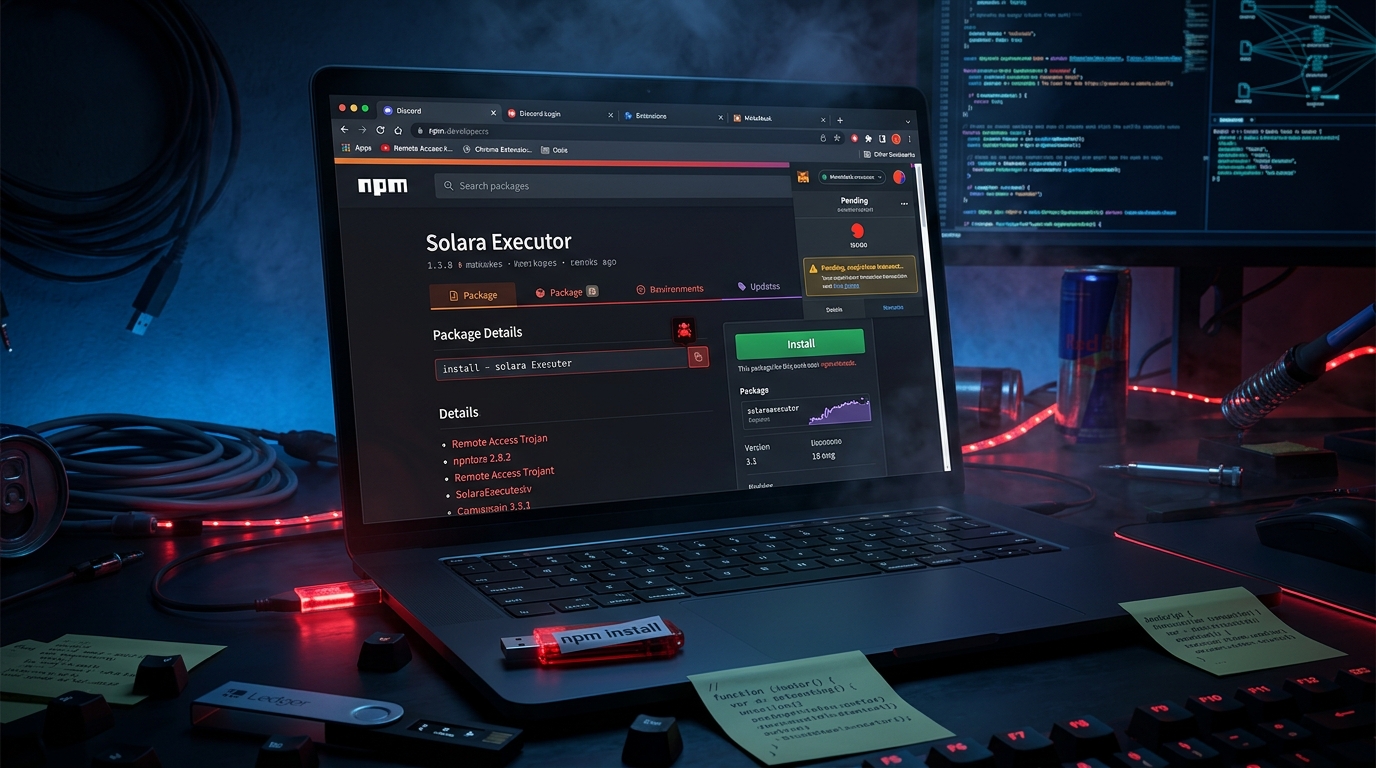
In the ever-evolving landscape of cybersecurity threats, malicious actors continue to find innovative ways to compromise systems and steal sensitive information. One such recent development involves a series of harmful npm packages that masquerade as legitimate software while harboring dangerous capabilities. These packages, which appear to be targeting Discord users, web browsers, and cryptocurrency wallets, represent a significant threat to both individual users and organizations alike.
Understanding the Threat Landscape
npm (Node Package Manager) has become an essential tool for JavaScript developers, hosting millions of packages that power countless applications. However, this popularity has also made it an attractive target for cybercriminals. The recent discovery of malicious packages designed to impersonate Solara Executor highlights the ongoing battle between security professionals and threat actors.
The packages in question are engineered to deceive users into believing they are installing legitimate software. Once installed, these packages can execute a range of malicious activities, from stealing Discord tokens to compromising browser sessions and even targeting cryptocurrency wallets. This multi-faceted approach demonstrates the sophistication of modern malware campaigns.
How the Malicious Packages Operate
The attack begins with social engineering tactics that lure users into downloading what appears to be a legitimate package. These packages are often distributed through unofficial channels or disguised as popular software updates. Once installed, they establish persistence on the victim’s system and begin their malicious activities.
The packages are designed to target specific applications and services. For Discord users, they can steal authentication tokens, allowing attackers to hijack accounts and access private servers. For web browsers, they can capture session data, cookies, and other sensitive information. When it comes to cryptocurrency wallets, the packages can attempt to steal private keys or intercept transactions.
Technical Analysis of the Malware
Security researchers who have analyzed these malicious packages report that they employ various obfuscation techniques to evade detection. The packages often contain encrypted payloads that only decrypt when specific conditions are met, making them difficult to detect using traditional security tools.
The malware’s architecture typically includes several components: a dropper that initiates the infection, a loader that fetches additional malicious code from command and control servers, and the actual payload that performs the harmful activities. This modular approach allows the attackers to update their tactics and targets without needing to modify the initial package.
Impact on Different User Groups
Discord users face the risk of account compromise, which can lead to data theft, impersonation, and the spread of malware to other users through compromised accounts. Gamers and content creators who rely on Discord for community building are particularly vulnerable to these attacks.
Browser users may find their personal information, login credentials, and financial data at risk. The malware can capture keystrokes, take screenshots, and even activate webcams without the user’s knowledge. This level of intrusion can have devastating consequences for both personal privacy and financial security.
Cryptocurrency holders are among the most targeted groups, as digital assets can be quickly and irreversibly transferred once private keys are compromised. The malware may wait for opportune moments to steal wallet credentials or manipulate transactions to benefit the attackers.
Detection and Prevention Strategies
Organizations and individual users can take several steps to protect themselves from these threats. First and foremost, it’s crucial to only download packages from official npm repositories and verify the authenticity of any software before installation. Implementing strict package management policies within development teams can also help prevent the introduction of malicious code.
Security tools that specialize in detecting malicious npm packages are becoming increasingly important. These tools can analyze package behavior, check for known malicious patterns, and alert users to potential threats before they can cause harm. Regular security audits of installed packages and dependencies are also recommended.
Best Practices for npm Users
Developers should adopt a security-first mindset when working with npm packages. This includes reviewing package documentation carefully, checking the reputation of package maintainers, and being cautious of packages with few downloads or recent creation dates. Using package lock files can help ensure that only verified versions of dependencies are installed.
Implementing network segmentation can limit the damage if a system does become compromised. By isolating development environments from production systems and sensitive data, organizations can reduce the potential impact of malware infections.
The Role of the npm Community
The npm community plays a vital role in combating these threats. Users are encouraged to report suspicious packages and share information about potential threats. Package maintainers can contribute by implementing security best practices in their own code and being vigilant about the packages they depend on.
Npm’s security team works continuously to identify and remove malicious packages from the registry. However, the sheer volume of packages and the sophistication of some attacks mean that community involvement remains crucial for maintaining a secure ecosystem.
Future Trends and Emerging Threats
As security measures improve, attackers are likely to develop even more sophisticated techniques. We may see an increase in supply chain attacks, where malicious code is inserted into legitimate packages through compromised developer accounts or build systems. The use of artificial intelligence and machine learning by both attackers and defenders will shape the future of this ongoing battle.
Cross-platform malware that can affect multiple operating systems and environments is also on the rise. This trend makes it even more important for users to maintain comprehensive security practices regardless of their specific technology stack.
Conclusion
The threat posed by malicious npm packages targeting Discord, browsers, and crypto wallets represents a significant challenge for the software development community. By understanding how these attacks work and implementing robust security practices, users can significantly reduce their risk of falling victim to such threats.
Staying informed about the latest security developments, using appropriate security tools, and maintaining a healthy skepticism about software sources are all essential components of a strong security posture. As the digital landscape continues to evolve, so too must our approaches to protecting ourselves and our systems from malicious actors.
The battle against malware in the npm ecosystem is ongoing, but through vigilance, education, and community cooperation, we can create a safer environment for software development and use. Remember that security is not a one-time effort but a continuous process of adaptation and improvement.
Check out more on our blog page now → AI, Tech, Cybersecurity